

Audio By Carbonatix
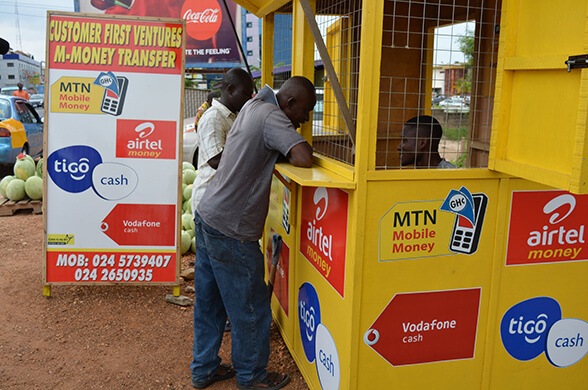
Mobile money transfers across different networks, also known as Mobile Money Interoperability (MMI), have shot up by 358 percent in the first three months of this year, compared to the same period last year.
The volume went up to over 5.12 million transactions from 1.11million in the first quarter of last year, according to figures from the Ghana Interbank Payment and Settlement Systems (GhIPSS), a subsidiary of the Bank of Ghana.
Sending money from one wallet to another of a different telecommunications network was only possible through the token system, which was complicated until the MMI was introduced in May 2018.
Since its introduction, it has become easier to transfer funds across wallets of different networks. This possibility has also led many organisations to set up their systems to accept mobile money payments.
Mr Archie Hesse, the Chief Executive of GhIPSS, said in an interview with the Ghana News Agency that the MMI has made payments through mobile money one of the most efficient and easy to access.
He, therefore, urged all businesses to accept payments from mobile money wallets as one of the default modes of payment or risk losing out on potential income.
When MMI started, volume of transactions hovered around 100,000 per month but monthly transactions have since crossed the one million mark with the month of March, 2020 recording close to two million transactions.
MMI transactions include transfers from wallets to bank accounts as well as from wallets to e-zwich cards.
However, these two account for less than three percent of the volume of transactions, implying that an overwhelming majority of the transactions involve wallet to wallet transfers.
Mobile money in general has witnessed a phenomenal success in Ghana but this is being negated by the frequent cashback transactions, which means that ultimately cash is being used to make payments.
In recent times, however, the introduction of merchant IDs has encouraged customers to pay directly from their wallets.
Another effort likely to result in a further drop in cashback transactions, is the launch of the universal QR code for payment.
This payment service will enable customers to scan the codes of merchants to pay directly from their wallets. The QR code payment is also available for feature phone users who will be required to dial a specific code to effect payment.
Payment using QR code in Ghana can be made using mobile money wallet or bank accounts as well as any other payment apps that fintechs may develop. This payment service was launched in March this year.
Latest Stories
-
‘I was beaten, threatened with death, and was told to stay’ – Abuse survivor recounts ordeal in marriage
21 minutes -
Ato Forson has performed wonders with common fund releases – Northern Regional Minister
42 minutes -
Zelensky accuses US of inaction as Russian strikes kill over 70 in two days
46 minutes -
Bipartisan majority of Americans blame Trump policies for rising costs, Reuters/Ipsos poll finds
46 minutes -
New Trump rules will make it harder for farmers to access US funds for energy projects
47 minutes -
John Jinapor warns energy sector board chairs, CEOs against toxic working relationships
48 minutes -
Recover, protect and properly account for every cedi of public money – Finance Minister
51 minutes -
GTA denies collecting money for US, Canada visas ahead of 2026 World Cup
57 minutes -
GTA CEO Maame Efua Houadjeto denies involvement in World Cup visa scandal
1 hour -
Rockland Farms CEO Calls for Greater Support for Women in Agriculture
2 hours -
AFCON 2027Q: Interim Black Stars technical team to take charge of November games
2 hours -
Gov’t suspends implementation of L.I. restricting preaching and hawking in moving vehicles
2 hours -
Three Saudi nationals killed in Houthi attacks on Riyadh airport
2 hours -
Jinapor demands accountability from energy sector agencies ahead of 2027
2 hours -
Cars torched and shops looted as anti-migrant violence erupts in South Africa
2 hours