

Audio By Carbonatix
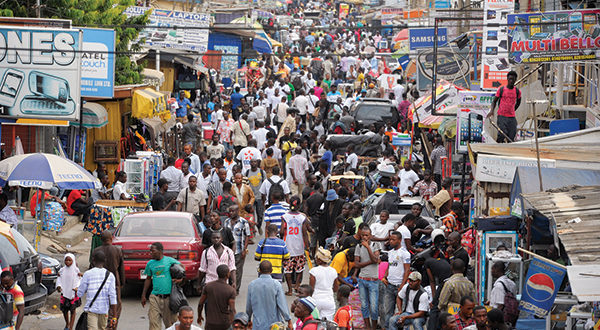
More than one-third of Ghana’s population are young people, according to new data from the Ghana Statistical Service (GSS), which has highlighted both the opportunities and challenges associated with the country’s youthful population.
The GSS, in a statement to mark World Population Day on Tuesday, July 28, said young people aged between 15 and 35 years currently account for 36.9 per cent of Ghana’s projected population, up from 34.6 per cent in 2000.
The Service said Ghana’s population has grown significantly over the past two decades, increasing from 18.9 million in 2000 to 30.8 million recorded in the 2021 Population and Housing Census, and an estimated 33.7 million in 2025.
According to the GSS, the growing youth population presents Ghana with an opportunity to achieve a demographic dividend through strategic investments in education, skills development and healthcare.
“This age structure presents Ghana with an opportunity to realise the demographic dividend through investments in education, skills development and health,” the statement said.
However, the Service warned that youth unemployment remains a major concern that could limit the country’s ability to fully benefit from its youthful population.
Data from the Quarterly Labour Force Survey (QLFS) for the first three quarters of 2025 showed that national unemployment averaged 12.8 per cent, while youth unemployment among persons aged 15 to 35 averaged 21.9 per cent — nearly twice the national rate.
The GSS noted that regional disparities in youth unemployment were also significant, with Greater Accra recording an average rate of 31.9 per cent, followed by the Central Region with 27.4 per cent and Ashanti Region with 27.2 per cent.
Beyond unemployment, the Service said nearly two million young people aged 15 to 35 were classified as Not in Education, Employment or Training (NEET) as of the third quarter of 2025.
The figure represents about 19.5 per cent of Ghana’s youth population and indicates that a significant number of young people are neither gaining skills through education nor participating in productive employment.
The GSS also highlighted the impact of early pregnancy on the educational and economic prospects of young women, citing findings from the 2022 Ghana Demographic and Health Survey.
According to the survey, 15 per cent of girls aged 15 to 19 had ever been pregnant, with 11 per cent having given birth.
“Early pregnancy can interrupt education, limit opportunities for skills development, and reduce long-term economic participation, particularly among young women,” the GSS stated.
The Service stressed that closing the gap between Ghana’s youthful population and labour market opportunities would require sustained investment in technical and vocational education, stronger school-to-work transition pathways, entrepreneurship development and expansion of productive sectors capable of creating decent jobs.
It added that young people, when equipped with the right skills and provided with opportunities, could become active contributors to inclusive economic growth.
“When young people are equipped with the right skills and provided with opportunities to apply them, they become active partners in driving inclusive growth rather than passive beneficiaries of development,” the statement noted.
The GSS said Ghana’s future economic prospects would depend largely on decisions taken today to keep young people healthy, equip them with relevant skills and empower them to contribute meaningfully to national development.
“As Ghana joins the global community in commemorating World Population Day, the evidence is clear: whether today’s young people become the country’s greatest economic asset or its most pressing development challenge will depend on the investments made today,” the Service said.
World Population Day was observed this year under the theme: “Investing in Ghana’s Future through Healthy, Skilled and Empowered Young People.”
Latest Stories
-
Venezuela frees 39 political prisoners after post-Maduro talks
13 minutes -
EU unlocks humanitarian aid for crises worldwide
16 minutes -
Tenth woman’s body found as South Africa police probe killings
25 minutes -
Black woman found hanging from tree was dead before body was ‘staged’, police say
29 minutes -
Final day: 3rd Republic Bank-JoyNews Habitat Fair clinic underway at Junction Mall, Nungua
31 minutes -
Nor’easter brings flooding as New York and New Jersey declare emergency
42 minutes -
Africa’s richest man helps fund $660m fuel pipeline between Ethiopia and Djibouti
1 hour -
Security lapses at Utah campus where Charlie Kirk was killed, review says
1 hour -
White House bars CNN from travelling with Trump on Air Force One
1 hour -
Pope praises young people’s ‘energy and commitment’ at huge open-air Mass in Paris
2 hours -
Nyankamam residents benefit from free medical screening, healthcare outreach
2 hours -
Ghana, Boeing explore setting up regional aircraft maintenance hub
2 hours -
Bangkok roads submerged as flood disaster declared
2 hours -
Four killed in helicopter crash near Montreal
2 hours -
Ghana could have national airline back in skies within 18 months – Boeing to Mahama
2 hours