

Audio By Carbonatix
The Parliamentary Caucus on Population and Development has called for urgent and sustained investment in Ghana’s youth.
It has also warned that the country risks missing a “once-in-a-generation opportunity” to harness its demographic dividend without bold action.
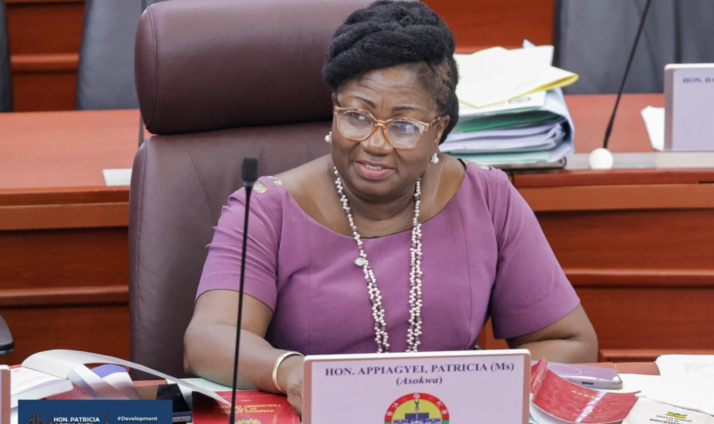
Delivering a statement on the Floor of Parliament to commemorate World Population Day 2026, Madam Patricia Appiagyei, the Chairperson of the Caucus, said Ghana stood at a defining moment in its demographic transition.
Citing the 2021 Population and Housing Census and current projections, Madam Appiagyei noted that Ghana’s population had grown to about 34.4 million.
“Mr. Speaker, nearly 12 million Ghanaians, about one-third, are young people between ages 15 and 35.
“This youthful population presents Ghana with a historic opportunity to accelerate economic growth and national development through the demographic dividend,” she said. “However, this opportunity can be realised only through sustained investments in human capital,” she added.
Madam Appiagyei, also the Deputy Minority Leader and the New Patriotic Party (NPP) Member of Parliament (MP) for Asokwa, highlighted several challenges threatening youth potential.
She noted unemployment, where she explained that 2025 national labor statistics showed one in four young people aged 15-35 were not in Education, Employment, or Training (NEET), with young women disproportionately affected.
A skills gap, according to the MP, was another challenge, noting that many employers report shortages of appropriately skilled workers despite high youth unemployment.
“Adolescent Pregnancy. The 2022 Ghana Demographic and Health Survey found 15.2 per cent of adolescent girls aged 15-19 have ever been pregnant,” she stated.
Other barriers were mental health concerns, digital inequalities, limited access to financing for young entrepreneurs, and barriers to quality reproductive health services.
“Mr. Speaker, these challenges are not only social concerns but also development challenges that affect productivity, economic growth, and national competitiveness,” Madam Appiagyei stated.
She, therefore, endorsed calls by the National Population Council and other stakeholders for increased investment in quality and inclusive education; technical, vocational, and digital skills development; youth employment and entrepreneurship; and swift clearance of family planning commodities from the port.
Others were strengthening primary healthcare, domestic health financing amid dwindling donor funds, budget allocation for adolescent reproductive health programming, mental health and social protection programmes; innovation, research, and technology, and strong population and data systems for evidence-based policymaking.
The Chairperson emphasised that Parliament’s role in legislation, budget approval, and oversight was “vital to inspire a shared sense of responsibility for youth development.”
She also urged development partners, the private sector, and civil society to strengthen collaboration to empower Ghana’s youth.
“Let us therefore commit to building a Ghana where every young person is healthy, well-educated, skilled, productive, and empowered to contribute meaningfully to national development,” she said.
According to Madam Apppiagyei, Ghana’s Revised National Population Policy, Sexual and Reproductive Health Policy for young people, the United Nations (UN) Sustainable Development Goals, and the African Union (AU) Agenda 2063 all affirm that investing in young people is the surest pathway to inclusive national development.
The world marked World Population Day on July 11, 2026, under the global theme, “Realising the Hopes and Aspirations of Young People: Today and for the Future,” while Ghana’s national theme is “Investing in Ghana’s Future through Healthy, Skilled, and Empowered Young People.”
Some MPs who commented on the statement called for investment in Ghana’s youth as Ghana’s population reached 34.4 million.
Mr Patrick Boamah, the NPP MP for Okaikwei Central, called for increased and targeted investment in Ghana’s youth for sustained development.
On his part, Mr Frank Afriyie, the National Democratic Congress (NDC) MP for Afadzato South, welcomed plans to improve maternal and child health delivery in deprived communities.
Latest Stories
-
Ghana begins review of 1999 National Land Policy, targets new framework by 2027
11 minutes -
Tiptoe Lane’s tech takeover: The story behind Ghana’s booming informal phone market
2 hours -
Abanga vows to use social media to counter NDC messaging ahead of 2028 elections
2 hours -
Okai Mintah seeks Sabah Zita Benson’s support for NDC National Youth Organiser bid
2 hours -
Okai Mintah vows to strengthen NDC campaign machinery ahead of 2028
2 hours -
Mother of four and Jasikan teacher among new Telecel M’ahitti Promo winners
2 hours -
International Youth Shakers Conclave 2026 set to bring global young leaders to London
2 hours -
Gov’t is committed to addressing teachers’ conditions of service, deprived-area allowance – Education Minister
2 hours -
GoldBod’s structure encouraging galamsey – Afenyo-Markin
2 hours -
Tullow starts selling Jubilee, TEN crude to Ghanaian refineries
2 hours -
Local Government Service authorises rationalisation, redistribution of staff
2 hours -
PURC assures consumers of working to ensure quality services in Northern Region
2 hours -
Ghana develops US$4.28bn water financing framework
2 hours -
Christian Council calls for protection of mission schools’ religious identity
2 hours -
Mahama holds discussions with India’s External Affairs Minister
3 hours