

Audio By Carbonatix
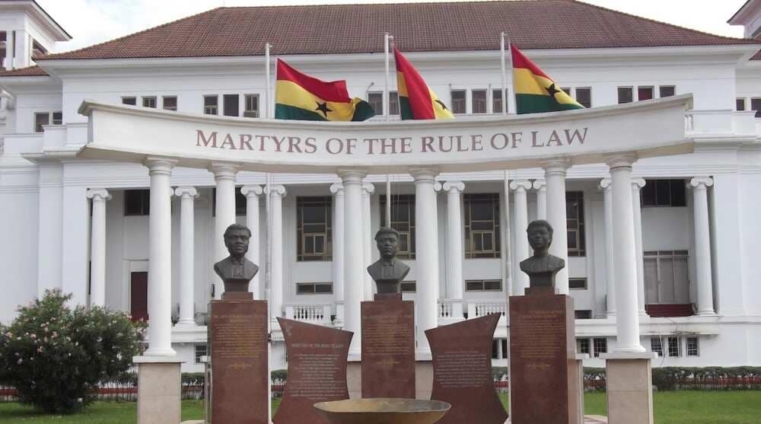
The Supreme Court has provided a detailed explanation for its decision to uphold the suit brought by Majority Leader, Alexander Afenyo-Markin.
According to the apex court, a Member of Parliament (MP) is deemed to have vacated their seat if they change their political affiliation and continue to serve in Parliament under a new party identity.
This ruling supports the suit filed by the Majority Leader, clarifying that the relevant constitutional provisions apply only within the current term of Parliament.
The court specified that Articles 97(1)(g) and (h) of the Constitution do not extend to future parliamentary terms, such as when an MP runs for election under a different political party in subsequent elections.
The Supreme Court emphasised that an MP’s seat must be vacated if they switch parties while holding office within the same parliamentary term.
In other words, changing political affiliation during a parliamentary term while remaining in Parliament will lead to the loss of their seat.
The judgment also addressed the situation for independent MPs, making it clear that if an independent MP joins a political party while serving their current term, they must vacate their seat.
The ruling elaborated that the constitutional provisions should be viewed in the context of the existing term of Parliament.
They do not intend to regulate future candidacies or the electoral ambitions of MPs who may wish to contest under different political parties in the future.
“It follows from the above, therefore, that the only plausible conclusion which must necessarily flow from a holistic and contextual reading of Article 97(1)(g) and (h) is that an MP’s seat shall be vacated upon departure from the cohort of his elected party in Parliament to join another party in Parliament while seeking to remain in that Parliament as a member of the new party,” the court stated.
Additionally, the ruling clarified that the constitutional articles in question are not concerned with future elections.
They strictly pertain to the current period in which an MP holds their seat and make no provisions for future electoral scenarios.
In conclusion, the Supreme Court’s decision firmly defines the circumstances under which an MP must vacate their seat, focusing exclusively on changes in political affiliation within the same parliamentary term.
Latest Stories
-
Amin Adam calls for review of fuel taxes as diesel prices remain above GH¢18
9 minutes -
World Vision Ghana, Ahafo districts sign MoU for universal WASH coverage
39 minutes -
When the gold engine stutters: What Ghana’s Cedi and reserves are telling us about the new economic architecture
56 minutes -
Two reportedly die after being trapped in mining pit at Juaboso
1 hour -
Petrosol cleans up Wa Municipal Hospital, to donate medical equipment
1 hour -
KiDi brings the hits to London in sold-out UK headline concert
2 hours -
The last goodbye of Ghanaian shot dead in the US
2 hours -
MCC opens door to Ghana again as MiDA revives development partnership
2 hours -
CSIR moves to turn scientific research into jobs, national growth
2 hours -
More patrons troop in as 3rd Republic Bank-JoyNews Habitat Fair clinic enters final day stretch
2 hours -
‘If NPP was ‘insensitive’ over fuel prices, NDC must accept same description now’ — Amin Adam
2 hours -
German, Russian foreign ministers hold rare talks amid rising tensions
2 hours -
Gov’t to develop policy for Ghanaian Sign Language in education
3 hours -
Accra Academy defend ODADEƐ ’90 5-a-side title
3 hours -
Ghana risks EU gas market access over methane emissions – Expert warns
3 hours