

Audio By Carbonatix
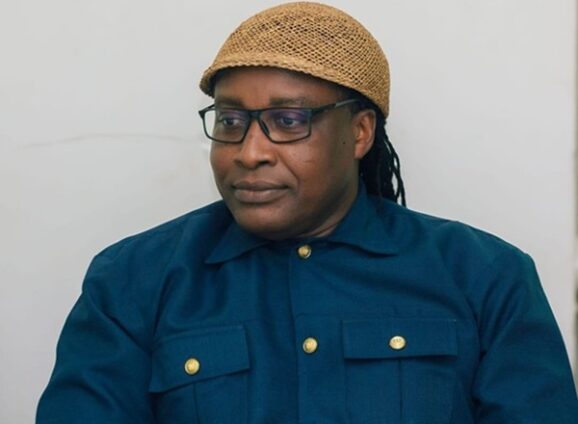
Distinguished archaeologist and Dean of the School of Arts at the University of Ghana, Prof. Wazi Apoh, has issued a rebuttal to a viral social media narrative that falsely links his academic work to a claim that the biblical Mother Mary lived in the Volta Region.
The controversy stems from a video featuring a tour guide, identified as a watchman at the Volta Regional Museum, who asserted that "Mother Mary spent 40 years in Agbenoxoe", a town in Kpando.
The video inaccurately cited Prof. Apoh’s research poster, currently on display at the museum, as evidence for this narrative.
Setting the Record Straight
In a press statement issued on Monday, 27 April 2026, Prof. Apoh described the claims as "outrageous and false," stating emphatically that his extensive research in the Agbenoxoe community, which spans from 1996 to the present, has never uncovered any such story.
“I have neither documented, written, nor published any such claim anywhere that would justify linking my name to this story,” Prof. Apoh stated, noting that the misinformation is a defamatory misrepresentation of his professional legacy.
Formal Petitions to Authorities
The Professor has taken swift administrative action to protect his reputation, officially notifying Mr. Essel Blankson, the Acting Executive Director of the Volta Regional Museum, and Dzifa Gomashie, the Minister of Tourism, Culture and Creative Arts.
Prof. Apoh has formally requested that both the Ministry and the Museum management issue an immediate press release to clear his name and correct the inaccurate reportage.
He has further demanded that all social media posts bearing this false narrative and linking him to the claim must cease circulation immediately.
A Legacy of Academic Integrity
Prof. Apoh is a prominent figure in the global archaeological community, known for his work on the archaeology of colonisation and his advocacy for the repatriation of looted African artefacts.
His research, including the influential book "Revelations of Domination and Resilience", focuses on the tangible past of the Akpini and Akan peoples during the German and British eras.
The Professor’s demand for a retraction underscores the growing challenge of "fake news" and the misinterpretation of academic research by social media influencers and unauthorised guides.
Latest Stories
-
Power restoration fault suspected in Kumasi Central Market fire
4 hours -
The 7-foot giant of Ngleshie Amanfro: Seven-foot Ghanaian Ephraim Saawa dreams of joining the national basketball team
5 hours -
Government promises support for Kumasi Central Market fire victims
5 hours -
Vibes The Movie: Big Ghun’s Ghanaian film earns five nominations at 2026 REFFA
5 hours -
MamaCare CEO warns unresolved conflicts among health workers could undermine maternal and neonatal care
6 hours -
Health professionals urged to translate medical knowledge into practice to save mothers
6 hours -
Conflicts among care providers linked to maternal, neonatal deaths – Expert
7 hours -
GIS marks 10th TIME conference, champions improved teaching practices
7 hours -
BRICS Or Balance? What Ghana’s bid really means
8 hours -
GPRTU wants full TRAFFITECH-GH implementation to start in 2027
8 hours -
How 10-mile walks for basic education birthed a 50-year legal career for Justice Korbieh
8 hours -
Mahama announces plans to import electric wheelchairs for PWDs
8 hours -
KGL U17 Colts 2026: Western beat Prempeh Elite Academy to set up final final with Greater Accra Region
9 hours -
Late Solanke strike salvages 10-man Spurs draw at Man United
9 hours -
Gender Ministry to monitor welfare of Nana Akua Addo’s children amid domestic violence case
9 hours