

Audio By Carbonatix
Introduction
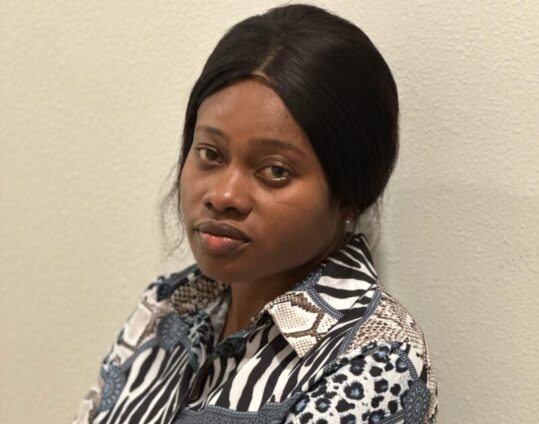
Ghana is honoured to welcome Dr Prisca Ifeoma, a renowned Nigerian public health communication Specialist with a long-standing commitment to advancing healthcare through innovative campaign strategies and community engagement.
With an impressive academic portfolio and years of experience, Dr Ifeoma has become a leading figure in public health interventions. Today, we are thrilled to have her share more about her journey and her work with VisionFund Ghana, which has impacted communities across Northern Ghana.
Interviewer (I): Dr Prisca, it's such a privilege to have you with us today. Could you start by telling us a little about yourself and what drives your passion for public health?
Dr. Prisca Ifeoma (DPI): Thank you for having me! I’m Dr. Prisca Ifeoma, a public health professional with a focus on multilingual Health communication strategies. My passion lies in addressing healthcare inequalities, particularly in underrepresented and rural areas. I’ve been privileged to lead research in critical areas like viral hepatitis B, Cancer and Health Equity and I also run a health communication consulting firm, Nexgen Global Health Solutions. What drives me is the desire to bridge gaps in healthcare, whether through advanced research or practical fieldwork, like the Hepatitis B education program we led in Northern Ghana.
I: That’s fascinating! Your research is incredibly unique, especially with the integration of fractional calculus in disease modelling. Can you explain how this research connects with the fieldwork you recently led in Northern Ghana?
DPI: Absolutely. The research I led introduces a novel approach to modelling how diseases interact, especially when co-infections like COVID-19 and viral hepatitis B are present. Through this, we gained insights into how vaccination strategies can mitigate these dynamics over time. The fieldwork in Northern Ghana was a direct application of these findings, as we focused on community education for Hepatitis B prevention and vaccination. In collaboration with VisionFund Ghana, we conducted a training program for 170 public health professionals, equipping them to educate local communities in their dialects on the importance of vaccinations. This hands-on approach is crucial in breaking down barriers to healthcare access, especially in areas where language can be a major hurdle.
I: The use of local dialects seems to have been a key component of the program. How did this enhance the effectiveness of the training?
DPI: Language is such a powerful tool, especially in healthcare education. One of the biggest challenges we face in rural health interventions is ensuring that the message resonates with the community. By training public health professionals to communicate in local dialects, we ensured that the people not only understood the health risks of Hepatitis B but also felt more connected to the message. This approach increases community engagement and trust, leading to greater participation in vaccination efforts, which is critical in controlling disease spread.
I: That’s incredible. What were some of the challenges you faced during the program, and how did you overcome them?
DPI: One of the main challenges was the logistical coordination, given the remote nature of some of the communities. Organizing transportation, and materials, and ensuring the availability of professionals from different districts required meticulous planning. We also faced the usual resistance in some areas where traditional beliefs sometimes clash with modern medicine. However, through careful community engagement and involving local leaders, we were able to mitigate some of these challenges. The use of local dialects was a key factor in overcoming scepticism, as it made the message more relatable and less imposing.
I: It sounds like this program was a huge success. What would you say were the most rewarding aspects of leading this initiative?
DPI: For me, the most rewarding aspect was seeing the immediate impact on both the health professionals and the community members. The professionals felt empowered with the knowledge and tools to engage their communities effectively, and the community members themselves showed a keen interest in learning more about Hepatitis B and getting vaccinated. It was heartening to see how education, when delivered in a culturally sensitive way, can truly change lives. This was also the first large-scale program in the region to address health education through local languages, and setting that precedent was a great achievement.
I: With such a successful program behind you, what are the next steps for your work in Ghana and beyond?
DPI: Going forward, we plan to replicate this model for other health initiatives. Nexgen Global Health Solutions is looking at expanding into more regions, not only in Ghana but across West Africa, to address other pressing public health challenges like malaria and maternal health. We also hope to continue our collaboration with organizations like VisionFund Ghana to ensure that we reach more rural and underserved populations with the education and resources they need.
I: Dr. Prisca, thank you so much for sharing your journey and the important work you're doing. We’re excited to see how your initiatives continue to grow and impact communities in Ghana and beyond.
DPI: Thank you for the opportunity. It’s been a pleasure discussing these vital programmes, and I’m looking forward to what we can achieve together in the future!
Latest Stories
-
Ecobank Junior Saver Big Pitch to reward 10 winners with GH¢2,000 each
1 minute -
AMA demolishes unauthorised pigsty obstructing Agbogbloshie waste evacuation exercise
2 minutes -
I was filled with disbelief – Akosua Achia Sarpong Esq. shares her first reaction
3 minutes -
Snake Village: A look at Volta Region’s hidden snake village and its tourism potential (Video)
10 minutes -
Election Watch Ghana calls for constitutional reforms to strengthen Electoral Commission independence
12 minutes -
NACOC, Postal and Courier Services Regulatory Commission intensify efforts to curb drug trafficking
14 minutes -
Ga Mantse chairs committee to drive Accra Green and Clean City Initiative
15 minutes -
Drivers threaten to remove traders from lorry stations over TrafficTech concerns
18 minutes -
AI could create 10 to 20 times more jobs despite current recruitment slowdown – Hubtel CEO
21 minutes -
Sexual abuse in schools persists because perpetrators are not held accountable – Dr Nyarkoa
28 minutes -
Chief Justice has designated Achimota Court to handle petroleum diversion cases – NPA CEO
31 minutes -
Philip Nai and friends gear up for bigger seventh Christmas outreach
33 minutes -
GSA strengthens electricity meter testing to protect consumers and improve energy reliability
33 minutes -
‘Dismissed or suspended? Ghanaians deserve clarity’ – NPP demands clarity on Ampofo Ankrah’s fate
37 minutes -
Teach consent and sexual boundaries from pre-school to prevent abuse – Gender advocate
43 minutes