

Audio By Carbonatix
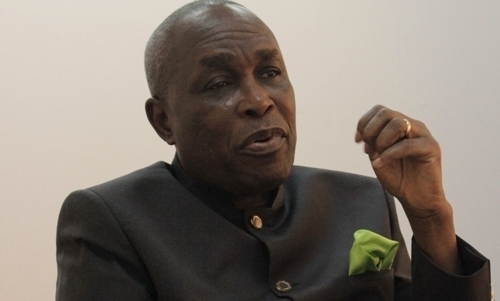
Labour expert Austin Gamey says the ongoing strike by the Ghana Registered Nurses and Midwives Association (GRNMA) should not have happened without further dialogue, stressing that negotiations do not end once an agreement is signed.
The striking nurses and midwives insist that they will not renegotiate already agreed-upon conditions of service from 2024, despite the government's concern that if implemented this year, the conditions of service will throw its budget out of gear.
Speaking on Joy FM’s Super Morning Show on Wednesday, June 11, Gamey clarified common misconceptions surrounding labour negotiations, particularly in relation to the strike action by the nurses and midwives.
Reacting to the widespread belief that once a collective agreement is signed it must be implemented without any further negotiation, Mr Gamey stated, “I’ve heard many people saying that agreements have been reached, it is not to be negotiated again before implementation, it’s not correct.”
He explained that in industrial relations, implementation is not a mechanical step following agreement but a process that can itself be negotiated, especially if one party raises genuine concerns.
“In industrial relations, when you are negotiating, when you have concluded the negotiation, when you are to implement the negotiation, it is all subject to review,” he said. “But the parties that sat to negotiate the conditions of service, if one party has a genuine concern, it has to be raised. But you can’t raise it on your own terms; that is, you cannot do it unilaterally.”
Mr Gamey cited Section 97 of the Labour Act, which requires both parties to share relevant information and discuss any issues before implementation. “When you finish that and there is no conclusion between the two of you, what it means is that you have not been able to reach agreement on the implementation process,” he said.
He emphasised that implementation is not a one-sided affair and must involve joint discussions. “Agreement concluded is for implementation; implementation stage is also an action to be taken,” he added. “If you have a problem, you discuss it. If one party does not agree, you go to the National Labour Commission for assistance or you go to a mediator.”
While arbitration remains an option, Mr Gamey warned it can be adversarial. “Arbitration will produce a winner and a loser, and one person will not be happy. Wisely, you get somebody with the background of that experience to assist the two parties to resolve the differences.”
On the issue of what constitutes negotiation, Mr Gamey cautioned against misinterpretation of the term. “If I am unable as an employer to implement according to what you have done, that discussion is a negotiation,” he explained. “So people should not be favorated with the word negotiation as if it is strange it is not strange.”
He criticized the use of threats and symbolic protests like red bands during labour discussions, noting such actions are contrary to labour law.
“The law forbids whether in Ghana, Japan, America for anybody to be on strike at the same time having a discussion,” Mr Gamey said. “It is not a war zone, it is a labour relations matter, so you don’t even have to put on red band according to the law.”
He added that unions cannot demand dialogue on their own terms while taking an aggressive stance. “You cannot be threatening somebody, hold somebody, and at the back you say, ‘Come and let’s talk on my terms.’ It is like you are dictating to the person,” he said. “It implicates a unilateral approach.
He called for both sides to abandon positional tactics and return to the negotiating table with civility. “Both parties have to sit down and have a civilised conversation,” he said. “It is positional negotiation; it is not part of our labour law at all. It is a lack of knowledge that is creating the problem.”
He urged the striking nurses and midwives to resume work and advised the government also to reconsider its stance. “I will plead with both parties, the unions within the nursing fraternity, they know that they have to go to work,” he said. “And let the employer also get away from the posture everybody else is talking about. Let them go to the people and sit down and have a conversation about any plan that is worse at implementing.”
“You can’t force the employer to pay you when they cannot afford to pay. You cannot do that,” he added.
Latest Stories
-
GRA blames system failure for delay in issuing receipt over passenger’s customs duty
6 minutes -
Livestream: Newsfile discusses World Cup visa scandal, beach demolitions, education strikes, BRICS bid
10 minutes -
NC-PTAs welcomes end of teachers’ strike, urges parents to prepare children for Monday
20 minutes -
Government procures over 2,000 transformers as Ghana’s electricity access hits 89.13% – Energy Minister
47 minutes -
UTAG-UG threatens strike on October 19 over unpaid allowance
55 minutes -
Let The Constitution direct Chieftaincy to deliver “All Development Is Local”
2 hours -
John Jinapor outlines renewable energy, nuclear power priorities for 2027
3 hours -
Ghana explores centre of excellence for hearing, communication and cochlear implant care
3 hours -
Schizophrenia-related disorders lead mental health cases recorded in Ghana
4 hours -
Dutch authorities enlist Ghana in hunt for fugitive drug lord Bolle Jos
4 hours -
Ghana housing finance conference adopts communiqué to improve affordable housing access
9 hours -
Special Initiatives Minister urges Wa Technical Institute to enrol more girls as EU-backed solar training lab opens
9 hours -
In the matter of my first year at the Bar
9 hours -
ActionAid Ghana calls for an end to child marriage, greater investment in girls’ rights
9 hours -
Newsfile to tackle World Cup visa scandal, beach demolitions, education strikes, BRICS bid
10 hours