

Audio By Carbonatix
An upcoming study exploring new oral antivenoms could significantly change how snakebites are treated in rural Ghana, particularly in high-burden communities in the Upper West Region.
Snakebite envenoming remains a life-threatening but neglected public health problem, with antivenoms currently the only specific treatment available. Conventional intravenous (IV) antivenoms are difficult to deploy in remote settings, as they require cold-chain storage, trained staff, hospital-based administration, and carry some risk of severe allergic reactions. Stockouts and delayed access continue to cost lives and leave many survivors with permanent disabilities.
The study, which is scheduled to take place in Ghana and Brazil, will evaluate the potential of oral antivenoms, small-molecule drugs designed to target key venom components that are conserved across multiple snake species.
“These are not antibodies like traditional antivenoms,” explained Prof. Michael Abouyannis, chief investigator on the study, from the Liverpool School of Tropical Medicine (LSTM). “They are small-molecule drugs that target venom toxins shared by many different snakes. This means they have the potential to work broadly, reduce allergic reactions, and be given orally without the need for refrigeration.”
Because they can be taken by mouth, oral antivenoms could be used much earlier, closer to where snakebites occur, and before patients are transported long distances to referral hospitals. Even if they do not fully replace IV antivenoms, researchers believe they could reduce the speed with which the snakes’ venom damages the victim’s body and work alongside standard treatment to improve survival and reduce complications.
“For communities like those we visited in the Upper West, distance and delay are major drivers of poor outcomes,” said Prof. John Amuasi, the Ghana study’s principal investigator and lead for the Global Health and Infectious Diseases Research Group (GHID) at the Kumasi Centre for Collaborative Research in Tropical Medicine (KCCR) at the Kwame Nkrumah University of Science and Technology (KNUST). “Many facilities are far from where IV antivenom can be safely administered, and stockouts are common. If oral antivenoms prove effective, treatment could start earlier, closer to the time and place of the bite, and at lower cost to both patients and the health system.”
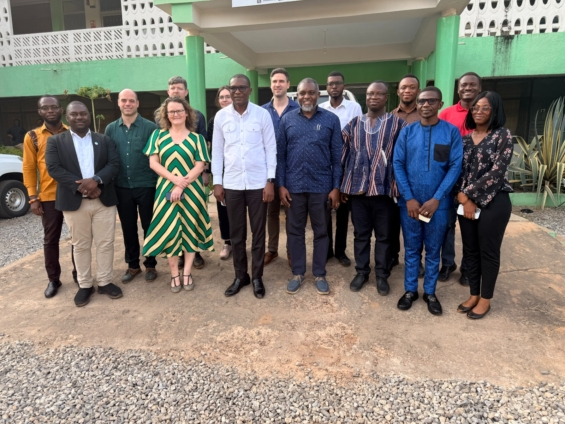
As part of trial preparation, the research team is conducting site feasibility assessments across hospitals and health centres in Wa and surrounding areas. These visits evaluate whether facilities can safely recruit patients, their distance from referral hospitals, and what support may be needed to strengthen readiness.
“Clinical research is always collaborative,” noted Dr. Andrew Bruce, epidemiologist and study doctor. “We are engaging hospital leadership, health centre staff, and the Ghana Health Service to understand what exists on the ground and how we can work together to prepare sites. This process itself strengthens local systems and builds experience in conducting high-quality clinical trials.”
If successful, oral antivenoms could also change current restrictions that prevent smaller facilities, especially those without doctors, from administering antivenom because of the risk of severe reactions.
“Every minute of delay increases the risk of permanent damage,” Dr. Bruce added. “An oral option could allow safer early treatment in peripheral facilities, potentially improving survival and reducing long-term disability.”
Beyond patient care, the study will be among the first clinical trials conducted in the Upper West Region, helping to build local research capacity and laying the groundwork for future studies and access to new treatments.
“This is not about one medicine,” Prof. Amuasi emphasized. “We are looking at bringing innovation to communities that carry a high burden of snakebite but have limited access to life-saving care.”
Latest Stories
-
Inflation to average 11.3% in 2027 – Fitch Solutions
23 minutes -
I didn’t campaign for NDC to come and do this nonsense – Kpebu on EOCO
24 minutes -
Fitch Solutions maintains its policy rate forecast of 14% by December 2026
31 minutes -
Diaspora Nasara Caucus congratulates Mohammed Ali Suraj, new NPP executives
2 hours -
Dr Antwi-Boasiako’s cybersecurity book showcased at UN crime prevention congress
2 hours -
We will empower the grassroots and protect every vote – NPP’s 1st Vice Chair Kojo Bamba
2 hours -
I do not see myself as better than anyone – NPP’s 1st Vice Chair Kojo Bamba
3 hours -
Police blur the line between invitations and arrests – Reindorf Twumasi Ankrah
3 hours -
Turning invitations into arrests is making citizens reluctant to assist police – Twumasi Ankrah
4 hours -
The Traffitech-GH SMS spot-fine system: The good, the sad, and the funny – Bright Simons writes
4 hours -
Hawa Koomson pledges experienced and mature leadership of NPP women’s wing
5 hours -
Young woman found dead at Kasoa Peace Town
6 hours -
Playback: The Law examined lawful arrest in Ghana
6 hours -
Mahama urges African governments to treat healthcare as an investment, not budget cost
7 hours -
Bawumia congratulates John Boadu and new NPP executives, pledges support ahead of 2028
7 hours