


Audio By Carbonatix
Nigeria's government rejected on Wednesday its designation by the United States as a "country of particular concern" over alleged religious freedom violations, saying the move was based on misinformation and faulty data.
President Donald Trump last week put Nigeria back on a list of countries that the U.S. says have violated religious freedom, and said on Saturday he had asked the Defence Department to prepare for possible "fast" military action if Nigeria does not crack down on the killing of Christians.
Washington's decision to designate Nigeria as a violator of religious freedoms has strained diplomatic ties between the two countries.
THREATS OF MILITARY ACTION UNWARRANTED, MINISTER SAYS
Defending Nigeria's record, Information Minister Mohammed Idris told a press briefing that Trump's threats of military action were unwarranted and misrepresented Nigeria's complex security challenges.
"...any narrative suggesting that the Nigerian State is failing to take action against religious attacks is based on misinformation or faulty data," Idris said.
Nigerian Chief of Defence Staff General Olufemi Oluyede said on Monday the country faced terrorism, not persecution of Christians, and the Nigerian presidency has said it would welcome U.S. help in fighting Islamist insurgents as long as the country's territorial integrity is respected.
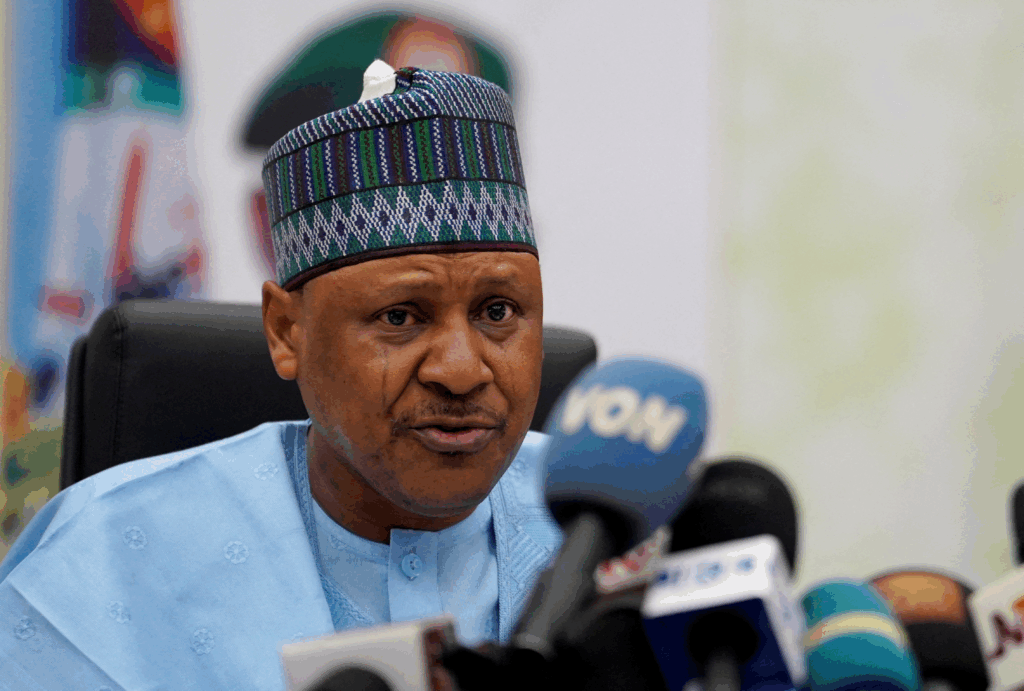
Idris said President Bola Tinubu's government had made significant progress in tackling terrorism since taking office in May 2023.
"The Government of Nigeria remains open and willing to work closely with the Government of the United States, other friendly nations and partners, to achieve our shared goal, the complete elimination of terrorism on Nigerian soil," Idris said.
More than 13,500 militants have been killed, 17,000 suspects arrested, and over 11,200 hostages — including women and children — rescued, he said.
Idris said terrorism affected both Christians and Muslims, and that the government is committed to ending extremist violence through military action, regional cooperation and dialogue with international partners.
Nigeria, home to more than 200 ethnic groups practicing Christianity, Islam and traditional faiths, has a history of coexistence but has also seen sporadic violence, often driven by ethnic tensions and competition over scarce resources.
Latest Stories
-
Association of Small-Scale Industries empowers trade executives in Bono East with a mentorship programme
5 minutes -
AMA evacuates refuse along Graphic Road, warns against indiscriminate dumping
10 minutes -
STC interdicts driver over Pokuase overtaking incident
14 minutes -
Ekumfi: How $6m EXIM participation built a $53m industrial asset — now poised for a 24-Hour Economy breakthrough
15 minutes -
4 arrested, 142 parcels of suspected Indian hemp seized as officers reject GH¢50k bribe
15 minutes -
No MMDCE can say they don’t see galamsey – Local Government Ministry
17 minutes -
Ghana, Germany explore stronger partnership in technical and vocational education
23 minutes -
AMA urges motorists and road users to comply with traffic regulations
24 minutes -
Sam George urges One Million Coders participants to complete all three levels
24 minutes -
Communications Minister announces 2,800-site telecom expansion during Volta visit
26 minutes -
Impunity fuelling sexual abuse in Ghana – Angela Dwamena-Aboagye
27 minutes -
NUGS condemns alleged sexual abuse by Obuasi SHTS headmaster, calls for prosecution
30 minutes -
President Mahama urges investors to employ trained local residents as 1,238-acre industrial park takes off
34 minutes -
Media doing its job, but politicians fuelling insults on social media – NMAG president
36 minutes -
Child protection must be the state’s responsibility, not NGOs’ burden – ARK Foundation Boss
42 minutes