

Audio By Carbonatix
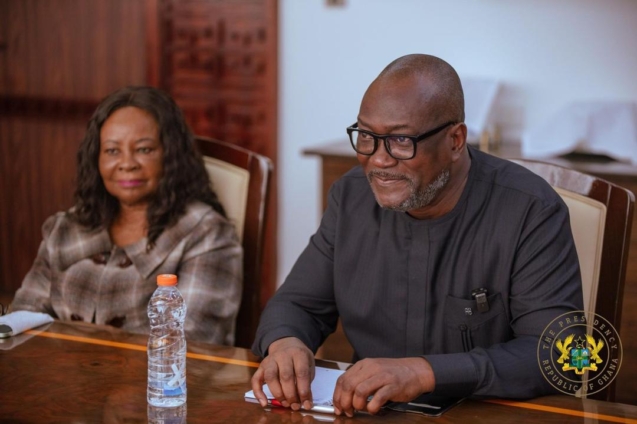
Chairman of the Constitution Review Committee, Prof Henry Kwasi Prempeh, says a five-year presidential term will make it far more difficult for an incumbent to return for a second term without clear performance.
Speaking on Joy News on December 25, he said the committee’s proposal is meant to be tough on leaders and fair to voters.
“So you come in, you are supposed to appoint everybody,” he said, explaining how much time new presidents lose at the start of their term.
“The new Council of State has to come up before you appoint, consult them and appoint. So it takes forever.”
He said the committee examined these delays and “sorted out some of those things right to free up time so that this management issue doesn’t happen.”
Beyond administrative delays, Prof Prempeh said the committee studied global practice and found that Ghana is now an outlier.
“We gathered evidence that actually, Ghana is among a dwindling number of countries that still do four years, especially new democracies and in Africa,” he said.
He noted that “most do five,” adding that “in our region, some do seven,” while Benin and Liberia operate longer terms.
He also pointed out that “Nigeria and Ghana… are always matching together lockstep.”
According to Prof Prempeh, the evidence showed that “the global norm now has shifted from four to five in presidential systems,” and that “in our own region, five is the norm.”
He said the committee concluded that since term limits are not fixed by science, “any number is arbitrary,” and Ghana should be guided by “comparative best practice.”
“So if the world is moving towards five, then maybe it makes sense five,” he said.
Prof Prempeh said the committee also looked at how voters think. He said incumbents often complain near the end of their first term.
“People tell us, ‘Oh, when their term is coming to an end, oh, give us another term. We didn’t have enough time,’” he said.
He explained that voters sometimes accept that argument under the four-year system.
“A Ghanaian voter might accept that four years is not enough and give you a second term to finish your work,” he said.
But he stressed that the argument collapses under a five-year term.
“If you have five years, it is going to be difficult to convince a voter that five years was not enough,” Prempeh said.
He said this is central to the committee’s thinking. “Five years is going to be a very difficult thing for the incumbent to come back and ask for more time if they haven’t performed well.”
According to him, the proposal shifts power back to voters.
“Our thinking is that actually five years is tough on the incumbent,” he said, adding that it “may very well lead to a result where fewer people get a second term.”
He was blunt about voter tolerance. “If you have not performed well in five years, Ghanaians are not really going to entertain the thought of letting you stay.”
H Kwasi Prempeh said the four-year system had created a predictable pattern. “The four, four was becoming like a tradition, like everybody gets eight,” he said.
He rejected the idea that a five-year term automatically means ten years in office.
“It’s not like you just multiply five by two and say, hey, 10 years, there is too much,” he said.
He stressed that under the proposal, “the 10 is going to be difficult to get,” and performance will decide who earns it.
Latest Stories
-
Court fines miner for breaking into gold buying shop
1 minute -
Tarkwa court jails labourer for three years over GH¢123,000 theft
57 minutes -
GAEC must retain nuclear scientists for Ghana’s nuclear ambitions – Minister
1 hour -
Man reportedly mistaken for game and shot by hunter dead in forest
2 hours -
19-year-old mason jailed 15 years for defiling seven-year-old pupil
2 hours -
Ghana’s banking sector assets rise 20.47% to GH¢500.2bn – BoG Governor
2 hours -
22 injured as Sprinter bus overturns at Sege after tyre burst
2 hours -
UN housing expert urges Ghana to strengthen Rent Control Department amid housing affordability concerns
2 hours -
Delta-BCI partnership reaches 166,000 people with breast cancer education
2 hours -
Power restoration fault suspected in Kumasi Central Market fire
7 hours -
The 7-foot giant of Ngleshie Amanfro: Seven-foot Ghanaian Ephraim Saawa dreams of joining the national basketball team
8 hours -
Government promises support for Kumasi Central Market fire victims
8 hours -
Vibes The Movie: Big Ghun’s Ghanaian film earns five nominations at 2026 REFFA
8 hours -
‘I’m a fulfilled man’—Justice Korbieh on missing out on Supreme Court despite two nominations
9 hours -
MamaCare CEO warns unresolved conflicts among health workers could undermine maternal and neonatal care
9 hours