

Audio By Carbonatix
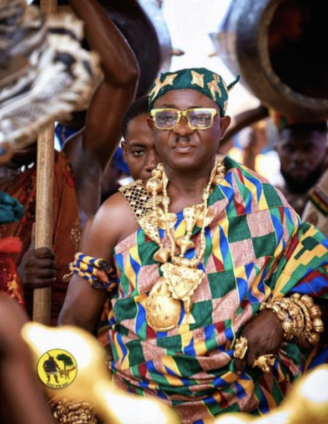
Odauman has formally severed ties with the Akyem Abuakwa Traditional Council, bringing to an end a relationship said to have lasted more than 300 years.
The decision was announced on April 12, 2026, by the Ofosu-Pema Royal Family at Odau Fie in Akyem Etwereso.
The family, which oversees the twin stools of Akyem Etwereso and Akyem Osenase and presides over Odauman—comprising dozens of towns and villages—declared that it would no longer recognise the authority of the Okyenhene or remain under the structures of the traditional council.
The fallout stems from a protracted disagreement involving the Odauhene, Odeneho Ofosu Kwabi Ayebiahwe, and the Okyenhene, following a series of decisions reportedly taken at the Ofori Panin Fie in Kyebi.
These include a ban on the Odauhene from entering the Okyenhene’s palace, the withdrawal of the title “Daasebre”, and moves to reassign towns under his jurisdiction to other authorities—actions the royal family described as unprecedented and contrary to long-standing custom.
At the heart of the dispute is the contested enstoolment of a regent for the Osenase stool.
The family insists the individual supported by the Okyenhene is not of royal lineage and therefore ineligible, further alleging that due process was breached after arbitration proceedings were adjourned but later concluded without notice.
They also cited an alleged attack on the Odauhene during a visit to Osenase as a key factor in worsening tensions.
Rejecting claims of subordination, the family maintained that Odauman historically existed as an independent entity and entered into relations with Akyem Abuakwa based on cooperation rather than conquest. It argued that its lands and settlements cannot be ceded or reassigned by any other traditional authority.
In its final declaration, the Ofosu-Pema Royal Family announced a complete withdrawal from the Akyem Abuakwa Traditional Council, stating that Odauman would henceforth operate independently in all traditional matters.
It added that the Odauhene would now bear the title “Odeneho” without allegiance to any higher authority, and that steps would be taken to secure recognition for a separate traditional council.
The development effectively establishes what the family describes as a fourth Akyem state—alongside Akyem Abuakwa, Akyem Kotoku and Akyem Bosome—marking a significant rupture in the traditional governance structure of the area.
Latest Stories
-
Police blur the line between invitations and arrests – Reindorf Twumasi Ankrah
28 minutes -
Turning invitations into arrests is making citizens reluctant to assist police – Twumasi Ankrah
1 hour -
The Traffitech-GH SMS spot-fine system: The good, the sad, and the funny – Bright Simons writes
1 hour -
Hawa Koomson pledges experienced and mature leadership of NPP women’s wing
2 hours -
Young woman found dead at Kasoa Peace Town
3 hours -
Playback: The Law examined lawful arrest in Ghana
3 hours -
Mahama urges African governments to treat healthcare as an investment, not budget cost
4 hours -
Bawumia congratulates John Boadu and new NPP executives, pledges support ahead of 2028
4 hours -
Aksa Energy delegation pays courtesy call on GRA Commissioner-General
4 hours -
‘No talent should be left out’ – Bawumia pledges inclusive NPP campaign for 2028
4 hours -
Prof. Mike Oquaye recounts how he blocked the Special Prosecutor’s attempt to arrest Bawku Central MP
4 hours -
Make health sovereignty a priority for Africa – Mahama
4 hours -
Dorimon Naa, Wa West DCE lead massive clean-up exercise; threaten sanctions against recalcitrant residents
5 hours -
Photos from Adom FM Y2K Jam
5 hours -
Praye Tiatia steals the show at Adom FM Y2K Jam [Watch]
5 hours