

Audio By Carbonatix
Only 4% of US legislators bring scientific experience and expertise to their jobs as elected officials and policymakers, recent research from Rutgers University Brunswick's Eagleton Science and Politics Program has revealed.
According to a copy of the new research sighted by JoyNews’ Mahmud Mohammed-Nurudeen, the number of health care professionals, scientists, and engineers in state legislatures has increased since 2021 when Eagleton launched the first publicly accessible national database of elected state legislators with scientific, engineering, and health care training. At the time, only 3% of state legislators in the United States were in those occupations.
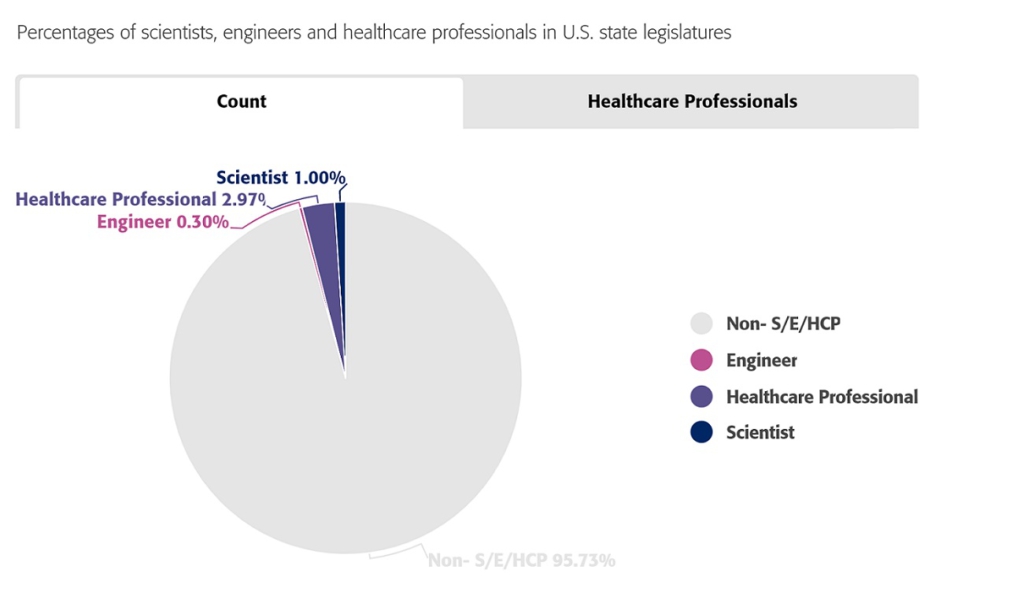
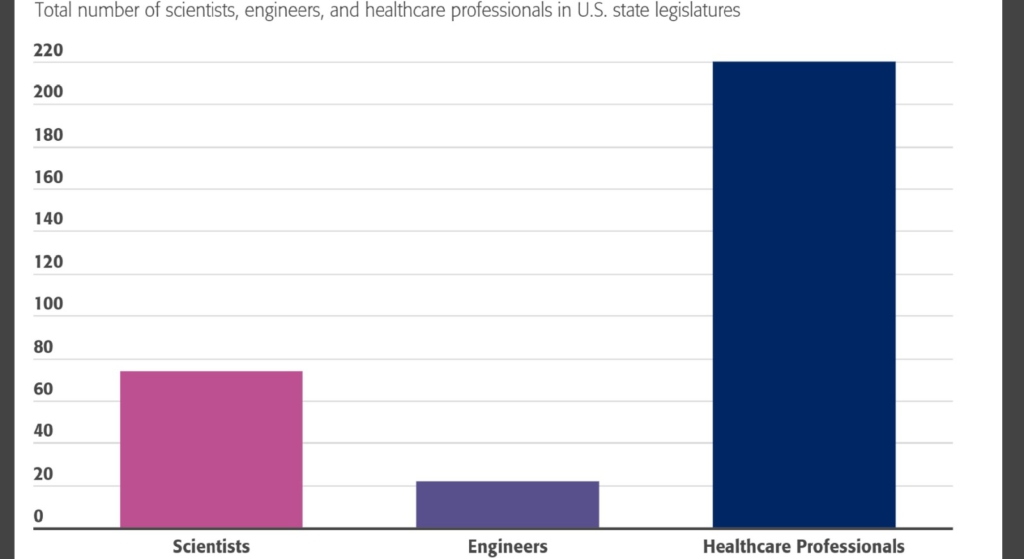
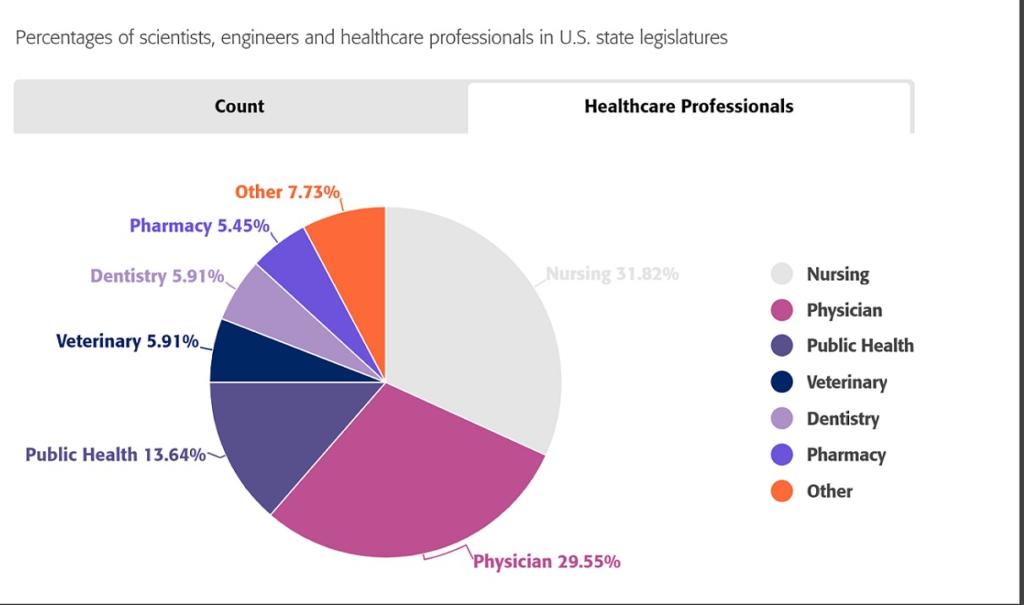
Data from the research shows that, 316 scientists (220 health care professionals, 74 scientists, and 22 engineers) currently serve in state houses across the country, up from 228 in 2021 (197 health care professionals, 20 scientists, and 11 engineers).
Health care professionals continue to be the well-represented scientific community in state legislatures. Registered nurses (70) are the most numerous in that group, followed by physicians (65), public health specialists (30), dentists (13), veterinarians (13), and pharmacists (12).
"As our nation continues to face public health, climate change, renewable energy infrastructure, and other science-based issues, it becomes apparent that the perspectives of scientists who hold elected office are invaluable,” said Anna Dulencin, director of the Eagleton Science and Politics Program.
Dulencin said, the slight increase in representation of health care professionals, scientists, and engineers in the legislatures comes as the country faces complex policy issues affecting science, technology, and energy, highlighting the importance of developing stronger communication and understanding between scientists and elected officials.
“Addressing almost any issue – expansion of artificial intelligence, facial recognition usage and automated vehicles to wildfires, extreme weather events and the many ramifications of pandemics - requires policymakers at all levels of government to quickly make critical decisions that are informed by increasingly complex scientific data and understanding,” she said.
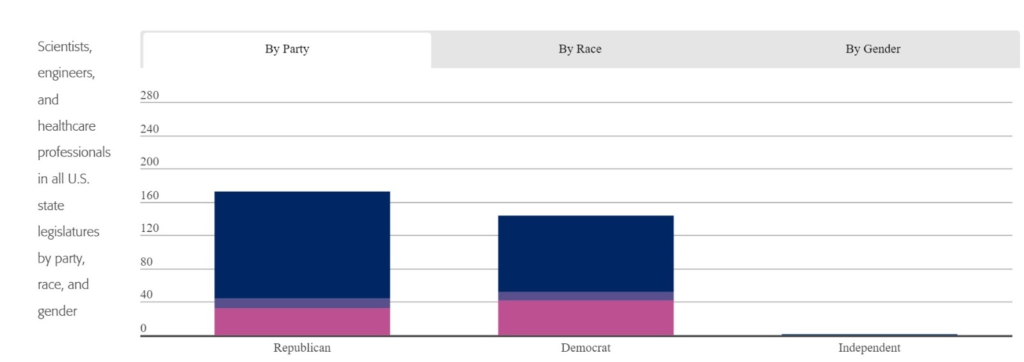
Notably, according to the 2023 data, there are more women (112) than men (108) who are healthcare professionals and serve as state legislators. Men continue to outnumber women in science and engineering, as well as in state legislatures. The vast majority of healthcare professionals and engineers are Republicans, while the vast majority of scientists are Democrats.
The states with the most scientists, engineers, and health care professionals in their legislatures are New Hampshire (20), Georgia (15), and Maryland (11). New Jersey also has eight members in its state legislature, including three scientists, one engineer, and four healthcare professionals.
This research was made possible in significant part by Dheeraj Goli, a graduate student researcher at the Eagleton Science and Politics Program at Rutgers University pursuing a Master's degree in computer science.
The Eagleton Science and Politics Program explores how science, technology, and American politics intersect, the political systems that connect them, and how deeper understanding and clearer communication within and across these disciplines can benefit policymakers, scientists, and the larger public.
Latest Stories
-
SSNIT says La Beach clearance was to protect hotel investments, beaches to remain public
43 minutes -
APSU congratulates St Augustine’s College after back-to-back National Investment Quiz wins
48 minutes -
Renewed flood intervention at Mallam Junction raises hopes among residents, businesses
1 hour -
St Augustine’s College retain National Investment Quiz title after nail-biting grand finale
2 hours -
Education infrastructure investment will drive Banda’s development – Ahmed Ibrahim
2 hours -
Teacher unions strike: Gov’t presents fresh proposals as talks end inconclusively
2 hours -
51,000 teachers’ promotion arrears to be validated for October payment – Education Minister
3 hours -
Kwabena Boamah appointed Board Chair for Impact Investing Ghana
3 hours -
Striking teacher unions to meet Fair Wages and Salaries Commission on October 6
3 hours -
EOCO working with AG to arraign Nana Baffour Awuah before weekend court
3 hours -
Duraplast reassures customers after fire, announces October 5 reopening
3 hours -
Call off strike, gov’t will not renege on promotion arrears pledge – Haruna Iddrisu to teacher unions
4 hours -
Committee set up to validate teachers eligible for 20% deprived-area allowance – Education Minister
4 hours -
Five-member committee to search for new Black Stars coach after Sports Ministry-GFA meeting
4 hours -
Pinktober: Breast cancer survival exceeds 90% when detected early – Breast Society of Ghana
4 hours