

Audio By Carbonatix
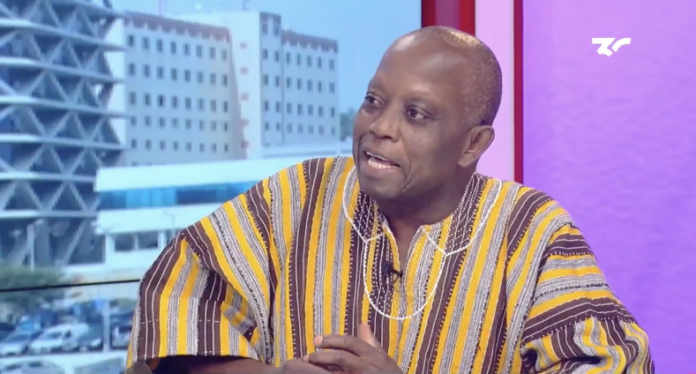
Former Auditor-General and member of the Operation Recover all Loot (ORAL) committee, Daniel Yao Domelevo, has called for urgent reforms in Ghana’s legal system to speed up corruption and economic crime cases.
Speaking on JoyNews’ Newsfile on Saturday, October 25, during a discussion on “ORAL and OSP Chasing Billions of Loot”, Mr Domelevo said the current legal framework makes it difficult for corruption cases to be concluded quickly and fairly.
“My worry is not about the speed of going into the courtroom. My worry is about when we arrive at the courtroom, what's next? From my point of view, there are things which must change, or the legal framework must change, to facilitate the early completion of these cases.”
He proposed that Ghana introduce laws that set time limits for the trial of corruption, economic and organised crime cases, saying such a move would prevent unnecessary delays that weaken justice delivery.
Mr Domelevo cited Nigeria as an example, explaining that its laws prevent the suspension of court proceedings once a criminal trial begins.
“I take courage from the Supreme Court of Nigeria. Based on section 306 of their Administration of Criminal Justice Act and section 40 of their Economic and Financial Crimes Commission Act, there is no stay of proceedings. You are allowed to appeal during the hearing, but the trial continues to the end. If we bring such a practice to Ghana, it will help so that cases do not stay in court for too long.”
The former Auditor-General also expressed concern about the difficulty of proving guilt in corruption-related cases under the current legal standard.
“Proving guilt beyond reasonable doubt that someone stole money, especially in cases of economic crime or corruption, is extremely difficult,” he explained.
“These acts are not done openly or by people who are daft; they are done by very intellectual people with power and influence, who can even sway investigators and prosecutors.”
Mr Domelevo suggested expanding the existing legal principle under Article 286 of the Constitution, which requires public officers to explain unexplained wealth revealed in asset declarations.
“The principle of reversed burden, as stated in Article 286, should be expanded and applied to all corruption and corruption-related cases.
“If your subsequent declaration shows an increase in wealth that does not match your sources of income or gifts, then you have acquired assets contrary to the Constitution.”
He warned that without such reforms, corruption prosecutions will continue to face two major obstacles proving guilt beyond reasonable doubt and the lengthy delays in court proceedings.
“Otherwise, it is going to be difficult. Two things are going to disturb us: how to prove beyond a reasonable doubt in the courtroom, and how long it will take before we come to a closure on a case,” he explained.
Latest Stories
-
Nana B passport claims a diversionary tactic — Abu Jinapor
25 minutes -
Pope Leo diagnosed with cancer as doctors remove lobe of lung, Vatican says
25 minutes -
Legal Aid Commission takes free legal services to Techiman main lorry terminal
30 minutes -
Nana B denies seeking passport favour, accuses Ablakwa of failing to account for GH¢16.4m
35 minutes -
Young girls demand climate action, stronger protection against child marriage
47 minutes -
Ex-gang boss sentenced to 40 years for orchestrating Tupac Shakur’s murder
47 minutes -
From near-deferral to three awards: UMaT graduate’s academic journey
49 minutes -
Atta Akyea denies seeking presidential pardon for Wontumi in galamsey case
1 hour -
Photos: Mahama commissions 85-bed Police Hospital ward, donates two ambulances
2 hours -
GTEC directs Ghana’s public universities to reopen by October 16 and begin lectures on October 19
2 hours -
Star Oil donates GH¢1million towards construction of new CID facility
2 hours -
Court hands Adjetey Sowah, two others lifetime bans after Amputee Football legal dispute
2 hours -
NDC appoints Julius Kwame Anthony as a Deputy Communications Director
2 hours -
Ghana repatriates 120 Nigerians rescued from suspected cybercrime centres
2 hours -
NPP rejects Emelia Agbenyo’s appointment as Deputy EC Chair, demands withdrawal
2 hours