

Audio By Carbonatix
Economist Professor Godfred Bopkin says Eurobond holders, domestic bondholders and pensioners who endured losses under Ghana’s debt restructuring were instrumental in restoring the country’s debt sustainability.
He says their sacrifices, rather than GoldBod, provided the financial “breathing space” that has enabled Ghana to bring down its debt-to-GDP ratio and debt-servicing costs.
“The unpopular domestic debt exchange has played a key role. Remember that those who gave Ghana fresh air were actually not GoldBod,” Prof. Bopkin said.
He stressed that Ghana’s improving fiscal position should be viewed against the sacrifices made by creditors who came to the negotiating table when the country needed financial support the most.
“Those who gave Ghana breathing space to have what we have today were domestic bondholders who sacrificed, were Eurobond holders who sacrificed, who came to the table when Ghana needed help the most,” he said.
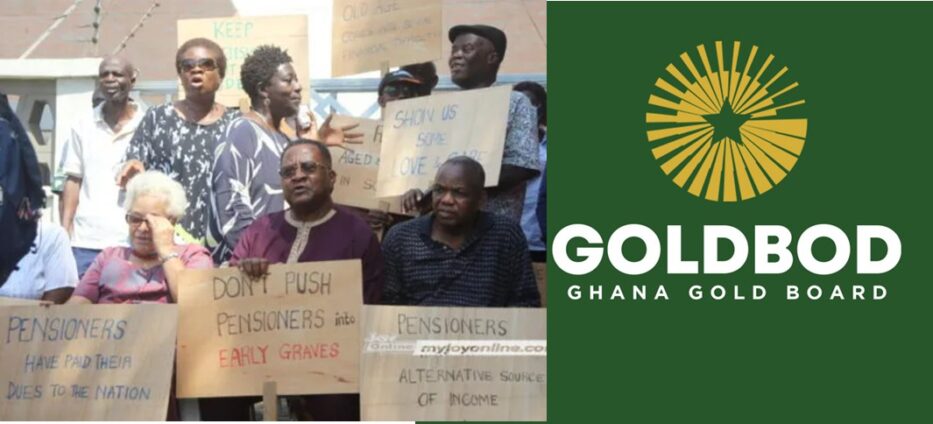
Prof. Bopkin said pensioners were among those who bore the impact of the domestic debt restructuring and deserved recognition for their contribution to Ghana’s economic recovery.
“Those who gave Ghana sweat equity, who gave Ghana fresh air to breathe, and I think we need to recognise them today, including pensioners and all of them, who endured a haircut. They didn’t even get a chance to choose the style of the haircut,” he said.
He noted that the original IMF-supported programme had a balance of payments financing gap of about $13.5 billion, at a time when GoldBod’s domestic gold purchase operations were still relatively small.
According to Prof. Bopkin, Ghana must therefore recognise the role of domestic bondholders, Eurobond holders, pensioners and external bilateral creditors in creating the fiscal space the country is currently enjoying.
He welcomed the significant reduction in the debt-to-GDP ratio and debt-servicing costs but cautioned that the gains could easily be squandered if the country failed to use the fiscal space prudently.
Prof. Bopkin recalled that Ghana had reached a similar position after the Highly Indebted Poor Countries programme and the Multilateral Debt Relief Initiative, when the country’s debt-to-GDP ratio fell below 30%.
That fiscal space, he said, was eventually dissipated, forcing Ghana to return to the IMF in 2009.
“It’s good news we are celebrating this fiscal space. Let’s put in place the right structures, spend efficiently, borrow prudently, and invest it in enhancing the cash flow-generating capacity of the economy. Otherwise, we have been there before,” he said.
Latest Stories
-
Drive constitutional reform – GJA urges journalists
12 minutes -
NPP Delagates Congress: Confusion delays voting at Ashanti Region TESCON centre
1 hour -
Fire ravages shops, houses near Koforidua Central Police Station
1 hour -
NPP Delegates conference: The wisdom of the masses will prevail – Napo
2 hours -
Flydubai co-pilot attacked captain with axe, UAE official says
2 hours -
NPP Bosome Freho Constituency Chairman reportedly arrested over ballot paper incident
2 hours -
Medical plane with 6 on board missing off Massachusetts coast
2 hours -
Bolt driver jailed 25 years for robbing beautician
2 hours -
Happy 76th Birthday to the Daily Graphic!
3 hours -
Amin Adam celebrates Prof. Alhassan Musah on appointment as KAAF University Vice-Chancellor
3 hours -
Mahama reaffirms commitment to Volta development at Asogli Te Za
3 hours -
Bawumia urges NPP aspirants to accept results, reunite party after elections
3 hours -
Double fibre cut disrupts Telecel services, 72,754 subscribers affected
3 hours -
Bawumia demands probe into financiers behind Ghana-linked cocaine shipments
3 hours -
Spain beat Czech Republic to maintain winning run
4 hours