

Audio By Carbonatix
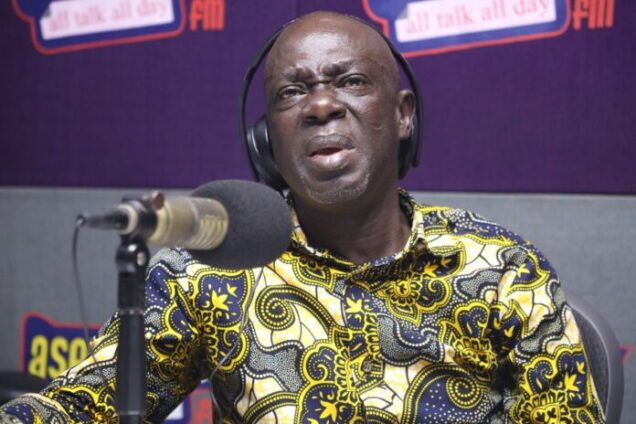
The President of the Renal Patients Association, Baffour Kojo Ahenkorah, has highlighted the extreme financial sacrifices kidney disease patients in Ghana are making to afford life-saving treatment.
In a candid interview on Joy News’ PM Express, he revealed that some Ghanaians, facing high dialysis costs, are now turning to desperate measures, such as paying millions of cedis or even exchanging property for a kidney.
His comments follow Vice President Dr Mahamudu Bawumia’s announcement that starting December 1, 2024, the government will provide free dialysis treatment under the National Health Insurance Scheme (NHIS) to alleviate the financial burden on kidney patients.
Reflecting on his journey, Mr Ahenkorah shared that his dialysis costs over the past decade have been financially crippling.
“If I’m to calculate the 10 years now, the money I’ve spent, I could have done a transplant easily with that money,” he said.
“But the point is, I don’t have the bulk money to go and do it. So at least then, if I get ¢1000, I go and do a session and see if I can get bulk money. Day in, day out, the time is running. So it’s all about the money.”
According to Mr Ahenkorah, many patients are trapped in a cycle of paying for dialysis without ever being able to save enough for a kidney transplant, which is now available at Korle Bu and Bank hospitals in Ghana.
“If this thing was there for the last 10 years, probably I could have saved enough or the money that I have, I would have used it to do my transplant, and I’m off,” he explained, expressing hope that the upcoming free dialysis treatment might help patients save towards transplants in the future.
When asked about the availability of kidney donors, Mr Ahenkorah shed light on a troubling reality: people in Ghana are quietly selling their kidneys to survive.
“We need to get it, because now, for somebody even to give this kidney to, people are selling it. People are doing it indirectly. In Ghana, people are doing it indirectly,” he disclosed.
He explained that the traditional route of receiving a kidney donation from a family member is becoming less common as economic hardship pushes some people to offer their kidneys for sale.
“Now, the country is hot; people need money. So if I can live on one kidney, why not?” Mr Ahenkorah stated.
“Some people don’t mind. If they check and you are compatible, that’s it. Some people are selling it for about ¢3 million or ¢4 million. Once you do the labs and you are compatible, it’s ready; they are willing to give it to you. Somebody will say, ‘Get me a two-bedroom apartment, let me go and stay there, and I’ll give you one of my kidneys.’”
Mr Ahenkorah highlighted that the costs don’t stop at purchasing the kidney. Patients must then pay an additional $25,000 for the transplant surgery.
“So you buy the ¢3 million or ¢4 million kidney, and then you have to now go and pay for the procedure of about $25,000,” he noted, stressing the double financial burden that many Ghanaians simply cannot bear.
Reflecting on the ongoing expenses associated with dialysis, Mr Ahenkorah pointed out that he has spent enormous amounts on medication alone.
“If I’m to sit down and calculate the Erythropoietin injections alone that I have bought, and the BP medication that I have bought, that money, I could have done transplant way back,” he said.
But due to a lack of funds, he’s been forced to continue paying for dialysis sessions, balancing the costs of treatment with his responsibilities as a parent.
“I have children. You have to take care of them, you know, in between the dialysis,” he added, underscoring the toll kidney disease takes on patients and their families.
Latest Stories
-
Global InfoAnalytics poll puts John Boadu, Justin Kodua and Titus Glover ahead in NPP executive race
60 minutes -
Ghana to establish skills development university with $50m from German support package
1 hour -
Baffour Awuah under EOCO investigation over alleged financial loss and money laundering – Deputy AG
1 hour -
How healthy is Ghana’s health sector?
1 hour -
HACSA Tech4Girls graduates 80 young women with digital and technology skills
1 hour -
Arrest of Manhyia South MP should involve Parliament, not police station – Kpebu
2 hours -
Two Nigerians sentenced to 189 months in US prison over $2.4m cyber fraud
2 hours -
Cristiano Ronaldo leaves Portugal’s training camp after rift with Head Coach
2 hours -
Ghana Energy Awards opens nominations for landmark 10th anniversary edition
2 hours -
Aayalolo contra-flow: Are we treating the symptom instead of the disease?
2 hours -
GTEC orders Colleges of Education to begin 2026/2027 admissions despite fees approval delay
2 hours -
Legal reforms must solve real problems, improve justice – Bagbin
2 hours -
Ofori-Sarpong named Alumni President of the Year, honoured for PRESEC dormitory project
3 hours -
Germany commits $132m to Ghana for skills development and training university – Pelpuo
3 hours -
‘Influence should go beyond visibility’ – Taadi Banyinba GH launches The TB Impact
3 hours