

Audio By Carbonatix
A report by the Third World Network (TWN) -Africa on the impact of the Planting for Food and Jobs (PFJ) and One District One Factory (1D1F) has shown that low credit opportunities and lack of effective targeting are major challenges facing the programmes.
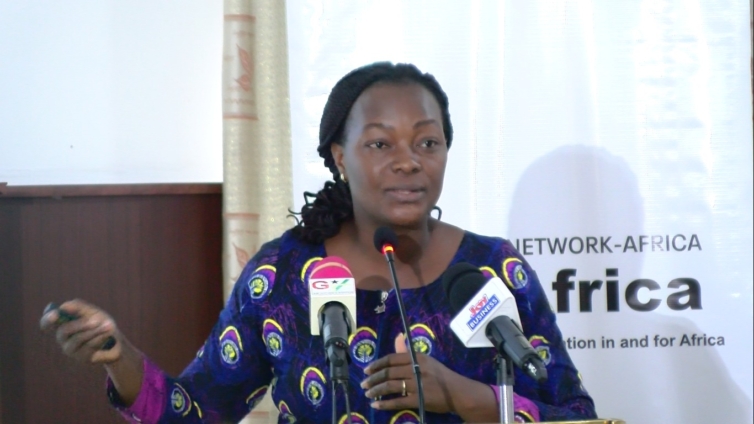
According to the Lead Researcher, Dr. Faustina Obeng, the lack of targeted credit support deprived many small holder farmers from full participation in the programme, affecting output.
Dr. Obeng said low credit opportunities, insufficient fertilizers and the lack of effective targeting are major challenges which hinder the output of the programme.
She noted that ineffective targeting of credit for small holder farmers in the hinterlands, particularly among female farmers made it difficult for them to scale up and contribute to the expected output.
“There was a challenge with the cost of input. When the partial credit around PFJ was removed, farmers could no longer access the needed fertilizers”, she said.
“Many farmers who could not afford the complete package of seeds and fertilizers reverted to using their old farmer-save seeds,” she added.
Dr. Obeng explained that famers struggled with the minimal capital provided for them since the use of modified seeds (prescribed under the PFJ programme) needed more fertilizers to survive.
The report also assessed the linkage between the Planting for Food and Jobs and the 1D1F programmes, pointing out that there was poor collaboartion.
Although output was increased in some farming jurisdictions, the study noted that some recommended breeds under the programme lacked the availability of ready markets for processing.
“If we look at the Gomoa area, you will find out that the factory situated to make use of orange fleshed sweet potatoes also invested in raw materials, and this did not help the farmers.” Dr. Obeng noted.
1D1F
On the impact of the 1D1F initiative, the report noted that inadequate funding support for the capital intensive sector was a major challenge for the full implementation.
“The low levels of loans and funding support from government to put up a whole factory and keep it running was a major challenge. For the factories running, more capital had to be injected by owners to ensure its survival.”
It also added that insufficient raw materials was a major worry for a significant number of factories.
Latest Stories
-
‘It’s not a matter of evidence; it was a metaphor’ – Afenyo-Markin defends ‘drug lab’ comment
5 minutes -
Borrowing costs cut by more than half – Finance Minister
9 minutes -
KNUST students urged to look beyond Ghana for AI and robotics opportunities
12 minutes -
Odeibea Foundation extends energy equity initiative with solar streetlights in Akpato and Worwonyo
12 minutes -
Customs increases surveillance at ports, warns importers against concealing restricted items
15 minutes -
WERise urges women entrepreneurs to scale businesses, increase revenue and create jobs
16 minutes -
POWA calls for end to gendered attacks on Lordina Mahama, Samira Bawumia
21 minutes -
Zigx Foundation supports 50 vulnerable mothers in Akwapim North
21 minutes -
Nhyiramma Foundation calls for greater support for widows and single mothers
23 minutes -
Ghana must stop turning rivers into gutters through encroachment – Kwadwo Poku
25 minutes -
‘We’ll never compromise on quality’ – Agbodza tells Accra-Kumasi bypass supervisors
31 minutes -
Roads Minister urges motorists to drive cautiously on Accra-Kumasi Highway
31 minutes -
Hohoe MCE appeals for more relief supplies as flooding displaces residents
32 minutes -
‘Free Salomey now!’ – Women march to EOCO over Salomey Awitey Baffoe’s continued detention
34 minutes -
GES appeals to teachers to rescind strike and return to class as efforts to resolve concerns intensify
34 minutes