

Audio By Carbonatix
Before I proceed, let me state respectfully for the record that this article was written entirely under bright electrical conditions, with a fully charged phone, a stable ceiling fan, and no intention whatsoever of overthrowing the Republic through suspicious flashlight commentary.
In fact, if at any point this write-up accidentally resembles a national security threat, then perhaps Ghana has finally become the first country where discussing electricity now requires spiritual clearance, legal representation, and possibly witness protection.
These days, one must be careful.
In the old Ghana, people feared armed robbers.
In the new Ghana, your greatest fear may be typing:
“Hmm… have the lights gone off again?”
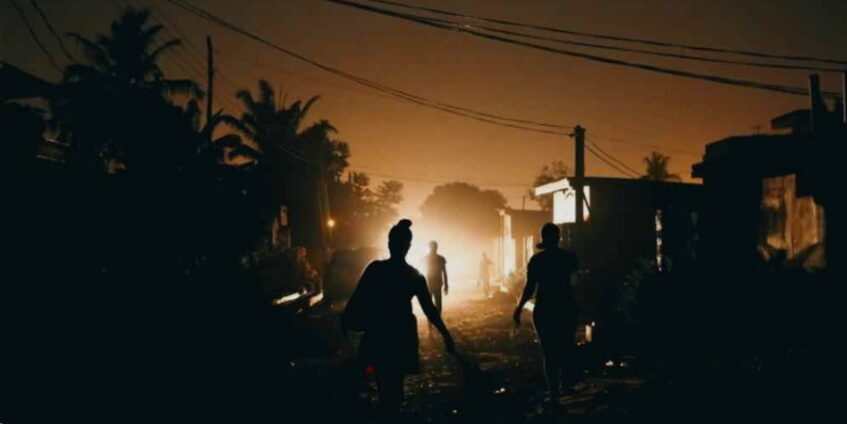
Because apparently, darkness itself has entered politics.
Once upon a time in the Republic of Uncommon Sense, the lights blinked twice during supper time, and although the electricity returned almost immediately, the entire nation reacted the way old soldiers react to distant gunfire.
Nobody panicked openly.
Ghanaians simply paused and looked around suspiciously, because this country has suffered enough darkness to know that electricity problems rarely arrive dramatically. They arrive politely first. They flicker small-small like a visitor pretending he will not stay long, only to unpack his bags three days later and begin adjusting your television antenna.
There are certain words in Ghanaian public life that carry emotional scars inside them. Mention “kalabule” to an elderly trader and watch her face tighten immediately. Whisper “coup” near your grandmother and she may instinctively begin preserving gari and matches. But no modern political word in Ghana carries trauma quite like “dumsor.”
The word itself has become a national ghost story.
It no longer merely describes power outages. It awakens collective suffering.
Traders remember frozen chicken slowly surrendering its dignity before market hours. Students remember learning under rechargeable lamps that died before the important examination topics arrived. Tailors remember sewing wedding clothes against impossible deadlines while generators coughed like chain smokers. Barbers still carry emotional wounds from half-finished haircuts that transformed respectable men into confused experiments.
Entire relationships nearly collapsed because ceiling fans stopped working during hot April nights when even mosquitoes appeared too exhausted to fly properly.
So when a certain gentleman in Agona West reportedly went onto Facebook and suggested that perhaps the old spirit of dumsor had started stretching its legs again under President Mahama’s administration, the state allegedly responded with the seriousness usually reserved for attempted coups, cocaine trafficking, or Black Stars penalties.
According to reports, armed officers allegedly picked him up after his post gained traction online.
Armed officers.
For Facebook.
At this point, the ordinary Ghanaian no longer knows which subjects are considered dangerous. One worried citizen may soon post that tomatoes are becoming expensive again, only for heavily tinted pickup vehicles to arrive before sunset demanding clarification about the source of his economic pessimism.
Naturally, the nation has now divided itself into two powerful camps, each defending its position with the confidence of people who have already recorded lengthy WhatsApp voice notes for circulation after midnight.
One side insists that freedom of speech must not become freedom to spread fear, misinformation, or politically motivated panic.
The other side argues that if citizens cannot complain openly about recurring power outages, then democracy itself has started behaving like prepaid electricity: unreliable, stressful, and capable of disappearing at the exact moment you need it most.
Meanwhile, social media has transformed into a national courtroom where everybody suddenly holds honorary degrees in constitutional law, political science, and electricity distribution.
Radio stations are vibrating with outrage. TikTok political analysts are speaking with the urgency of military spokespersons. Facebook prophets are quoting democracy with Old Testament intensity.
Every Ghanaian uncle who once forwarded COVID-19 conspiracy theories has now become an expert in civil liberties and state intimidation.
Yet beneath all the noise lies a deeper national anxiety that many people are afraid to admit openly.
Ghanaians are not merely reacting to one alleged arrest. They are reacting to memory itself.
The country remembers what dumsor felt like.
It remembers the frustration, the unpredictability, and the sweating through sleepless nights while generators growled across neighborhoods like angry spirits demanding sacrifice.
It remembers businesses collapsing quietly. It remembers the sound of entire communities shouting “light nu aba oo” whenever electricity suddenly returned at 2 a.m., as if light itself had become a visiting celebrity.
That is why even the suspicion of dumsor carries political danger in Ghana. The word behaves like dry-season fire near a fuel station. Once somebody mentions it publicly, emotion spreads faster than explanation.
And perhaps that is the truly fascinating part of this entire story.
In many countries, darkness is merely an inconvenience.
In Ghana, darkness is political language.
It is campaign material. It is historical trauma. It is opposition strategy, government embarrassment, economic anxiety, and household suffering all rolled into one unstable electrical cable.
Today, the ordinary Ghanaian citizen sits beneath a ceiling fan that may or may not survive the evening, charging every device in sight with the discipline of a man preparing for war.
Nobody wants propaganda.
Nobody wants political intimidation.
People simply want stable electricity and the freedom to complain when the lights disappear unexpectedly without feeling as though they have accidentally committed a constitutional offense.
Because after all these years, Ghanaians have learned one painful truth: when darkness enters a country too often, eventually even conversations about darkness begin generating more heat than light.
Welcome once again to the Republic of Uncommon Sense, where electricity outages may come and go, but political voltage never sleeps.
Jimmy Aglah
#RepublicOfUncommonSense #DumsorChronicles #PoliticsGH #FreeSpeech #Mahama #GhanaSocialMedia
Latest Stories
-
Son jailed for threatening to stab mother
13 minutes -
Drive constitutional reform – GJA urges journalists
35 minutes -
NPP Delagates Congress: Confusion delays voting at Ashanti Region TESCON centre
1 hour -
Fire ravages shops, houses near Koforidua Central Police Station
2 hours -
NPP Delegates conference: The wisdom of the masses will prevail – Napo
2 hours -
Flydubai co-pilot attacked captain with axe, UAE official says
2 hours -
NPP Bosome Freho Constituency Chairman reportedly arrested over ballot paper incident
3 hours -
Medical plane with 6 on board missing off Massachusetts coast
3 hours -
Bolt driver jailed 25 years for robbing beautician
3 hours -
Happy 76th Birthday to the Daily Graphic!
3 hours -
Amin Adam celebrates Prof. Alhassan Musah on appointment as KAAF University Vice-Chancellor
3 hours -
Mahama reaffirms commitment to Volta development at Asogli Te Za
3 hours -
Bawumia urges NPP aspirants to accept results, reunite party after elections
3 hours -
Double fibre cut disrupts Telecel services, 72,754 subscribers affected
4 hours -
Bawumia demands probe into financiers behind Ghana-linked cocaine shipments
4 hours