

Audio By Carbonatix
The Local Government Service Association of Physical Planners has commended President John Dramani prompt action in demolishing illegal structures on waterways.
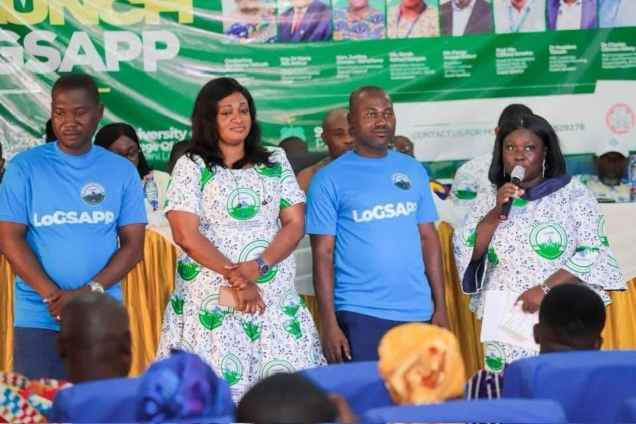
The National Interim President of the Association and Head of the Physical Planning Department at the Sunyani West Municipal Assembly, Planner Gifty Nyarko, commended President Mahama’s proactive stance, underscoring that such measures are vital for environmental protection and resident safety.
She highlighted that this initiative would contribute significantly to promoting sustainable urban development and creating livable cities for future generations.
In a statement at the National Eid-ul-Fitr prayers in Accra on 31st March 2025, President Mahama condemned the unlawful construction of buildings on waterways, linking this issue to the severe flooding in several communities.
The Association believes that the President’s bold move will not only mitigate flooding but also contribute to building resilient cities, preserving wildlife habitats, and protecting natural environments.
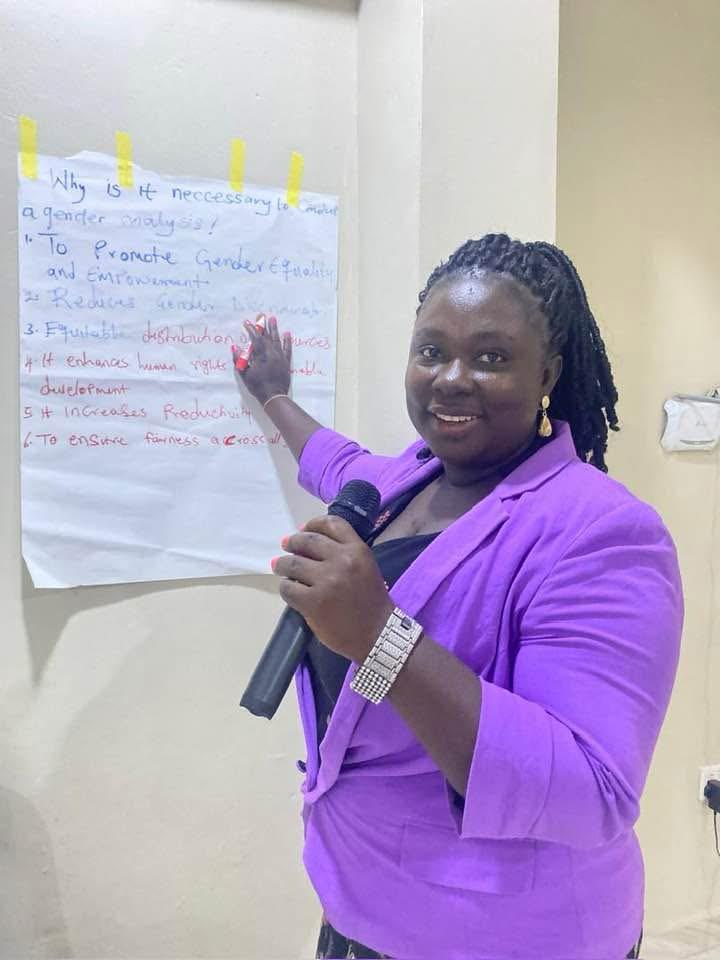
Speaking in an interview with the Adom News' Bono regional correspondent Christian Ofori Kumah on Tuesday 1st April, 2025, Madam Nyarko noted that this move would help achieve Goals 11 and 16 of the United Nations’ Sustainable Development Goals (SDGs), stressing the importance of ensuring that unauthorized buildings obstructing waterways are eliminated.
She pointed out that the Land Use and Spatial Planning Act, 2016 (Act 925) empowers Municipal, Metropolitan, and District Assemblies (MMDAs) to regulate land use and spatial planning for sustainable development. Section 121 of the Act specifically addresses unauthorised developments, including those on waterways.
According to Act 925, unauthorised development refers to any physical development carried out without a permit, or in violation of the conditions of a permit. Construction on waterways is considered unauthorized development of public space, as per Section 121.
An authorized officer is empowered to immediately prohibit, alter, remove, or demolish such unauthorized structures without prior notice if they cause an environmental nuisance or interfere with public space use.
Madam Nyarko clarified that "public space" includes open areas accessible to the public, such as urban utility spaces, riparian buffer zones, parks, and infrastructure rights of way. Assemblies can demolish such structures without a court order if they pose risks to public safety, health, or the environment or violate land-use planning laws.
She recommended that MMDAs first ensure that the buildings in question are within public spaces and are causing or have the potential to cause, environmental harm.
Madam Nyarko also discussed the challenges MMDAs face in removing illegal structures on waterways.
"One major issue is the insufficient enforcement capacity within many MMDAs, which lack the resources, personnel, and advanced tools needed for regular monitoring and removal of unauthorised buildings."
She highlighted the difficulties faced by the Physical Planning and Works Departments, which are responsible for preventing illegal construction but lack vehicles and modern technology for inspections, noting that "This hampers their ability to stop the spread of illegal development and enforce regulations effectively."
Planner Kofi Yeboah, the Public Relations Officer, emphasised the need for stricter enforcement of planning regulations. He stressed the importance of regular inspections and timely demolitions to prevent unauthorised constructions.
Mr Yeboah also called for fair enforcement that is free from political interference or corruption, with active community involvement in demolition and relocation efforts.
He urged the government to provide the necessary resources for the Planning and Building Inspectorate Units of the Assemblies, which include staff from the Physical Planning and Works Departments, to help them carry out their duties efficiently.
Additionally, Planner Ashmond Baffoe, the General Secretary, pointed out that the legal framework for land use and development on waterways is often ambiguous, which complicates enforcement.
"Legal processes are slow, and violators sometimes exploit legal loopholes to delay demolitions. Political interference is another challenge, as influential figures, including politicians, may resist demolition efforts, further hindering progress."
Planner Kwabena Asiedu Bediako, the Vice President, highlighted the resistance from residents of informal settlements who fear displacement and the lack of alternative housing options. This makes it difficult for MMDAs to act swiftly without facing public opposition, he added.
He acknowledged that corruption and indiscipline in the land market contribute to the problem, as illegal constructions are sometimes ignored. Economic factors also play a significant role, as many people resort to building on waterways due to a lack of affordable housing or legal land options.
Mr Nyarko also noted that land ownership disputes are a contributing factor. "Many people build on waterways due to unclear or disputed land ownership, often without proper documentation or legal titles. Informal land transactions make it easier for individuals to build on waterways with little fear of legal consequences."
He further pointed out that some residents may not fully understand the environmental and legal risks of building on waterways.
"Without proper education on the long-term effects, some people view the construction as a solution to their immediate housing needs. In some cases, people take advantage of vacant land along waterways without considering the environmental impact or future flooding risks. Pln. Nyarko stressed that chiefs granting verbal authorizations for land allocation, rather than official development permits, need to be stopped."
Another significant issue, according to him, is the lack of detailed topographical analysis in local planning maps.
Nyarko emphasised the importance of incorporating detailed topographical studies into planning processes to ensure safe, sustainable communities.
"Such analysis is vital for determining land suitability for construction, especially near waterways. Without accurate data on land features like soil type, slope, and water flow, it is challenging to assess the risks of flooding, erosion, or soil instability."
Mr Nyarko also advocated for collaboration with the Survey and Mapping Division for the preparation of base maps to support local planning and resilient city development.
Furthermore, he acknowledged that natural disasters and climate change impacts, such as flooding and erosion, complicate the situation, stressing the need for inter-agency cooperation and greater community involvement, as MMDAs often struggle with coordination and gaining public support.
He concluded that MMDAs must prioritise urban planning by allocating sufficient resources for city development.
"Proper funding would enable comprehensive strategies, including zoning, environmental protection, and infrastructure development, to prevent illegal construction and support sustainable growth. She urged local authorities to invest in local plan preparation and take steps to discourage unauthorized developments."
Latest Stories
-
Western Regional Minister applauds Karpowership’s role in Ghana’s power sector
24 minutes -
Livestream: Road safety crises: Where are we getting it wrong?
26 minutes -
Enterprise Life celebrates 25 years of protecting families and building trust
34 minutes -
ICC London rules in favor of Ghana against Tullow over $400m tax charge
44 minutes -
We are disappointed in ICC’s ruling over our corporate income tax assessment in Ghana – Tullow Oil
55 minutes -
Cost of building inflation for August 2026 increases to 4.6% – GSS
56 minutes -
Today’s front pages: Wednesday, September 30, 2026
1 hour -
Bawumia highlights agricultural, compulsory insurance reforms in IBAG engagement
1 hour -
Ghana will secure Tullow tax revenues while protecting Jubilee, TEN investments – Ato Forson
2 hours -
Ghana wins $393m Tullow tax arbitration as tribunal upholds GRA assessment
2 hours -
Gender Minister assures women’s group of action on Affirmative Action, Development Bank
2 hours -
Over 2,000 teachers in Dormaa comply with strike – GNAT Secretary
3 hours -
Food Buffer Stock seeks stronger liquidity buffer despite record profit
3 hours -
LPG investments key to achieving 50% access target by 2030 – Energy Minister
3 hours -
Jinapor: New LPG terminal strengthens Ghana’s energy security
3 hours