

Audio By Carbonatix
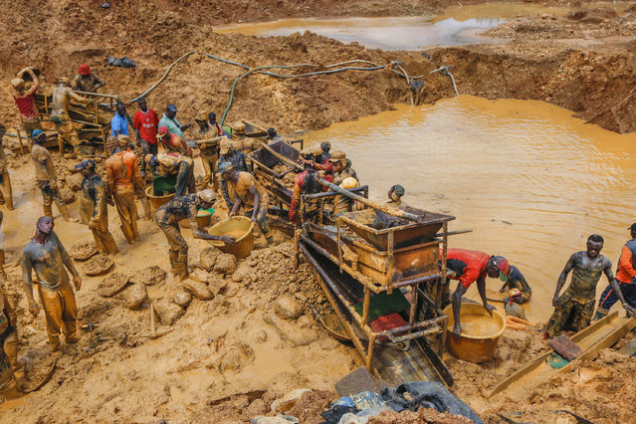
Former Chief Justice Sophia Akuffo says illegal mining, aka galamsey, spiralled out of control when people with political influence turned it into a vehicle for quick wealth.
Speaking on Joy News’PM Express Business Edition on Thursday, she said the country must accept collective responsibility for the crisis.
“We should all stand condemned for one, irresponsibility and irresponsible governance, because it didn’t start overnight.”
She rejected the argument that galamsey has always existed in its current destructive form.
“There will be those who say there has always been a galamsey," but she drew a sharp contrast with her childhood memories of life around the Birim River.
“I remember the clear waters of my childhood,” she recounted how Saturdays were spent by the river.
“Part of my growing up was in Kyebi. And I remember Saturdays, we would walk down to the Birim, and that’s where we would do the washing of the clothing.”
Children swam freely, she said, without fear. “You swim, swim, swim, swim, swim, until your eyes are bulging out. We didn’t get bilharzia, we didn’t get any chemical, because it was clear water.”
Water was even fetched for household use, “but it was then not out of hand.”
According to her, the turning point came when politically connected actors saw profit in the trade.
“When it started getting out of hand was when, let’s say, people with political influence saw a source of income or a quick wealth in it, and then it went so completely out of hand.”
She said the consequences are now frightening.
Recounting a conversation with a friend, she said: “A friend of mine, I told her, but you told me, you have a house in your hometown, but you’ve never invited me for a weekend or something.”
The response was chilling. “And she said, and I will not, because I myself, I don’t go there anymore because I don’t think it’s safe.”
The reason, she explained, was mining activity beneath homes. “This is because they have been mining underneath her building in the middle of the village.”
For her, the crisis reflects a dangerous shift in values. “Now it’s wealth at all costs, and it does not matter.”
Yet she noted that some communities are resisting the tide.
“There are still some towns and villages in some of these areas where the people have also said that no matter what, we will not permit anybody, even if you come with a license from the minerals commission, we’re not going to allow you to do any small-scale operation in this place.”
Their choice, she said, is clear. “We will continue with our farming.”
Latest Stories
-
Anti-LGBTQ Bill: NDC’s arrogance is worrying – Hassan Tampuli
8 minutes -
Let’s give OSP time to mature, not to scrap it – Hassan Tampuli
12 minutes -
Nigeria convicts 386 Islamist militants in mass trials
17 minutes -
Djibouti president wins election with 97.8% of vote, state media says
22 minutes -
We don’t have mandate to deduct tax from rent allowance of security services personnel – Interior Ministry clarifies
36 minutes -
Ablakwa receives Presidential Special Envoy on Reparations to advance global agenda
54 minutes -
Christina Koch becomes first woman to travel around the moon on Artemis II
1 hour -
Epstein survivors’ calls to meet King Charles and Queen harder to ignore as US visit approaches
1 hour -
UN Secretary-General names Ghana’s Anita Kiki Gbeho as South Sudan envoy
1 hour -
Mali withdraws recognition of Sahrawi Republic, backs Morocco’s autonomy plan
1 hour -
Gov’t distributes over 8,500 laptops to One Million Coders project
1 hour -
Julius Debrah, ‘man to beat’ as NDC’s James Agbey dismisses Musah Dankwah’s polls
1 hour -
GPRTU in Savannah Region to protest alleged eviction in Damongo
2 hours -
Re: Reinsurance does not replace process — A response to the SIGA–SIC defence
2 hours -
Gender Ministry supports Harriet Amuzu in ongoing abuse case
2 hours