

Audio By Carbonatix
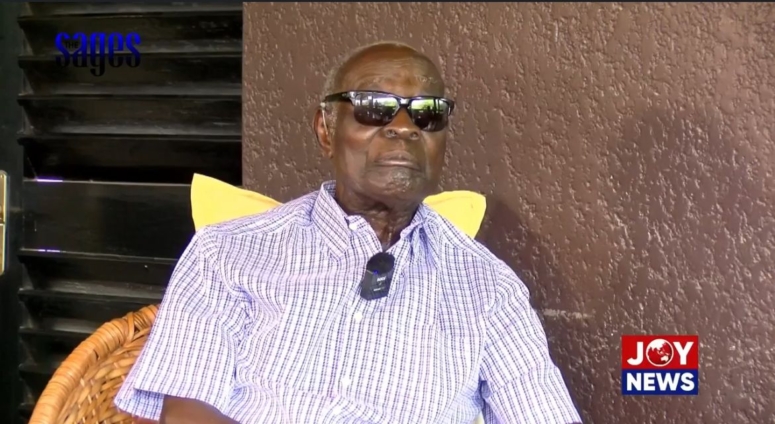
Renowned Ghanaian architect and Pan-Africanist, Prof. John Owusu Addo, has blamed the unplanned nature of Ghana's urban landscape on political interference and a lack of respect for professional expertise in planning and architecture.
Speaking on The Sages on JoyNews, the renowned architect expressed frustration at how politicians and powerful stakeholders routinely sideline professionals trained to design and manage the country’s urban development.
“We have trained town planners, architects and so on. But politicians will not allow them to do their work as they’ve been taught.”
According to him, the planning process has been hijacked by non-technical actors whose personal interests often override professional guidance and established laws.
“Town and country planning, that is urban design, the planning laws are changed at will because those who sit on the committee have no idea. There’s only the town planning officer and one voice against many who have all sorts of interests. Chiefs, politicians, businessmen, they all have interest in land acquisition and development.”
Prof. Owusu Addo said the professionals planners, architects, and technicians are often outnumbered and outvoted, rendering their knowledge and expertise ineffective in the decision-making process.
“And the poor technician or the planner or architect has very little say. And that is why we have our towns and cities. We don’t follow the law.”
“The laws are there. But we are not able to implement them, to enforce them. That’s why we have cities and towns which develop in any way they like.”
He also explained that simply tearing down old buildings and replacing them with new ones on the same plot offers no meaningful transformation.
“In the big cities, the tendency has been to replace one building which is probably outmoded or it has problems. Somebody buys the old building and he puts exactly in his place another building. That is not the way to develop a modern city.”
He advocated for a broader, more visionary approach where larger areas are redeveloped together, with banks and developers backing comprehensive plans designed by professionals.
“You should have about 10 or 20 such buildings in a big area and get the developer and they get the bankers to back them. And you give the architect and the planner and the engineers an opportunity to redesign the whole place. Pedestrian movements, walks, walkways, shops and so on.”
“And that is how modern cities are developed. And not by piecemeal. That is just replacing individual buildings with old buildings, with new buildings.”
Prof. Owusu Addo’s remarks come at a time when Ghana’s major cities, especially Accra and Kumasi, continue to battle congestion, flooding, poor zoning, and infrastructure challenges.
Latest Stories
-
Prof. Prempeh calls for public review of draft constitutional reform bills
5 minutes -
AFCON 2027Q: ‘I have never seen a poor performance from Black Stars like against Gambia’ – Nii Lante Vanderpuye
9 minutes -
Nigeria set to launch National Digital Address System 9 years after Ghana showed the way
32 minutes -
Policy rate decision takes time to reflect in lower lending rates – BoG
42 minutes -
Western Regional Minister applauds Karpowership’s role in Ghana’s power sector
1 hour -
Livestream: Road safety crises: Where are we getting it wrong?
1 hour -
Enterprise Life celebrates 25 years of protecting families and building trust
1 hour -
ICC London rules in favor of Ghana against Tullow over $400m tax charge
1 hour -
We are disappointed in ICC’s ruling over our corporate income tax assessment in Ghana – Tullow Oil
2 hours -
Cost of building inflation for August 2026 increases to 4.6% – GSS
2 hours -
Today’s front pages: Wednesday, September 30, 2026
2 hours -
Bawumia highlights agricultural, compulsory insurance reforms in IBAG engagement
2 hours -
Ghana will secure Tullow tax revenues while protecting Jubilee, TEN investments – Ato Forson
2 hours -
Ghana wins $393m Tullow tax arbitration as tribunal upholds GRA assessment
2 hours -
Gender Minister assures women’s group of action on Affirmative Action, Development Bank
3 hours