

Audio By Carbonatix
As Ghana grapples with an elevated public debt-to-GDP ratio, hovering around 85% by late 2024, and navigates stringent fiscal reforms mandated by its Extended Credit Facility (ECF) programme with the International Monetary Fund (IMF), a heated debate has erupted over the proposed establishment of an Independent Fiscal Council.
Amidst discussions envisioning this new body as a cornerstone for long-term fiscal discipline, prominent legal practitioner Professor Stephen Kwaku Asare (popularly known as Kwaku Azar) has vehemently shot down the idea, branding it as an unnecessary, costly, and counterproductive duplication of existing state functions.
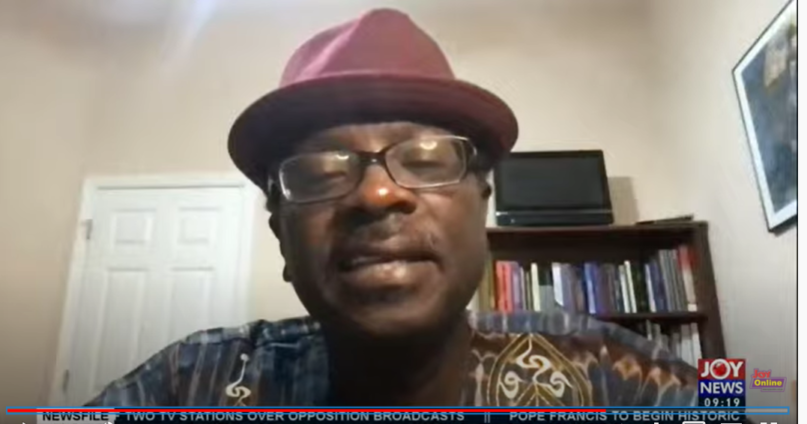
Writing from his base in the United States, Prof. Asare, a distinguished professor of accounting, argued forcefully in a social media post on Sunday, June 1, that the impetus for new oversight bodies like a Fiscal Council reflects a persistent flaw in Ghana's governance philosophy: an ingrained "institutional fetish" for creating new structures rather than fortifying established ones.
He estimates that setting up such a council, complete with a board of 7-9 members, a secretariat, salaries, logistics, and office infrastructure, could drain the national coffers by an estimated GH₵15-20 million annually.
"We have a penchant for creating new institutions for old problems," Prof. Asare observed. "This approach duplicates existing mandates, muddies responsibility and accountability, and risks becoming tools of patronage masked as technocratic solutions."
He asserted that the critical functions envisioned for a Fiscal Council – including fiscal compliance, forecasting, and policy oversight – are already embedded within the mandates of existing institutions.
He pointed to the Auditor-General's Department, tasked with ensuring financial transparency and adherence to regulations; the Ministry of Finance, responsible for macroeconomic forecasting and policy design; and parliamentary committees, which exercise oversight and scrutiny over government spending and fiscal policy.
Instead of enhancing coordination and fiscal discipline, Prof. Asare warned that the introduction of a new council could inadvertently delay decision-making processes and inflate the overall cost of governance without delivering any tangible improvements in fiscal outcomes.
As a more efficient and impactful alternative, Kwaku Azar advocated for a strategic investment in augmenting the analytical and forecasting capacities of current institutions, particularly the Auditor-General's Department and the Budget Office.
He suggested that a "modest investment" – perhaps a 15-20% increase in their current operational budgets, specifically earmarked for acquiring advanced fiscal modelling software and training a dedicated team of 20-30 economic and financial analysts – could empower these existing bodies to fully absorb the proposed functions of a Fiscal Council, legally, operationally, and independently.
"We must resist the impulse to solve every reform challenge by creating a new committee," he cautioned. "Creating new structures while neglecting existing ones reflects a misplaced confidence in form over function."
Prof. Asare maintained that while the concept of an Independent Fiscal Council might be well-intentioned, its implementation in the Ghanaian context would ultimately prove redundant.
He firmly believes it should be shelved in favour of a concentrated effort to bolster the technical capabilities and independence of Ghana's already established fiscal oversight bodies, thereby ensuring more effective and sustainable fiscal management.
Latest Stories
-
The 7-foot giant of Ngleshie Amanfro: Seven-foot Ghanaian Ephraim Saawa dreams of joining the national basketball team
30 minutes -
Government promises support for Kumasi Central Market fire victims
37 minutes -
Vibes The Movie: Big Ghun’s Ghanaian film earns five nominations at 2026 REFFA
1 hour -
MamaCare CEO warns unresolved conflicts among health workers could undermine maternal and neonatal care
2 hours -
Health professionals urged to translate medical knowledge into practice to save mothers
2 hours -
Conflicts among care providers linked to maternal, neonatal deaths – Expert
3 hours -
GIS marks 10th TIME conference, champions improved teaching practices
3 hours -
BRICS Or Balance? What Ghana’s bid really means
4 hours -
GPRTU wants full TRAFFITECH-GH implementation to start in 2027
4 hours -
Mahama announces plans to import electric wheelchairs for PWDs
4 hours -
KGL U17 Colts 2026: Western beat Prempeh Elite Academy to set up final final with Greater Accra Region
4 hours -
Late Solanke strike salvages 10-man Spurs draw at Man United
5 hours -
Gender Ministry to monitor welfare of Nana Akua Addo’s children amid domestic violence case
5 hours -
Benedict Okyere Yeboah: Ghana’s football problem goes beyond sacking a coach
5 hours -
GPL 2026/27: Darkwah Wiafe’s winner sees All Blacks beat Kotoko
5 hours