

Audio By Carbonatix
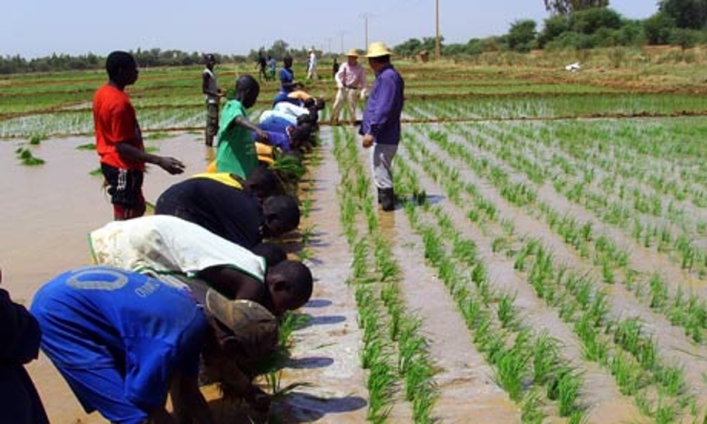
Rice millers in the country say they are being compelled to sell their paddy rice to millers in Burkina Faso and Nigeria due to a lack of storage facilities.
According to them, there is plenty of harvests, but lack of investments in the building storage facilities leads to post-harvest losses, which results in farmers losing out.
Speaking to Joy Business, the Convener of the Rice Millers Association, Yaw Adu-Poku appealed to government to invest in storage facilities near rice farms in the northern part of the country to avert post-harvest losses.
“Assuming we produce one million metric tonnes of rice we’ll be able to mill about 350,000 metric tonnes. The remaining 650,000 metric tonnes is left to vagaries of the weather” he said.
Mr. Adu-Poku stated that local rice farmers have the capacity to produce the staple to sufficiently feed the whole nation, but the lack of proper storage deter farmers from expanding their production capacity.
This, he maintained, is disincentive to rice industry since farmers are now being compelled to export the produce to other countries in the sub-region.
Touching on the price, he stated that the situation could be blamed on the high price of Ghana rice when the reverse could have been the case.
“All the rice that cannot be milled immediately could have gone into a storage facility and then over the period, release for milling and onto the market. So the price will stabilise from January to December.
Meanwhile, Mr. Adu-Poku, says demand for Ghana rice has gone up, following a ban on export of the commodity in South-East Asia.
The situation, he said has compelled major rice importers to turn to Ghanaian producers to fill the vacuum created by the shortage in import of rice.
“We are of the view that the current situation provides an excellent opportunity to sustain the supply by encouraging more Ghanaians to consume made in Ghana rice”, he said.
Mr. Adu-Poku stated that because the surge in demand for Ghana rice is influenced by external factors, there is the need to quickly design home grown policies to protect local rice farmers to cushion farmers from losing, when major rice producing countries in Asia lift the ban.
Latest Stories
-
My focus is victory in 2028, those with Agenda 2032 can wait — John Boadu
34 seconds -
AK24 Entertainment wins Event Promoter of the Year at Ghana Entertainment Awards USA 2026
3 minutes -
KNUST, UNCDF host EU Ambassador to advance EU Pact for skills development initiative agenda
4 minutes -
Teachers’ strike: School in Wa turns ghost town; pupils forced onto ‘virtual holiday’
6 minutes -
Gov’t should not see bipartisan probe into 3.9-tonne cocaine haul as attack – Akuapem North MP
18 minutes -
The foundation of every boy’s upbringing is important – Kobby Kyei
20 minutes -
Middle East conflict pushed Ghana fuel prices higher in first half of 2026 – COMAC
26 minutes -
President Mahama puts mining firms on notice over 2030 raw mineral ore export ban
28 minutes -
Ghana’s fuel consumption rises 12.24% to 4.06 billion litres in first half of 2026
28 minutes -
Global oil shock tests Ghana’s shift towards domestic fuel production
32 minutes -
Roads Ministry threatens legal action against utility companies over excavation of completed roads
33 minutes -
Mammography available in only 5 regions, making breast cancer screening difficult – Radiologist
43 minutes -
Pastor Daniel Amoateng pays for release of 23 Nsawam prison inmates
45 minutes -
Government to equip health facilities with mammography, radiotherapy machines – Deputy Health Minister
47 minutes -
Floodwaters recede in Hohoe as residents begin returning home – NADMO
59 minutes