

Audio By Carbonatix
Rounded edges, pastel colors and satisfying symmetry -- there is something unmistakable about a Wes Anderson movie.
For more than two decades, the director has crafted a unique aesthetic through quirky films like "The Royal Tenenbaums," "The Life Aquatic with Steve Zissou," and "The Grand Budapest Hotel.
"So, when travel enthusiast Wally Koval began noticing real-world locations that looked straight out of a Wes Anderson movie, he started an Instagram account in 2017 to document them all.
Three years and 1.3 million followers later, @accidentallywesanderson boasts over 1,200 submissions from around the world.
Despite its seemingly niche brief, the cult account features everything from minimalist lighthouses to grandiose hotels, from Art Deco bathhouses to mountain cabins.
All, however, are distinctly reminiscent of Anderson's oeuvre."He has created these very specific worlds, these fantastical worlds that are very perfectly placed," Koval explained in a video interview.
"They feel otherworldly, to a degree. They're real, but they're not right. They could exist at any point in time, or any place, potentially."
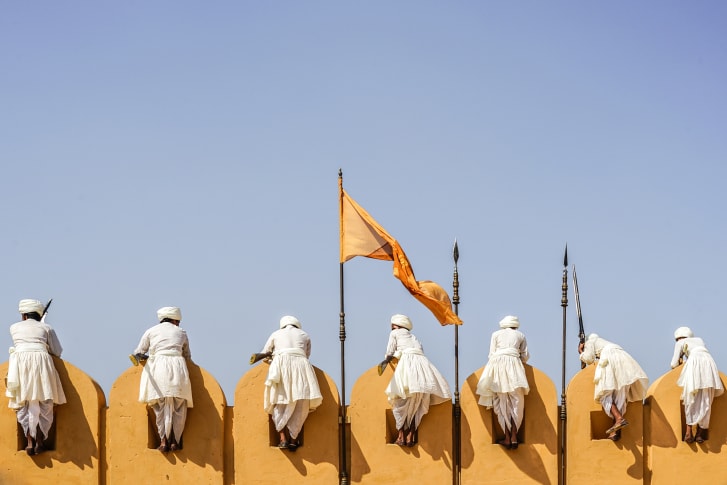
Such was the account's success that Koval has now published a book containing 200 of his favorite images.
As much a travel guide as a show of photography, the submissions are divided by geographical region and span the farthest corners of the Earth -- including tiny post offices in Alaska and Antarctica, and a powder-pink metro station in North Korea's capital, Pyongyang.
While the publication is, ostensibly, about Anderson, Koval said the director is really just a lens through which to see design and architecture around the world.
"The name brings you through the door," he added.
"But once you're in, I don't think you'd go anywhere."
Unexpected places
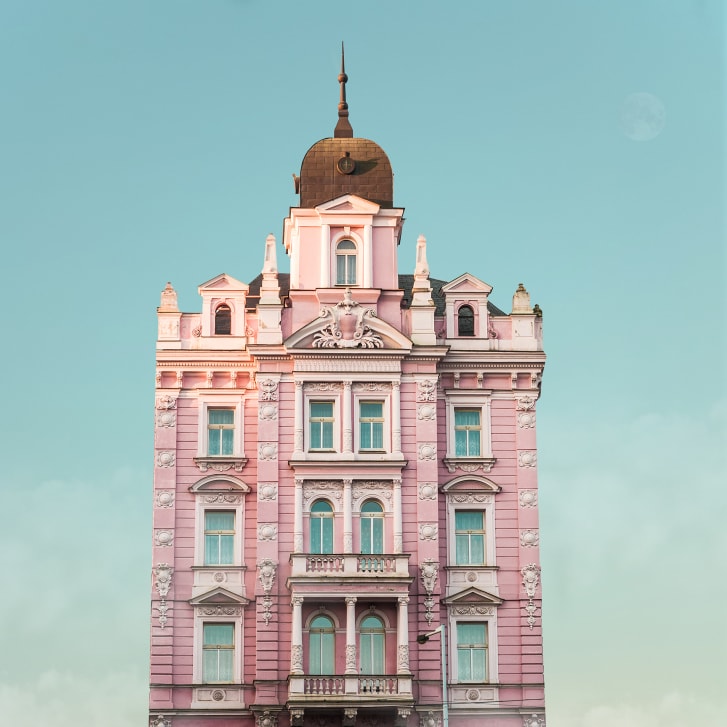
Some of the featured locations will feel familiar to Anderson fans: a funicular in the Swiss Alps, the wooden interior of a Norwegian railway carriage, the ornate facade of a Renaissance Revival hotel in Prague.
(Not Budapest, but close enough.) Others, however, demonstrate an ability to see the eccentric director's vision in the unlikeliest of places.
Take, for example, the image of Beijing's National Stadium, better known as the Bird's Nest. To most, the structure's bulking mass and latticed concrete shell would seem far from Anderson-esque.
Yet, with some selective cropping and favorable light, the neat colored seats and pristine turf take on an entirely new appearance.
"There's this layer or level of subjectivity that comes along with each location," Koval said.
"Maybe the light or wind hit a building just right, or there's some intangible thing that happened and (the photographer) stopped to take a photo ... They're adding substance and context to the world that we (otherwise) just walk past, or let go by in our periphery and just ignore."
As such, Koval is effusive in his praise for what he calls the "AWA community."
He now receives as many as 3,500 submissions a month through a dedicated Accidentally Wes Anderson website.
"They're the most important part of this project," Koval said of his contributors. "Without them, this doesn't exist."
Power of stories
In the years since 2017, when Koval and his wife Amanda started cataloging the photos as a bucket list for their own travels, Accidentally Wes Anderson has taken on its own unique identity beyond that of the director's work, Koval said.
Placing the project at "the intersection of distinctive design and unexpected narratives," he encourages photographers to accompany their submissions with stories about the locations and how they encountered them.
"There are a lot of pretty pictures out there, but I think the story that exists around them is what provides real context and real meaningful impact for whatever experience you might have when you go there."
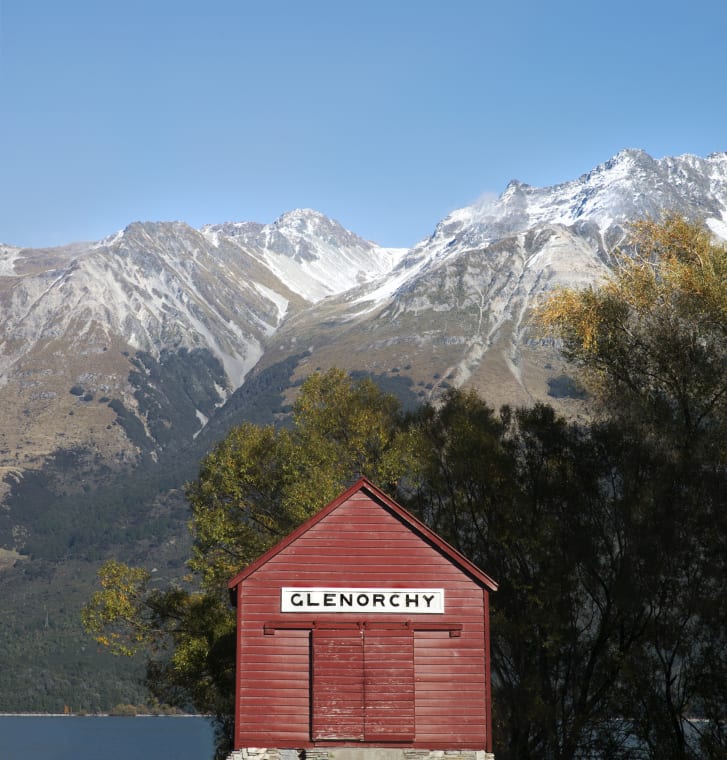
And now the project has received the ultimate seal of approval from Anderson himself. In the foreword to Koval's book, the director describes it as an "alluring travel guide" that "should keep me busy for several decades."
Anderson then signs off in typical style, writing: "I now understand what it means to be accidentally myself. Thank you.
I am still confused what it means to be deliberately me, if that is even what I am, but that is not important.
I send my very best wishes and much gratitude to this group for discovering and sharing all these peculiar and fascinating vistas."
"Accidentally Wes Anderson," published by Voracious Books, is available now.
Latest Stories
-
GPL 2025/26: Dreams FC stage stunning comeback to hammer Eleven Wonders
28 minutes -
Livestream: The Probe examines Kumasi’s looming water crisis
31 minutes -
MTN Ghana gears up to lead Africa’s AI revolution
32 minutes -
Philanthropist Alhaji FuZak donates Da’wah bus to Ambariya Sunni community
39 minutes -
GUTA calls for suspension of Publican AI system over trade disruptions
42 minutes -
TTAG raises alarm over proposed recruitment of 7,000 teachers, demands national posting roadmap
1 hour -
Civilians feared killed after reports of air strike on Nigerian market
1 hour -
Bishop Simon Kofi Appiah installed as new Jasikan Diocese Bishop
1 hour -
Trump’s Strait of Hormuz blockade threat raises risks and leaves predicaments unchanged
1 hour -
US Court backs extradition of former MASLOC CEO Sedina Tamakloe-Attionu to Ghana
2 hours -
Seven arrested as NAIMOS dismantles illegal mining camp, seizes firearms at Boin River
2 hours -
Fire erupts at Madina Ritz Junction, destroys multiple wooden structures and containers
2 hours -
Daniel-Kofi Kyereh returns from long-term injury, registers assist for Freiburg U23
2 hours -
Knifeman calling himself ‘Lucifer’ slashes three at NYC’s Grand Central
3 hours -
Brands are built from within to without
3 hours