

Audio By Carbonatix
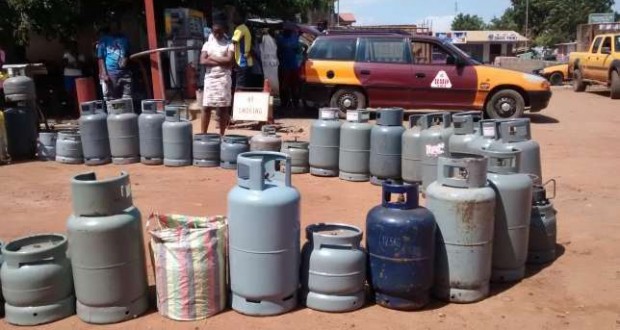
An Economics Professor at the University of Ghana wants government to, as a matter of urgency, remove taxes on liquified Petroleum Gas (LPG).
Eric Osei Assibey said, this is to reduce the burden of the hike in the cost of the commodity, on the poor and promote sustainable development.
LPG was first introduced as a cheaper fuel source to replace wood and other environmentally unfriendly fuel sources.
But now, its price build-up is made up of more than 20 per cent of taxes imposed over the years.
According to industry players, the indicative price is now GH¢6.86 from GH¢6.56 in the previous window.
The ex-refinery price has moved from GH¢4.25 in the previous window to GH¢4.55 currently. The current window on the international market closed on July 11, 2021, and the international price has gone up by 10.7%.
This will reflect in about a 5- 6% increase in the local price. This will push up the pump price to about 7.25 Ghana Cedis next widow beginning on Friday, July 16.
All of this, is expected to reflect in the average household 14.5kg cylinder costing the Consumer GH¢106. An increase of about GH¢4 from the previous current window price of GH¢102.
In an interview on the Super Morning Show, Prof. Osei Assibey explained that the recently imposed levies should be reviewed to ensure we are not unfairly targeting and overburdening the poor instead of protecting them.
“If you look at the levies, in my view, they are quite regressive in nature. Especially, when you over concentrate on VAT you will realise that it is the poor that ends up paying more within the big cities and so the targeted response is making sure it becomes more progressive so that it is the wealthy that tend to pay more.”
He then categorically stated that taxes on LPG should be removed to promote sustainable development, “Removing taxes or levies from products like LPG, if we are serious about sustainable development and conserving our environment, because these were targeted to encourage the poor to use more of LPG.
"Otherwise, it is going to be counterproductive in the sense that, they are really going to drive their demands towards the environmentally harmful energy usage products.”
Latest Stories
-
Caveman Watches partners with Mfantsipim School for 150th anniversary
1 minute -
We’ll pursue GH¢15m defamation suit against Sammy Gyamfi to its logical conclusion- Afenyo-Markin’s lawyers
2 minutes -
Martin Kpebu urges Afenyo-Markin not to return to court over Sammy Gyamfi lawsuit
11 minutes -
GRA submits preliminary report on drug shipment case to Mahama – Commissioner-General
38 minutes -
Sammy Gyamfi using ‘procedural roadblocks’ to dodge defamation case? – Afenyo-Markin’s lawyers
40 minutes -
The illusion of a good deal: Why some everyday money-saving habits may be costing you more
55 minutes -
Family seeks autopsy, police investigation into death of student 12 days after Abomosu SHS enrolment
1 hour -
Trade Minister urges employers to leverage industrial opportunities to create jobs
1 hour -
Asantehene plants trees to commence Jimi Watercourse Rehabilitation destroyed by galamsey
2 hours -
15 arrested, 6 trucks impounded over sandwinning activities on Kumasi-Accra Expressway
2 hours -
OFFICIAL: Vinicius will miss El Clásico, suspended four games
2 hours -
Prayer vigil held after four arson attack murders
2 hours -
GRA fully recovers $154k legacy debt owed by foreign entities between 2022 and 2024
2 hours -
Kwesi Pratt Jr warns bus preachers are adding to passengers’ stress with accident prophecies
2 hours -
MTN Ghana to spend $1.1bn in 3 years, build 500 new sites as MoMo hits 44% Growth
2 hours