

Audio By Carbonatix
West Africa stands at a defining moment in its development journey. The region is richly endowed with mineral resources, a youthful population, and growing industrial ambition. At the same time, it faces rising energy demand, climate vulnerability, infrastructure deficits, and increasing expectations for inclusive growth.
In this context, responsible mining and sustainable power development are no longer parallel conversations; they are deeply interconnected pillars of West Africa’s long-term economic transformation. Mining remains one of the biggest contributors to economic activity across countries such as Ghana, Côte d’Ivoire, Mali and Senegal.
The sector generates billions in export earnings, supports government revenues, attracts FDI and creates thousands of direct and indirect jobs.
Minerals such as gold, bauxite, lithium and iron ore continue to position West Africa as an important player in the global commodities market. However, the future of mining cannot solely be measured by production volumes.
The true measure of success lies in how effectively the sector contributes to sustainable development through environmental stewardship, infrastructure development and value addition.
A key part of this transformation is power. Mining is an energy-intensive industry. Reliable and affordable power directly influences operational and cost efficiency. Across the ECOWAS region, inconsistent electricity supply and high energy costs continue to constrain industrial growth and reduce productivity.
For many mining companies, self-generation through diesel and heavy fuel oil remains expensive and environmentally unsustainable. This presents a significant opportunity for integration between the mining and power sectors.
Responsible mining can become a catalyst for energy transition and broader infrastructure development in West Africa. Increasingly, mining companies are investing in renewable and hybrid energy solutions, including solar, wind and gas-to-power systems, to reduce carbon emissions, improve energy reliability, and lower operational costs.
These investments not only benefit mining operations but can also support surrounding communities and national grids through shared infrastructure models.
In Ghana, for example, several mining companies are actively pursuing decarbonisation strategies through the integration of renewable power and energy efficiency initiatives.
In Africa, there is growing momentum around green mining, climate finance, and ESG. These developments reflect a broader shift toward mining models that prioritise sustainability alongside profitability. This is where collaboration becomes essential.
Governments, financial institutions, DFIs, mining companies and local communities must work together to create an enabling ecosystem for sustainable growth. Public-private partnerships will play a critical role in mobilising capital and accelerating innovation across both sectors. Financial institutions also have a responsibility to lead intentionally.
At Stanbic Bank, we recognise that sustainable development requires more than financing transactions; it requires financing impact. This means integrating ESG principles into credit processes, supporting clients on sustainability journeys that align economic growth with environmental and social responsibility.
The future of mining finance will increasingly be shaped by sustainability considerations. Investors, regulators, and communities are demanding greater accountability, transparency, and measurable impact.
Mining companies that proactively adopt responsible operational practices, invest in clean energy, strengthen community relations, and improve governance frameworks will be better positioned to attract long-term capital and remain globally competitive.
As the region prepares for the next phase of growth, the focus must remain on creating an ecosystem where natural resources generate lasting value for economies, communities, and future generations.
Responsible mining powered by sustainable energy can become a major force for industrialisation, economic diversification and inclusive prosperity across West Africa. The opportunity before us is significant. The responsibility to act collectively is even greater.
*********
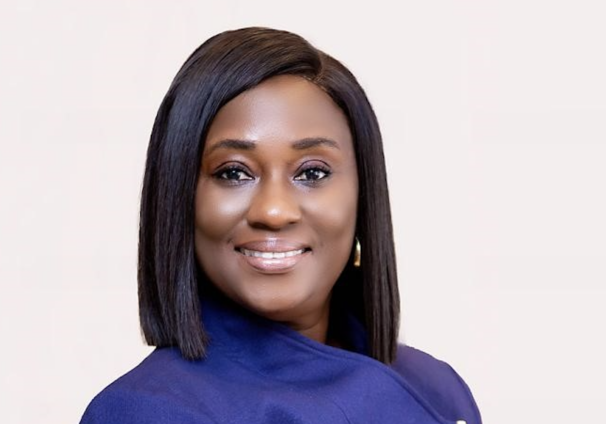
The writer, Lorraine Mac-Pods, Executive Vice President, Mining & Metals, Corporate & Investment Banking, Stanbic Bank Ghana.
Latest Stories
-
Ghana seeks long-term mining investments that benefit local communities – Armah-Kofi Buah
5 minutes -
Ghana’s Ambassador to China, Kojo Bonsu, presents credentials to Nepalese President
18 minutes -
Fairtrade Africa’s Cocoa Hubs Project strengthens rural service centres in cocoa-growing communities
23 minutes -
SEC cautions investors against fraudulent investment schemes
25 minutes -
Land Ministry urges rCOMSDEP operators to reserve earnings for land reclamation
28 minutes -
Commercial drivers give authorities one week to clear traders from lorry terminals, bus stops
33 minutes -
Nana B denies claims that Kojo Bamba was his driver and bodyguard
1 hour -
Engage Now Africa to construct a 10-unit classroom block for struggling Navrongo Vocational Training Centre
1 hour -
One digital financial breach could expose linked accounts to fraud – Financial Crimes Manager
1 hour -
Ghana Russia Centre signs ICT cooperation agreement with Moscow University
1 hour -
The powerhouses of the village: Honouring Ghana’s rural women on International Rural Women’s Day
1 hour -
Vincent Assafuah petitions CHRAJ to investigate alleged irregularities in 2026 World Cup visa arrangements
1 hour -
12-year-old boy found dead in muddy pit at Opeikuma
1 hour -
GHS begins Yellow Fever vaccination campaign in three Upper West districts
1 hour -
Organised Labour pushes for higher 2027 base pay despite slowing inflation
1 hour