

Audio By Carbonatix
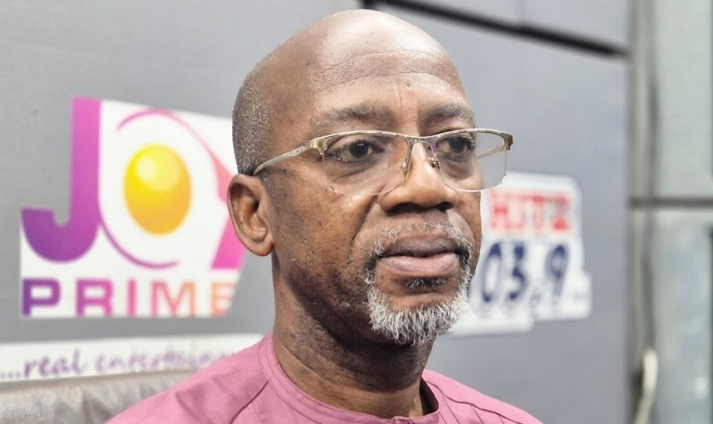
Veteran Ghanaian highlife musician and presidential staffer Rex Omar has called for a fundamental shift in public attitudes towards sanitation, urging Ghanaians to embrace cleanliness as a continuous civic responsibility rather than an activity undertaken only after disasters strike.
He said the devastating floods that recently affected parts of Accra and other communities should serve as a reminder that poor environmental practices, including indiscriminate waste disposal and the construction of buildings on waterways, continue to expose lives and property to avoidable disasters.
He made the remarks on Friday, July 10, when he joined President John Dramani Mahama, government officials, security agencies, volunteers and residents in the first phase of the National Clean-up Exercise organised in flood-affected communities.
The nationwide campaign forms part of government efforts to restore sanitation in the aftermath of the June 29 floods while promoting long-term environmental responsibility.
Rex Omar stressed that maintaining clean surroundings must become an integral part of the country's culture if Ghana is to effectively tackle recurring flooding and sanitation challenges.
“I believe that this shouldn’t be a nine-day wonder. It’s something that must be part of our way of life. If it’s every Saturday or every Friday at the end of the month or whatever, it’s something that we need to do,” he said.
He commended President Mahama for personally participating in the exercise, describing the gesture as an example of leadership that should inspire citizens to contribute actively to national development.
According to him, when national leaders demonstrate commitment to community service, citizens have a moral obligation to support such initiatives.
“Leadership by example, if the president himself is part of it, who am I not to be part of it? So at the end of the day, it is about the country,” Rex Omar said.
The musician urged Ghanaians to cultivate greater respect for their environment, observing that cleanliness is not only essential for public health but also reflects responsible citizenship.
He encouraged communities to comply with environmental regulations and adopt practices that promote healthier and safer surroundings.
“We need to change our attitude. They say cleanliness is next to godliness. So we need to be conscious of our environment and then always clean our environment and abide by the laws and the rules of the country,” he said.
Rex Omar attributed the country's persistent flooding problems partly to years of unchecked environmental abuse, including illegal construction on waterways and indiscriminate dumping of refuse into drains and gutters.
He warned that while such practices may benefit a few individuals in the short term, the resulting disasters ultimately affect entire communities.
“People have been allowed over the years to build in waterways and dump refuse in gutters and all that. And at the end of the day, if the disaster comes, it affects everybody,” he said.
He noted that flooding no longer affects only low-income communities, pointing out that even some of the country's most affluent residential areas have suffered severe flood damage in recent years.
According to him, the consequences extend beyond damaged homes, affecting businesses, livelihoods and national productivity.
“There are so many people who have built houses in very expensive areas and yet they’ve been affected by the floods. So at the end of the day, it affects productivity; it affects everything,” he said.
While acknowledging the importance of public education, Rex Omar argued that awareness campaigns alone would not solve Ghana's sanitation challenges unless existing environmental laws are rigorously enforced.
“The most important thing is that there must be enforcement,” he said.
Describing the recent flooding as an opportunity for national reflection, the highlife icon called on government, traditional authorities, local assemblies and citizens to work together to eliminate practices that threaten the environment.
“I believe that in going forward, what has happened with this flood is a wake-up call for all of us so as to be able to stop doing things that will create these problems,” he said.
He expressed optimism that sustained community participation, effective law enforcement and responsible environmental practices would help build cleaner, safer and more resilient communities across the country while reducing the devastating impact of future floods.
Latest Stories
-
Hawa Koomson pledges experienced and mature leadership of NPP women’s wing
20 minutes -
Young woman found dead at Kasoa Peace Town
53 minutes -
Playback: The Law examined lawful arrest in Ghana
1 hour -
Mahama urges African governments to treat healthcare as an investment, not budget cost
2 hours -
Bawumia congratulates John Boadu and new NPP executives, pledges support ahead of 2028
2 hours -
‘No talent should be left out’ – Bawumia pledges inclusive NPP campaign for 2028
2 hours -
Prof. Mike Oquaye recounts how he blocked Special Prosecutor’s attempt to arrest Bawku Central MP
2 hours -
Make health sovereignty a priority for Africa – Mahama
2 hours -
Dorimon Naa, Wa West DCE lead massive clean-up exercise; threaten sanctions against recalcitrant residents
3 hours -
Photos from Adom FM Y2K Jam
3 hours -
Praye Tiatia steals the show at Adom FM Y2K Jam [Watch]
3 hours -
Boakye Agyarko congratulates John Boadu, pledges support for NPP leadership
3 hours -
Antwi HiMight thrills fans with Antwi ne Antwi hits at Adom FM’s Y2K Jam [Video]
3 hours -
Amb. Edward Boateng congratulates Boadu, Kodua on election wins
4 hours -
John Boadu pledges to rebuild NPP from grassroots and restore ‘winning machinery’
4 hours