

Audio By Carbonatix
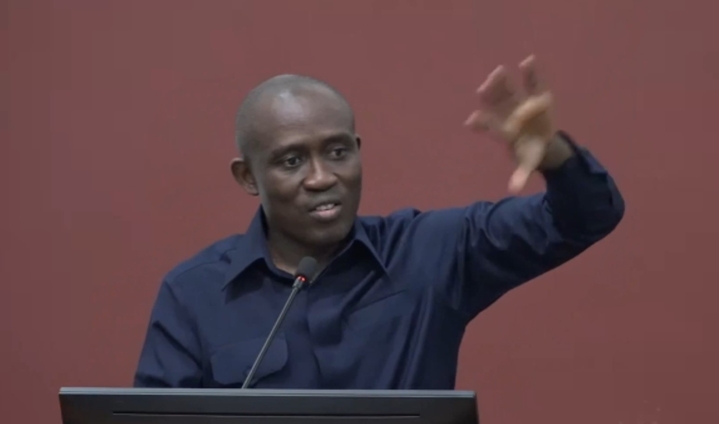
The Director of Public Health, Ghana Health Service, Dr Franklin Asiedu-Bekoe is pushing for an extensive roll out of the Surveillance Outbreak Response Management and Analysis system (SORMAS) to keep disease outbreak in check.
The system, which was introduced in 2015 detects, investigates and controls diseases.
The system has successfully been deployed in 3 simultaneous outbreaks in Nigeria that is Lassa fever, bacterial meningitis and monkey pox.
In Ghana, SORMAS has been piloted in 36 districts in 2 regions.
Speaking at One Health Sub-Saharan Africa workshop in Kumasi, Dr Asiedu-Bekoe identified inadequate use of SORMAS is causing delays in sample results feedback.
He again observed low coverage of staff in implementing districts and regions as hampering effective use of the system.
He was optimistic the training of staff and a nationwide implementation of SORMAS will help quell pandemics.
It was organized by the Department of Theoretical and Applied Biology in collaboration with the International Programmes Office and the University of Bremen.
It is also supported by the E-Learning Centre KNUST and AI4PEP Project.
The 3-day workshop, which was both in-person and online saw participation of experts across the sub-region deliberate on public health issues.
The programme featured experts like Malaria Data Advisor at the National Malaria Eradication Programme, Samuel Oppong who discussed malaria transmission in Ghana.
The malaria discourse also had Dr. Myat Su Yin of Mahidol University who is using Internet of Things for Mosquito surveillance. Prof. Dr. Peter Haddaway of the same University also discussed mapping of dengue vector breeding sites from street view images.
Prof. Ebenezer Bonyah of Akenten Appiah-Menka University also spoke about the social perspective of malaria.
Emerging technologies like Artificial intelligence use in healthcare was also discussed.
One of the presenters, Dr. Kingsley Badu from the Department of Theoretical and Applied Biology, KNUST spoke on a project "Responsible AI for developing a robust public health surveillance system: Early Detection and Prediction of Vector-borne Viral Zoonotic Pathogens".
The project co-designed with Dr. Franklin Asiedu-Bekoe seeks to support the public health department in solving some of the issues such as identifying novel infections and also predicting outbreaks.
It falls under the broad project, Artificial intelligence for pandemic and epidemic preparedness (AI4PEP).
This project is supported by the IDRC of Canada and the University of York in Canada.
Latest Stories
-
I assure Otumfuo, Mahama will join him to commission KNUST Teaching Hospital by end of this year – Haruna Iddrisu
20 minutes -
Gov’t to roll out free special education for persons with disabilities from July 1 – Education Minister
42 minutes -
“We used it to test our officiating officials’ readiness” – Bawah Fuseini after CAA Athletics event
1 hour -
Volleyball emerges as Ghana’s fastest rising sport
1 hour -
National Sports Fund needs strong leadership from the top – Administrator David Wuaku
2 hours -
JoySports Exclusive: Steve McLaren in talks with GFA after expressing interest in Black Stars job
2 hours -
Fire guts auto parts warehouse at Bubuashie, one fire officer injured
2 hours -
I owe my victory to coach Ofori Asare – Allotey after winning WBA Africa Gold Super Flyweight belt
2 hours -
Church of Pentecost supports over 2,000 BECE candidates in Obuasi with career guidance seminar
3 hours -
Brandon Asante and Coventry all but promoted to Premier League despite Sheffield Wednesday draw
4 hours -
GPL 2025/26: Late Kwartemaa strike downs Hearts in Tema
4 hours -
Ghana Faces Sierra Leone Moment as Prosecutorial Powers come under strain
4 hours -
Don’t consume fish or seafood from Tema Shipyard until further notice – FDA warns
4 hours -
Why volunteering might be Africa’s most underrated career accelerator
4 hours -
ActionAid Ghana raises concern over gender gaps in Feed Ghana Programme
4 hours