


Audio By Carbonatix
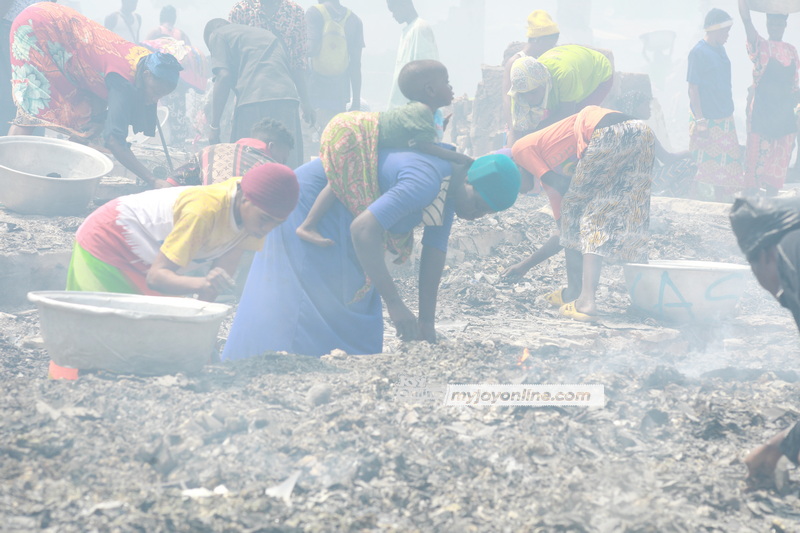
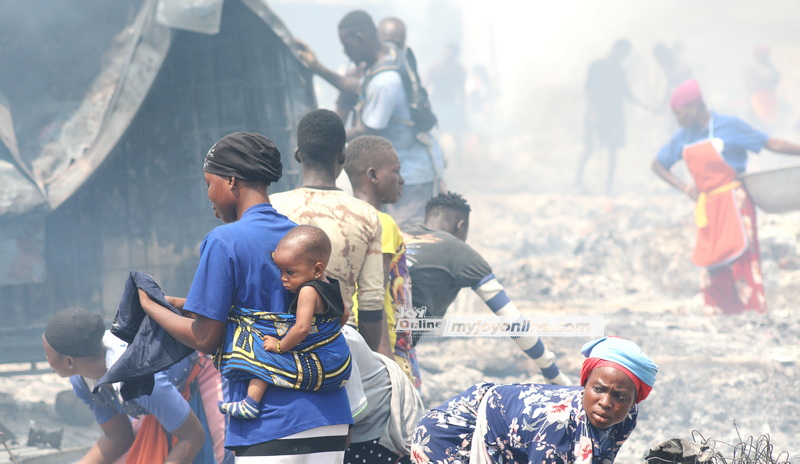
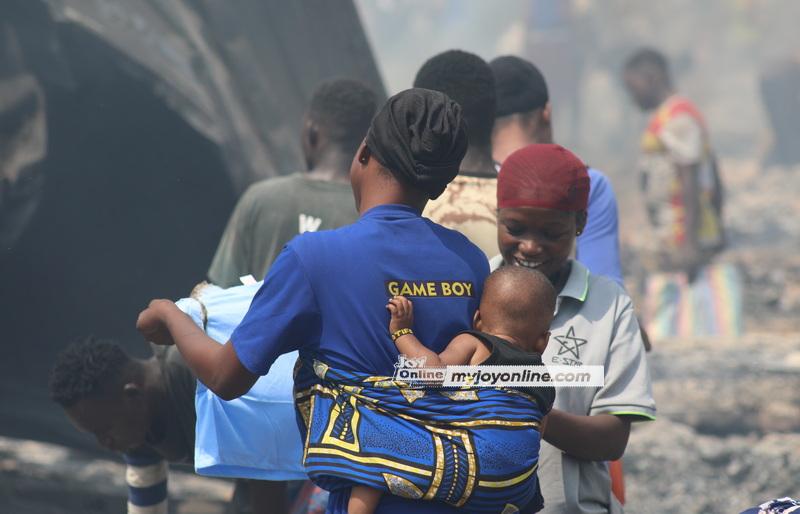
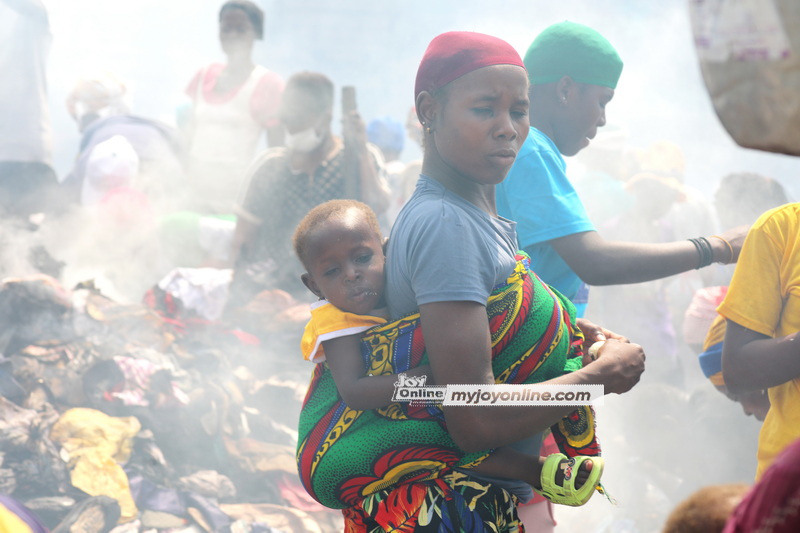
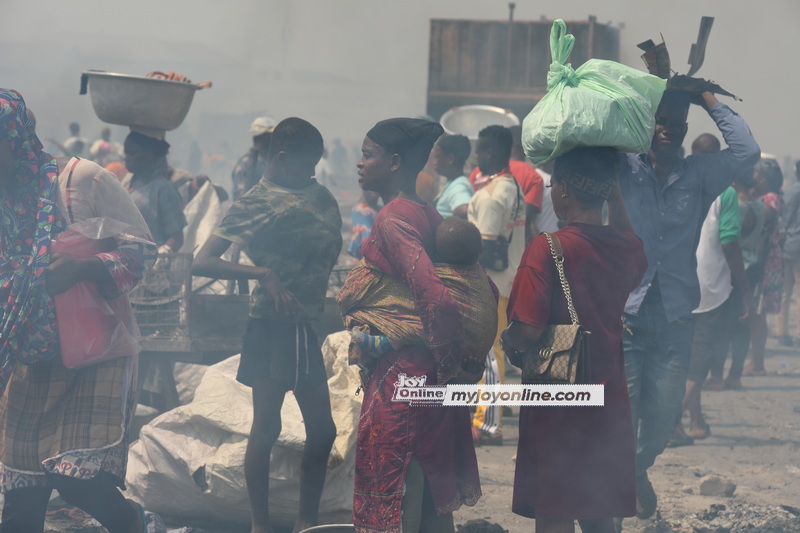
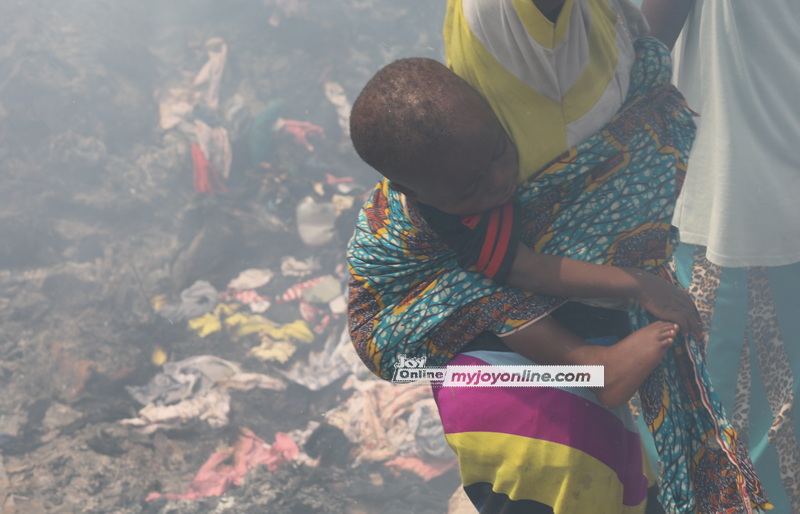
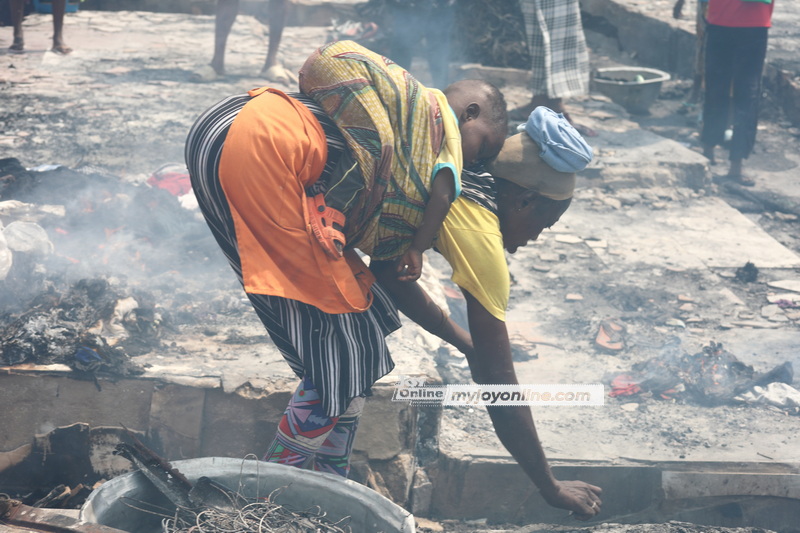
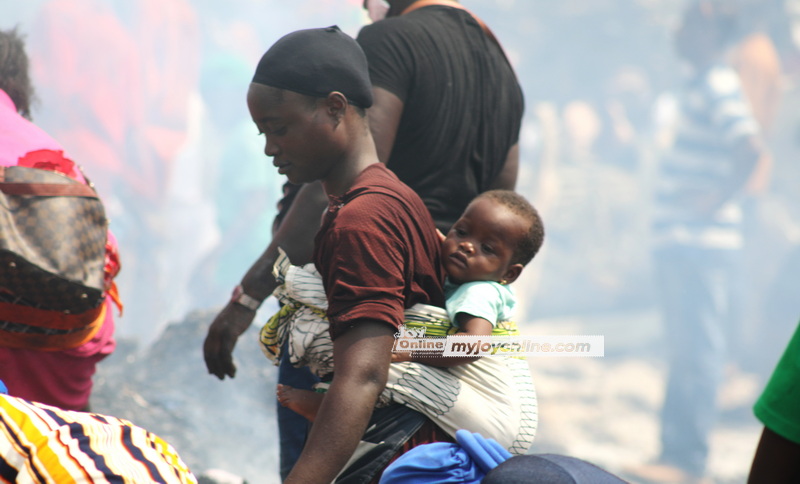
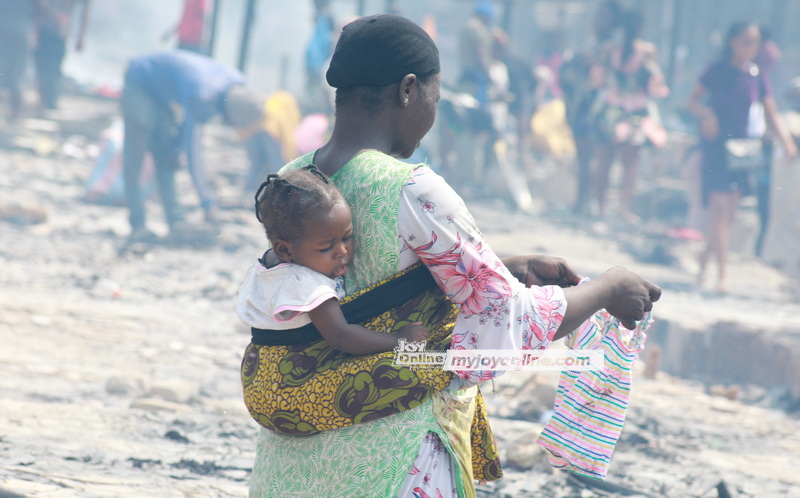
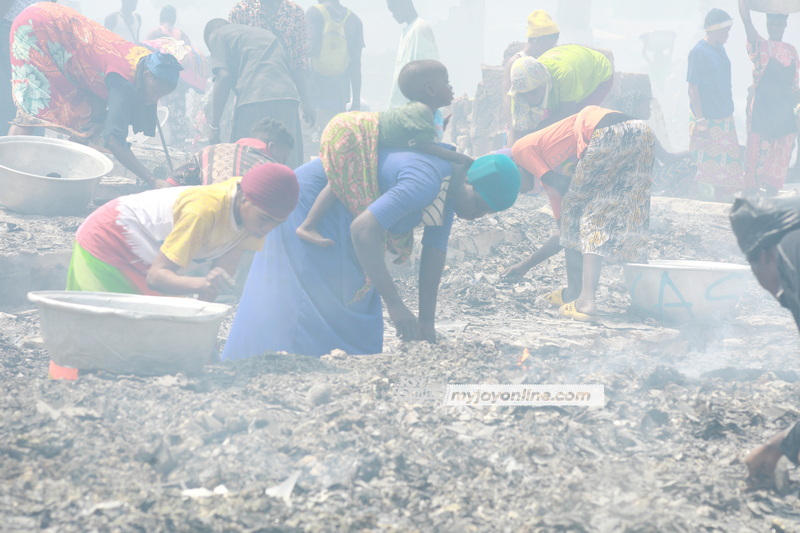
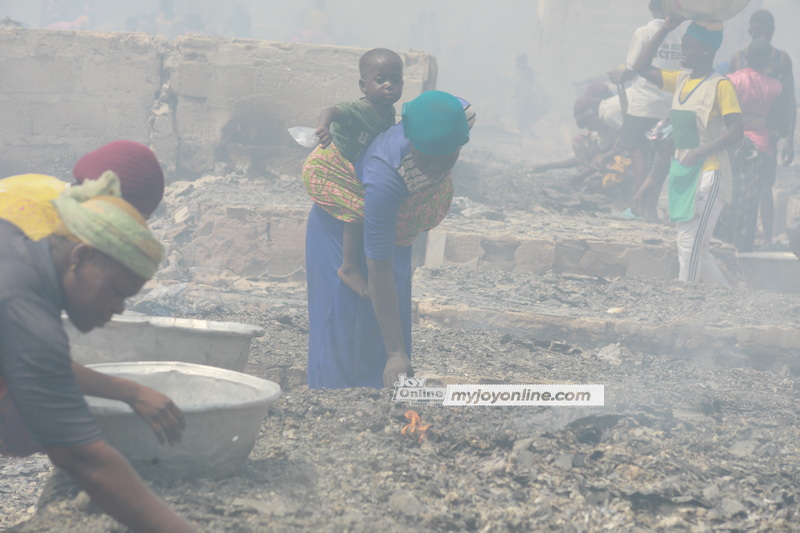
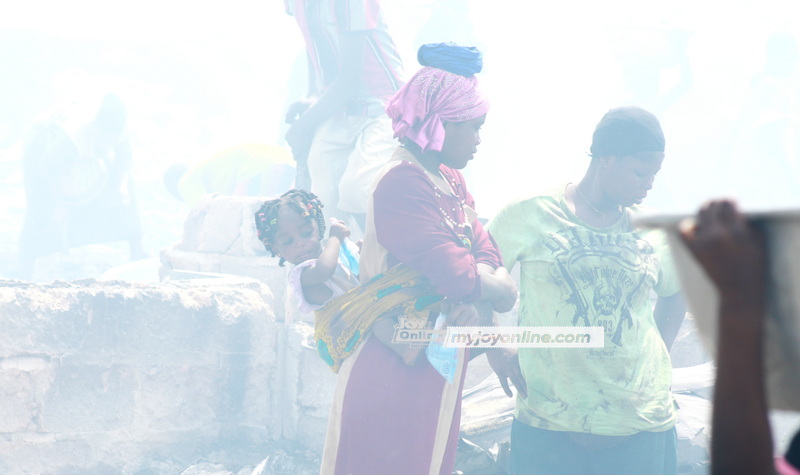
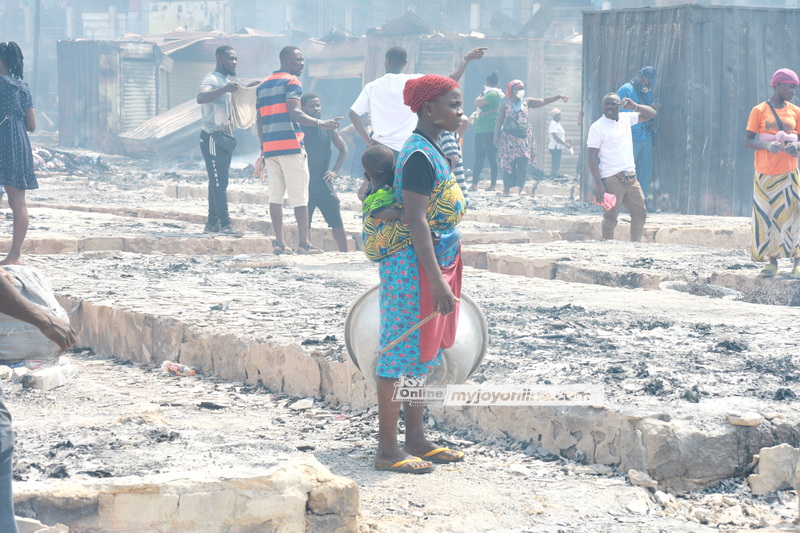
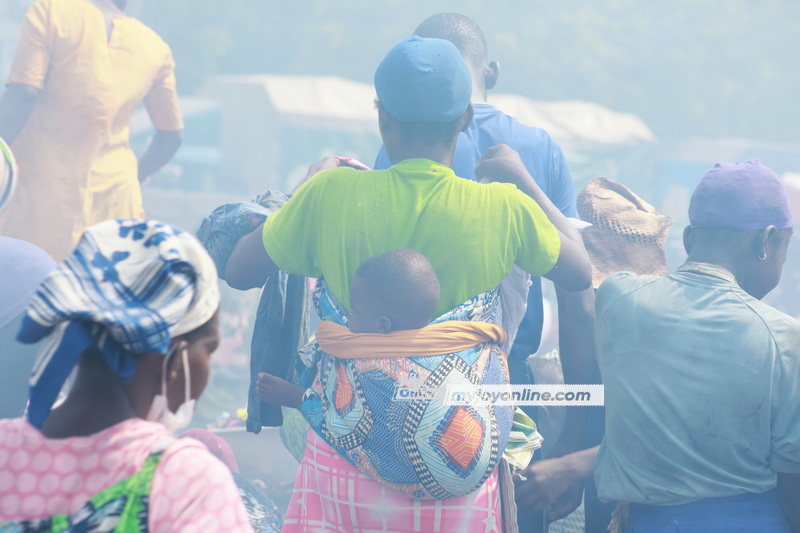
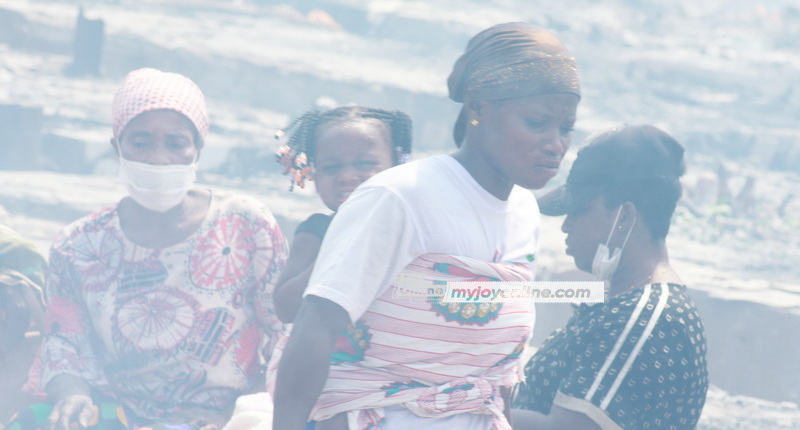
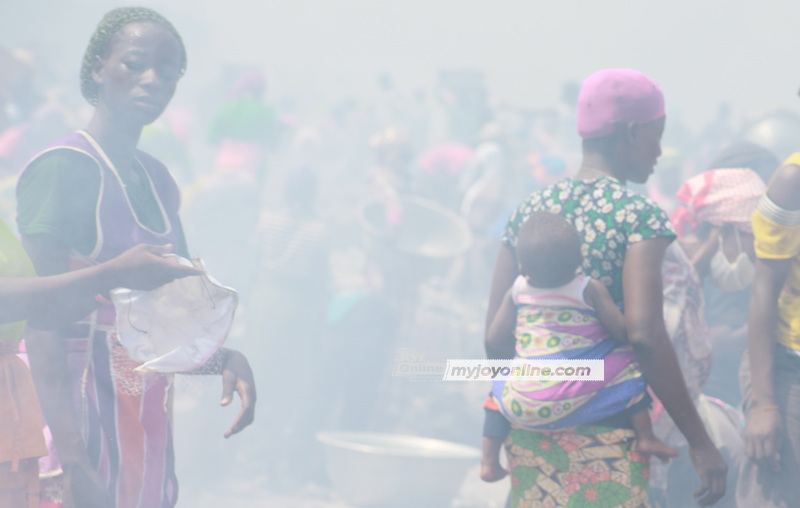
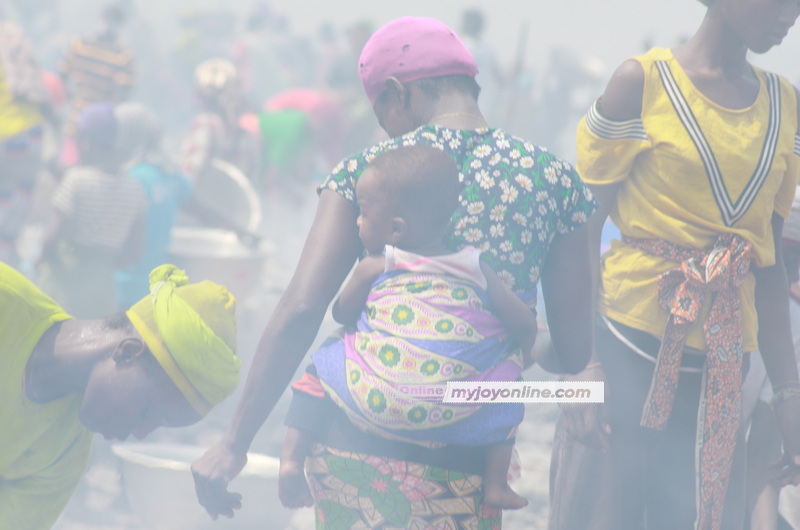
Scavenging mothers who defied the choking smoke that emanated from the Kantamanto devastating fire outbreak in the early hours of Thursday, January 2, appeared to care very little about the toxic smoke their children inhaled, as they braced the extreme health risks themselves, in the name of survival.
The immediate aftermath of Kantamanto’s worst fire disaster saw many people ignore the offensive toxic smoke to pick metal scraps to sell to nearby scrap dealers.
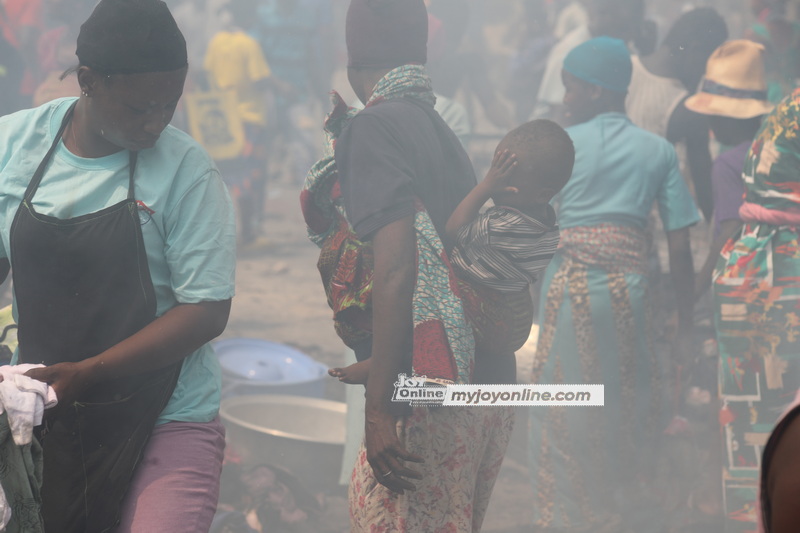
Some of the children coughed continually while others, strapped to the backs of their busy mothers, rubbed their agitated eyes in protest.
That attitude was condemned by some onlookers who argued that the mothers should have left the children, including babies, in safer environments.
Experts point to the fact that wildfire smoke is comprised of a mixture of gaseous pollutants (e.g., carbon monoxide), hazardous air pollutants (HAPs) (e.g., polycyclic aromatic hydrocarbons [PAHs]), water vapour, and particle pollution. Particle pollution represents a main component of wildfire smoke and the principal public health threat.
“Particle pollution” (also referred to as particles, particulate matter, or PM) is a general term for a mixture of solid and liquid droplets suspended in the air.
There are many sources of particle pollution; the most common is combustion-related activities, such as wildfires.
Particles can be made up of different components, including acids (e.g., sulfuric acid), inorganic compounds (e.g., ammonium sulfate, ammonium nitrate, and sodium chloride), organic chemicals, soot, metals, soil or dust particles, and biological materials (e.g., pollen and mold spores).
During a wildfire or other combustion-related activities, concentrations of particles can substantially increase in the air to the point that particle pollution is visible to the naked eye.
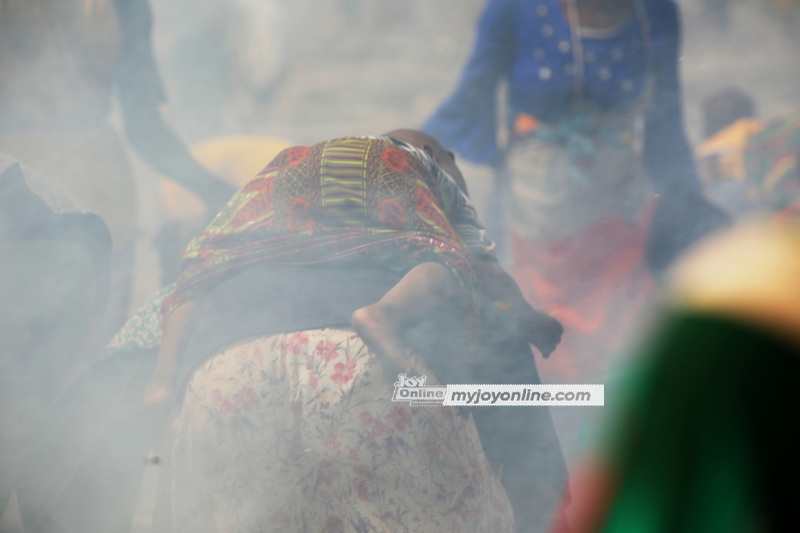
Smoke can irritate the eyes and airways, causing coughing, a scratchy throat, irritated sinuses, headaches, stinging eyes or a runny nose. If you have heart or lung disease, smoke might make your symptoms worse.
The fire which started around 1 a.m., destroyed stalls and goods worth millions of cedis. Devastated traders recounted their losses, with many calling on the government for urgent support.



Latest Stories
-
GAEC must retain nuclear scientists for Ghana’s nuclear ambitions – Minister
19 minutes -
Man reportedly mistaken for game and shot by hunter dead in forest
22 minutes -
19-year-old mason jailed 15 years for defiling seven-year-old pupil
26 minutes -
Ghana’s banking sector assets rise 20.47% to GH¢500.2bn – BoG Governor
30 minutes -
22 injured as Sprinter bus overturns at Sege after tyre burst
32 minutes -
UN housing expert urges Ghana to strengthen Rent Control Department amid housing affordability concerns
40 minutes -
Delta-BCI partnership reaches 166,000 people with breast cancer education
50 minutes -
Power restoration fault suspected in Kumasi Central Market fire
6 hours -
The 7-foot giant of Ngleshie Amanfro: Seven-foot Ghanaian Ephraim Saawa dreams of joining the national basketball team
7 hours -
Government promises support for Kumasi Central Market fire victims
7 hours -
Vibes The Movie: Big Ghun’s Ghanaian film earns five nominations at 2026 REFFA
7 hours -
‘I’m a fulfilled man’—Justice Korbieh on missing out on Supreme Court despite two nominations
7 hours -
MamaCare CEO warns unresolved conflicts among health workers could undermine maternal and neonatal care
8 hours -
Health professionals urged to translate medical knowledge into practice to save mothers
8 hours -
Retired judge Justice Francis Korbieh charges 1,568 new lawyers to uphold integrity
9 hours