

Audio By Carbonatix
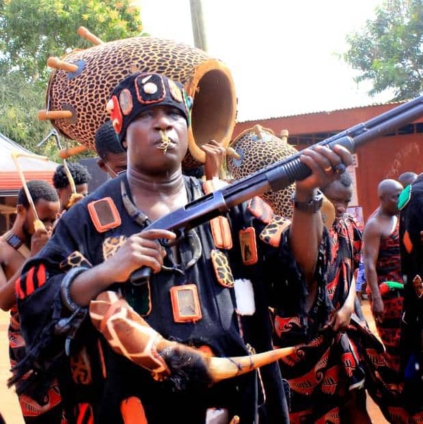
The chiefs and residents of Sefwi Boinzan have celebrated their Eluo Festival for the first time since 1992.
There had been no celebration of the festival for 30 years due to chieftaincy disputes in the community.
Speaking at the durbar, the chief of Sefwi Boinzan, Nana Ofori Ahenkan II called on residents to be united.
He spoke of the rich history of Sefwi Boinzan, a land that has been known for its unity and strength over the past years. He recounted the tales of their ancestors who had overcome challenges through collaboration and solidarity.
He emphasised that the Eluo Festival was not just a celebration of their heritage, but a reminder of their duty to safeguard it.

Nana Ofori Ahenkan II made a heartfelt plea for peace and unity. He urged the community to set aside their differences and embrace their common identity as Sefwis and also to foster development. His speech touched the young and old, forging a renewed sense of togetherness.
On his part, the District Chief Executive of Sefwi Juaboso in the Western North Region, Godfred Kwabena Adjei Asante indicated that the only way to ensure a massive development in the Boinzan community is to be united.
He said there is no acceleration of development in a community where there's chaos therefore, the chiefs and people must have a common objective of putting the success of their community at heart.
He pledged the district assembly would continue to relay its support to chiefs and residents of the Boinzan division.
Meanwhile, the Member of Parliament for Sefwi Juaboso, Kwabena Mintah Akandoh speaking for the first time after his tragic accident on Nyinahin to Kumasi road commended the chief of Sefwi Boinzan, Nana Ofori Ahenkan for being an agent of development of the area.

The MP also added that he would support the chiefs and people of Boinzan in terms of development.
The theme for this year’s Eluo Festival was 'Unity and Reconciliation' and it brought together all the chiefs of the Boinzan Divisional Council, political actors, civil servants, government departmental heads, agency heads, priests, non-governmental organizations, and others to make the event successful.
During the festive season, visitors are welcome to make merry. The people put on traditional clothes and there is a durbar of chiefs and residents to display the true definition of their culture.
As part of the celebration, the chiefs and people perform a ritual known as Dwiritwa where they visit the river gods in the community to engage in communal labor to clean up the river banks and pour libation to the gods and ancestors. Also the Kontihene leads the rest of the chiefs to perform a ritual to catch a crab and it is sent to the chief of the community which signifies that the beginning of the festival.
Latest Stories
-
Baffour Awuah deliberately refused to honour EOCO invitation – Deputy AG, Srem-Sai
8 minutes -
‘Believe in these players’ – Carlos Queiroz tells Ghanaians after leaving Black Stars job
8 minutes -
ECG announces planned maintenance outage in parts of Accra on Friday
20 minutes -
Carlos Queiroz sacked as Black Stars head coach
27 minutes -
Parliamentary Sports Committee to ‘interrogate’ Black Stars struggles with Ministry, GFA invitations
35 minutes -
Asutifi North Police arrest 7 in crackdown on suspected drug activities
46 minutes -
Attijariwafa Bank: What to know about the Moroccan Group taking over SG Ghana
49 minutes -
University Librarians Ghana honours past leaders for distinguished service
56 minutes -
Seychelles President leads high-level dialogue on Africa’s digital future at FALS Global Conversations in New York
57 minutes -
24-hour economy requires faster justice for commercial cases – Chief of Staff
1 hour -
Five Agric Colleges receive digital tools to drive climate-smart farming
1 hour -
GPL 2026/27: Kotoko face Karela test as Hamza Obeng takes temporary charge
1 hour -
Morocco strike late to overcome 10-man Black Starlets
2 hours -
Nyaho-Tamakloe calls on Kurt Okraku to resign amid Black Stars struggles
2 hours -
Societe Generale Group agrees to sell Ghana subsidiary to Attijariwafa Bank
2 hours