

Audio By Carbonatix
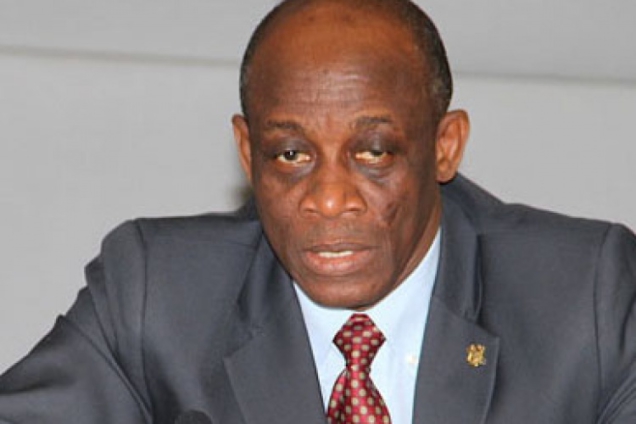
Former Finance Minister, Seth Terkper, has reiterated his advice to government not to engage in what appears to be another "fiscal offset" in the 2023 budget, similar to what occurred in the government's 2017 budget.
In this context, Mr Terkper has called on government to disclose its plan for dealing with a large¢ 77 billion pipeline of arrears and contracts in the 2021 Budget Performance Report.
He noted that a similar plan was used to deal with the "single spine" wage arrears in 2020.
He has argued that given that budget overruns are at the core of most debt challenges, transparency and accountability in government finances are crucial for securing an IMF programme.
Moreover, they are also needed for sustainable economic growth and development.
Mr Terkper has argued that the treatment of the banking and energy sector bailout costs as memoranda items, rather than adding them to the country's deficit and public debt stock, create a false impression of fiscal consolidation.
The former Minister stated that this practice by government resulted in the rapid financial market rating downgrades of the country's sovereign bonds and eventual debt default, with the deficit revised upwards to 7% and 7.2% for 2018 and 2019 respectively when the IMF and ratings agencies adjusted Ghana’s fiscal deficit and public debt figures.
Mr Terkper recalled that in 2017, the incoming Akufo-Addo administration accused the John Mahama administration of overlooking arrears of about GH¢7 billion.
However, only about GH¢2 billion was carried forward to the 2017 fiscal year after an apparent offset of GHS 5bn against total expenditures.
At the time, Mr Terkper opposed the move in various articles and interviews.
In a similar move, Mr Terkper notes that the 2023 budget shows another apparent offset of GHS 22bn that also appears to reduce the deficit from about GH¢60 billion to approximately GH¢38 billion.
As with the 2.3% reduction in the budget or fiscal deficit in 2017, the repetition of the fiscal move results in a "paper" reduction of 3.7% of GDP.
The former minister has warned that this practice by government creates a false impression of fiscal prudence, which is unsustainable in the long term.
He has argued that such moves lead to a lack of transparency and accountability in government finances, which can lead to financial instability and economic turmoil.
Mr Terkper's concerns reflect a broader need for transparency and accountability in government finances in Ghana.
The government must address these concerns to build trust with its citizens, investors, and international partners.
Failure to do so could lead to further economic instability and harm the country's long-term economic prospects.
Latest Stories
-
Conflicts among care providers linked to maternal, neonatal deaths – Expert
8 minutes -
GIS marks 10th TIME conference, champions improved teaching practices
15 minutes -
BRICS Or Balance? What Ghana’s bid really means
41 minutes -
GPRTU wants full TRAFFITECH-GH implementation to start in 2027
1 hour -
Mahama announces plans to import electric wheelchairs for PWDs
1 hour -
KGL U17 Colts 2026: Western beat Prempeh Elite Academy to set up final final with Greater Accra Region
1 hour -
Late Solanke strike salvages 10-man Spurs draw at Man United
2 hours -
Gender Ministry to monitor welfare of Nana Akua Addo’s children amid domestic violence case
2 hours -
Benedict Okyere Yeboah: Ghana’s football problem goes beyond sacking a coach
2 hours -
GPL 2026/27: Darkwah Wiafe’s winner sees All Blacks beat Kotoko
2 hours -
ITF World Tour : Patel Wins Boys’ Singles Final at J100 Accra
2 hours -
Ghana must pursue BRICS partnership if it brings economic benefits – Kpebu
2 hours -
Success and Wright Claims J100 Accra Girls’ Doubles Championship
2 hours -
ITF J100: America’s Wright wins J100 Accra Girls’ Singles Title
2 hours -
Expedition hopes to find aviator Amelia Earhart’s plane on remote island
2 hours