

Audio By Carbonatix
Sierra Leone has declared a public health emergency after two cases of mpox were reported.
The West African country’s health minister announced the move on Monday after the second case of the deadly viral disease was confirmed.
“The confirmation of two cases of mpox in the country has prompted immediate action as mandated by the Public Health Act,” Health Minister Austin Demby told reporters in the capital, Freetown. “On behalf of the government of Sierra Leone, I am declaring a public health emergency.”
Last week, Sierra Leone reported its first confirmed case of mpox since the African Union’s health watchdog declared a public health emergency over the growing mpox outbreak on the continent last year.
A second case was confirmed after a 21-year-old man showed symptoms on January 6, the National Public Health Agency said on social media.
Neither case had known recent contact with infected animals or other sick individuals, the Ministry of Health and Sanitation said.
Only the first case involved recent travel, limited to the airport town of Lungi in the northern Port Loko District between December 26 and January 6. Both patients are receiving treatment at a hospital in Freetown.
The public health emergency “allows us to act immediately to mobilise the resources needed to contain the disease, prevent further spread and provide care to those affected”, the minister said.
Demby also announced increased border surveillance and testing, as well as the launch of a national awareness campaign. He added that Sierra Leone’s medical system was ready to respond to cases, pointing to experience gained during the Ebola and COVID-19 outbreaks.
“We urge all citizens to remain calm, stay informed and report any suspected cases promptly to healthcare authorities,” Demby said.
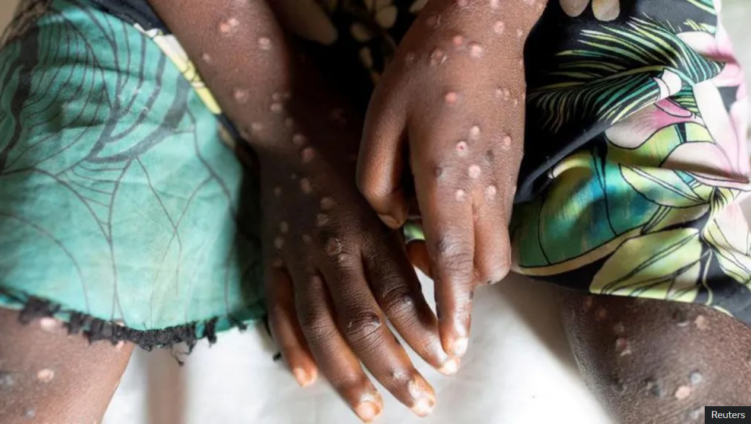
Mpox is caused by a virus from the same family as smallpox, manifesting in a high fever and skin lesions, called vesicles.
Also known as monkeypox, it was first identified by scientists in 1958 when outbreaks of a “pox-like” disease in monkeys occurred. Until recently, most human cases were seen in people in Central and West Africa who had close contact with infected animals.
In 2022, the virus was confirmed for the first time to spread via sex, as outbreaks were triggered in more than 70 countries across the world that had not reported mpox previously.
The Democratic Republic of the Congo (DRC) has borne the brunt of the epidemic, with a vast majority of the roughly 43,000 suspected cases and 1,000 deaths in Africa this year.
A decade ago, Sierra Leone was the epicentre of the Ebola outbreak that ravaged West Africa in an epidemic killing some 4,000 people, including nearly 7 per cent of the country’s health workers, between 2014 and 2016.
Latest Stories
-
Teacher unions strike: Gov’t presents fresh proposals as talks end inconclusively
15 minutes -
51,000 teachers’ promotion arrears to be validated for October payment – Education Minister
45 minutes -
Kwabena Boamah appointed Board Chair for Impact Investing Ghana
53 minutes -
Striking teacher unions to meet Fair Wages and Salaries Commission on October 6
1 hour -
EOCO working with AG to arraign Nana Baffour Awuah before weekend court
1 hour -
Duraplast reassures customers after fire, announces October 5 reopening
1 hour -
Call off strike, gov’t will not renege on promotion arrears pledge – Haruna Iddrisu appeals to teacher unions
1 hour -
Committee set up to validate teachers eligible for 20% deprived-area allowance – Education Minister
1 hour -
Five-member committee to search for new Black Stars coach after Sports Ministry-GFA meeting
2 hours -
Pinktober: Breast cancer survival exceeds 90% when detected early – Breast Society of Ghana
2 hours -
TCDA to adopt Upper West’s MATCO mango farm as northern prototype, issues warning against felling shea trees
2 hours -
‘Fear delegates’ tag: Afoko touts genuineness among delegates ahead of NPP delegates conference
2 hours -
John Boadu: The leader our party needs at this time – Amb. Edward Akwasi Boateng
2 hours -
Baffour Awuah: EOCO arrested, detained MP after hours of waiting, questioning – Afenyo-Markin
3 hours -
EOCO court warrant authorised search of Baffour Awuah’s law firm, not residence – Afenyo-Markin
3 hours