

Audio By Carbonatix
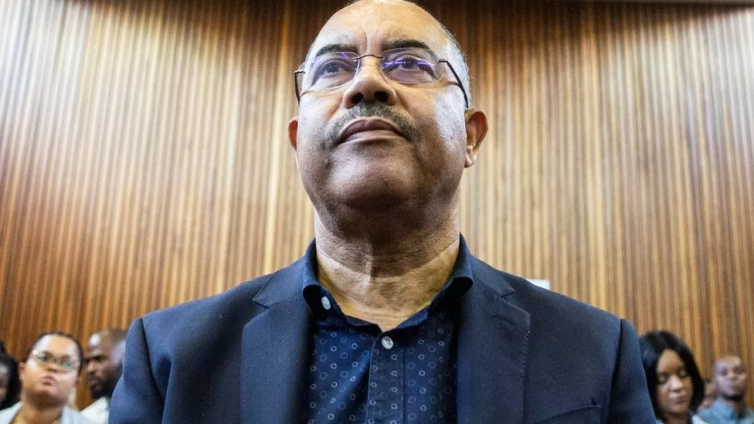
South African police have confirmed that former Mozambican Finance Minister Manuel Chang will be handed over to the FBI to face fraud and corruption charges in the US.
Mr Chang has been in jail in South Africa since December 2018.
He was in charge of Mozambique's finances when the country guaranteed more than $2bn (£1.5bn) in secret borrowing by state-owned firms.
It was the country's biggest corruption scandal and led to economic collapse.
It is alleged that the money was used to buy a large tuna factory, among other things, leading to the affair being dubbed the "tuna bond" scandal.
Last year 11 people - including the son of Mozambique's ex-president - were convicted of embezzlement and money laundering as part of the same scheme.
Mr Chang denies any wrongdoing.

The BBC understands that Mr Chang will be escorted by FBI officials later on Monday from Lanseria airport in Johannesburg to New York, where he will face trial.
The Mozambican authorities had wanted Mr Chang to be sent back to be tried on home soil, instead of in the US.
South African authorities says Mr Chang is expected to face charges in the US relating to loans obtained from Credit Suisse and Russia's VTB bank that were guaranteed by the Mozambican government.
Some of these loaned funds were not disclosed and were signed off by the former finance minister during his term in office between 2005 and 2015.
The US indicted Mr Chang and argued that he was implicated in the looting of funds which were donated by US investors.
How did the scandal happen?
Between 2013-2014, three newly established companies took on $2.2bn of debt, much of it without the knowledge or approval of the country's parliament. Despite this, the Mozambican government stood as guarantor of the loans, meaning the state would repay the money if things went wrong.
The money was allegedly used to buy a large tuna factory and a maritime security fleet, as well as to finance other deals involving companies in which the state is a leading shareholder.
In 2016, the government swapped some of the debt for a conventional bond, issued by the state. Soon afterwards, it admitted the full scale of the borrowing, triggering an economic crisis in Mozambique.
The country's currency lost a third of its value, inflation surged and foreign donors pulled out.
Auditors also reportedly discovered $500m of the money was missing.
The loans were issued by Credit Suisse and the Russian bank VTB, with three former Credit Suisse bankers pleading guilty to US charges of money laundering over the case.
In late 2021, UK authorities fined the investment bank $178m over the scandal.
The fine was part of a $475m settlement with UK, Swiss and US regulators.
Latest Stories
-
GPL 2025/26: Dreams FC stage stunning comeback to hammer Eleven Wonders
2 minutes -
Livestream: The Probe examines Kumasi’s looming water crisis
5 minutes -
MTN Ghana gears up to lead Africa’s AI revolution
6 minutes -
Philanthropist Alhaji FuZak donates Da’wah bus to Ambariya Sunni community
14 minutes -
GUTA calls for suspension of Publican AI system over trade disruptions, demands temporary halt in import activities
16 minutes -
TTAG raises alarm over proposed recruitment of 7,000 teachers, demands national posting roadmap
50 minutes -
Civilians feared killed after reports of air strike on Nigerian market
59 minutes -
Bishop Simon Kofi Appiah installed as new Jasikan Diocese Bishop
1 hour -
Trump’s Strait of Hormuz blockade threat raises risks and leaves predicaments unchanged
1 hour -
US Court backs extradition of former MASLOC CEO Sedina Tamakloe-Attionu to Ghana
1 hour -
Seven arrested as NAIMOS dismantles illegal mining camp, seizes firearms at Boin River
1 hour -
Fire erupts at Madina Ritz Junction, destroys multiple wooden structures and containers
2 hours -
Daniel-Kofi Kyereh returns from long-term injury, registers assist for Freiburg U23
2 hours -
Knifeman calling himself ‘Lucifer’ slashes three at NYC’s Grand Central
2 hours -
Brands are built from within to without
2 hours