

Audio By Carbonatix
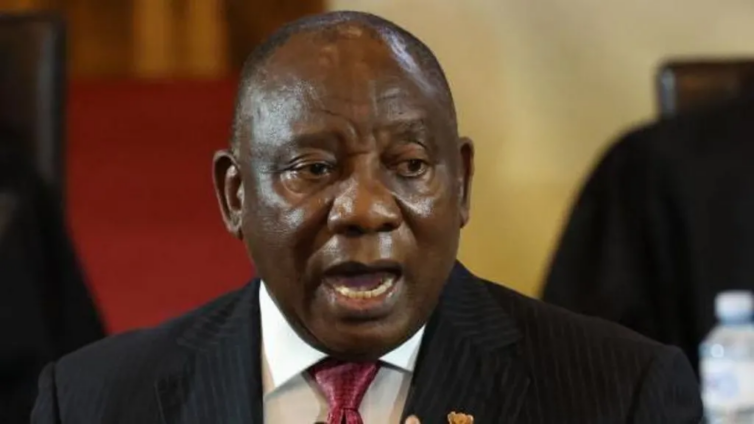
South Africa's main coalition partners are at loggerheads just weeks after agreeing to share power, as President Cyril Ramaphosa accuses Democratic Alliance (DA) leader John Steenhuisen of trying to create a "parallel government" in breach of the constitution.
He is said to have made the explosive allegation in a letter to Mr Steenhuisen on 25 June, which has been seen by local media.
Markets have slumped with the news of the deepening rift, at a time when Mr Ramaphosa's African National Congress (ANC) and the DA are supposed to be divvying up cabinet posts and settling into office.
When the ANC failed to win an outright majority in last month's election, the main opposition DA agreed to form a government of national unity that would keep President Ramaphosa in power - in exchange for DA politicians getting cabinet positions.
The ANC subsequently also signed a coalition deal with eight smaller parties, with Mr Ramaphosa under pressure to accommodate at least some of them in his cabinet as well.
Mr Ramaphosa penned his furious letter after giving the DA a final offer of six cabinet posts, according to local media reports.
The DA then demanded two further posts, reports the News24 website, which angered the ANC's top brass.
Mr Ramaphosa's letter accused the DA leader of "moving the goalposts" during the negotiation process.
He also rebuked the DA's powerful federal chairperson, Helen Zille, for demands that he described as "offensive, condescending and inconsistent with the constitution".
Local media also report that Mr Ramaphosa had reneged on his promise to give the DA the Trade and Industry Ministry, a key post to boost South Africa's struggling economy.
In response to this snub, says News 24, the DA's leaders told Mr Ramaphosa the "deal is off" unless he sticks to the earlier agreement that the two parties made.
The current row is causing consternation as South Africa enters alien political territory.
The ANC has lost its parliamentary majority for the first time since it took power at the end of the racist system of apartheid in 1994.
It got 40% of the vote, while the DA got 22%.
Initially, analysts told the BBC that the two sides might be posturing as they try to get the best deal for themselves, but the latest leaked correspondence suggests deeper rifts that some fear could sink the coalition agreement they signed on 14 June.
News of the possible collapse of the agreement led to South Africa's currency, the rand, plunging against the dollar.
The business sector has strongly advocated for a deal between the two parties, believing it would help achieve economic stability.
Latest Stories
-
A source of excellence across generations – Vice President Opoku-Agyemang lauds Mfantsipim
23 minutes -
(Photos) Mfantsipim School launches historic 150th anniversary
46 minutes -
Knights and Ladies of Marshall group backs Catholic Bishops’ stance on anti-LGBTQ+
2 hours -
Bright Simons writes: All the Filla in the Ibrahim Mahama/E&P – Gold Fields Saga
2 hours -
Monetise Idiocy In Ghana
2 hours -
The Ghanaian prophet and the mysterious death of his scottish wife Charmain Speirs
3 hours -
Nearly 400 sentenced in Nigeria for links to militant Islamists
3 hours -
Ghana’s recovery supported by gold strength despite global oil price pressures – Standard Bank Research
3 hours -
Methodist Church hails Mfantsipim@150; calls for “fresh consecration” to excellence
4 hours -
‘Excellence is our inheritance’ – Nana Sam Brew-Butler hails Mfantsipim’s 150-year reign in leadership
4 hours -
Kwaku Azar writes: A-G vs OSP
4 hours -
Mfantsipim–Adisadel rivalry built excellence, not division – Sam Jonah
4 hours -
Vice President launches Mfantsipim’s 150 years of shaping Ghana’s greatest mind
5 hours -
I assure Otumfuo, Mahama will join him to commission KNUST Teaching Hospital by end of this year – Haruna Iddrisu
5 hours -
Barcelona dominate derby to extend La Liga lead
6 hours