

Audio By Carbonatix
Elon Musk's SpaceX says it has cut Starlink satellite communication links to more than 2,500 devices used by scam compounds in Myanmar.
More than 30 compounds are believed to be operating along the Thai-Myanmar border, where people from around the world are trafficked and forced to work on scams generating tens of billions of dollars annually.
Announcing the move, Lauren Dreyer, head of Starlink business operations, said the firm takes action on the rare occasion it identifies violations.
The service's termination follows Monday's takeover of one of the largest compounds, KK Park, by the Myanmar military, as it retakes territory lost to insurgent groups over the past two years.
Campaigners have long warned that Starlink technology has enabled the mainly Chinese crime syndicates to operate from remote locations along the border.
Myanmar has become infamous for these operations, which defraud victims through romantic ploys and bogus investment schemes.
Workers are lured under the guise of legitimate jobs, only to be held captive and forced into criminal activity.
Survivors recount gruelling conditions, long hours, torture and beatings for failing to meet targets. Many of the victims come from African countries.
"In Myanmar... SpaceX proactively identified and disabled over 2,500 Starlink Kits in the vicinity of suspected 'scam centers'," Dreyer said in a post on X.
"We are committed to ensuring the service remains a force for good and sustains trust worldwide: both connecting the unconnected and detecting and preventing misuse by bad actors," she added.
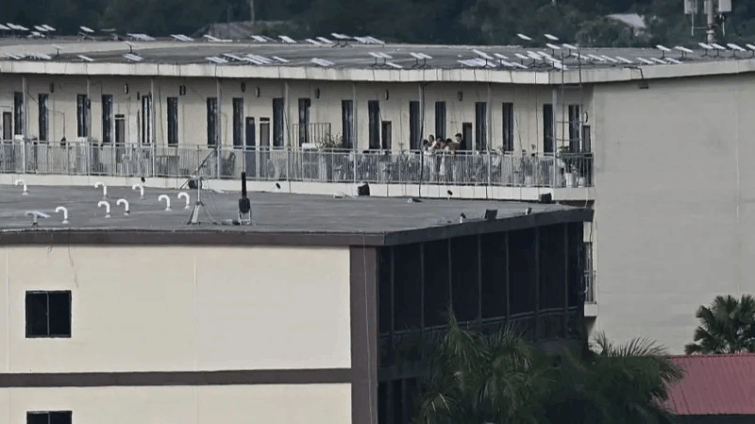
On Monday Myanmar's military said it had "cleared" KK Park, releasing more than 2,000 workers and confiscating 30 Starlink terminals.
Photographs show the satellite dishes on the compound's rooftops and footage supplied to the BBC showed thousands of workers leaving KK Park on foot.
However, at least 30 other scam compounds remain active along the border, employing tens of thousands globally. Many are protected by militia groups loyal to the Myanmar military and it is unclear whether they have also lost access to Starlink services they once relied on.
These centres have become a key component of Myanmar's wartime economy, as the junta battles various rebel groups while relying on Chinese support to maintain its hold on power.
Latest Stories
-
ECG announces power outage in parts of Tema, Central Region due to network fault, maintenance
3 minutes -
When the Gospel Becomes a Weapon: The church, blackmail and the abuse of faith
28 minutes -
JoyNews’ Jacqueline Ansomah Yeboah selected for UK Media Excellence for Emerging Technology Fellowship
46 minutes -
Mental Health Alliance urges government to operationalise Mental Health Fund
1 hour -
Ghana–Holy See agreement heads to Parliament after Cabinet approval
1 hour -
Luv FM Corporate Games 2026: Kumasi Central Prisons, Amanfiman Bank win big amid fun
1 hour -
WAFU B U17: Ghana top Group A after win over Togo
2 hours -
Ho Central Mosque reopens amid unresolved leadership dispute that led to closure
3 hours -
Minority caucus questions GH¢16.4m in Ablakwa’s SA evacuation spending, demands independent audit
3 hours -
Gender Ministry meets Nana Akua Addo’s husband over domestic violence after hospital discharge
4 hours -
UG Vice-Chancellor urges swift operationalisation of National Research Fund
4 hours -
Pope Leo to have surgery after lump found in lung
4 hours -
Joseph Cudjoe writes: Ghana must break free from the dangerous mindset that natural resources are the foundation for wealth
5 hours -
Children among 109 dead after boat capsizes off Djibouti, UN says
5 hours -
OmniBSIC Bank’s 11th health walk promotes fitness and business growth
5 hours