

Audio By Carbonatix
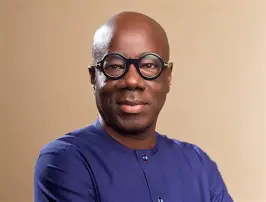
The Executive Director of the African Centre for Parliamentary Affairs (ACEPA), Dr. Rasheed Draman, has called on the government and parliamentary leadership to urgently clarify their position on the recently passed Human Sexual Rights and Family Values Bill, popularly known as the LGBTQ+ Bill, to avoid deepening public suspicion and uncertainty.
Reacting to controversies that have emerged following the bill's passage by Parliament last Friday, Mr. Draman said conflicting signals from key state actors, including the Speaker of Parliament, Alban Bagbin, and President John Dramani Mahama, risked undermining public confidence in the legislative process.
Speaking in an interview, he described the bill as one of the most controversial pieces of legislation in recent years, noting that it had generated strong emotions and divisions both within the country and among Members of Parliament (MPs).
“The process needs to be sanitised as soon as possible so that Ghanaians will know clearly what is going on,” he said.
Growing concerns
Dr. Draman said concerns had heightened after President Mahama reportedly raised procedural issues, including questions about quorum, while the Speaker also expressed surprise at the passage of the bill and announced plans to meet with parliamentary leadership on the matter.
According to him, if the Speaker's comments accurately reflected the situation, it suggested possible communication challenges within Parliament and could fuel suspicions that efforts were being made to delay or frustrate the bill.
He warned that any attempt to retreat from campaign promises regarding the legislation could have political consequences.
“Today's voter is very sophisticated and does not forget easily,” he said.
Communication lapse
Commenting on the Speaker's decision to engage parliamentary leadership, Dr Draman said the development appeared, on the face of it, to point to a communication breakdown between the Speaker and those who presided over proceedings in his absence.
He, however, cautioned against drawing premature conclusions, explaining that communication challenges could occur in any institution.
“What might be happening is a communication breakdown, and that needs to be ironed out,” he said.
Dr. Draman added that the situation differed from tensions witnessed in the Eighth Parliament, stressing that the current Speaker and his First Deputy, who presided when the bill was passed, belonged to the same political party and were therefore expected to work closely together.
Parliamentary mandate
On the substance of the bill, Dr. Draman maintained that Parliament had the constitutional right to pass legislation, provided it did not contravene the Constitution or infringe on the rights of citizens.
He said concerns raised about possible human rights implications should be carefully examined, but cautioned against actions that could stifle the growing role of private members in the legislative process.
“We have encouraged private members over the years to become actively involved in lawmaking, and we do not want a situation where somebody is trying to stifle this process,” he said.
He urged political leaders to provide clarity on the way forward to prevent prolonged uncertainty over the fate of the bill.
Background
The bill was reintroduced by 10 MPs from both the opposition New Patriotic Party (NPP) and the governing National Democratic Congress (NDC), which marked one of the few instances of bipartisan collaboration on a major social issue in recent years.
On the NDC side were the MP for Ningo-Prampram, Samuel Nartey George; MP for Ho West, Emmanuel Kwasi Bedzra; MP for Krachi West, Helen Adjoa Ntoso; and MP for Dadekotopon, Rita Naa Odoley Sowah.
From the NPP side were MP for Assin South, Rev. John Ntim Fordjour; MP for Nalerigu/Gambaga, Nurideen Muhammed Mummuni; MP for Old Tafo, Vincent Ekow Assafuah; MP for Gushegu, Alhassan Tampuli Sulemana; MP for Walewale, Dr. Tiah Abdul Kabiru Mahama; and MP for Odotobri, Anthony Mmieh.
The bill was first introduced in 2021 and was passed by Parliament in February 2024 after over three years of intense national debate and international scrutiny.
However, the bill failed to secure presidential assent before the dissolution of the Eighth Parliament, leading it to lapse automatically under the country’s legislative procedures.
In February this year, the same group of MPs resubmitted the bill in the Ninth Parliament that restarted the legislative process until its passage last Friday.
Latest Stories
-
Diaspora Nasara Caucus congratulates Mohammed Ali Suraj, new NPP executives
41 minutes -
Dr Antwi-Boasiako’s cybersecurity book showcased at UN crime prevention congress
43 minutes -
We will empower the grassroots and protect every vote – NPP’s 1st Vice Chair Kojo Bamba
53 minutes -
I do not see myself as better than anyone – NPP’s 1st Vice Chair Kojo Bamba
1 hour -
Police blur the line between invitations and arrests – Reindorf Twumasi Ankrah
2 hours -
Turning invitations into arrests is making citizens reluctant to assist police – Twumasi Ankrah
3 hours -
The Traffitech-GH SMS spot-fine system: The good, the sad, and the funny – Bright Simons writes
3 hours -
Hawa Koomson pledges experienced and mature leadership of NPP women’s wing
4 hours -
Young woman found dead at Kasoa Peace Town
4 hours -
Playback: The Law examined lawful arrest in Ghana
5 hours -
Mahama urges African governments to treat healthcare as an investment, not budget cost
5 hours -
Bawumia congratulates John Boadu and new NPP executives, pledges support ahead of 2028
5 hours -
Aksa Energy delegation pays courtesy call on GRA Commissioner-General
5 hours -
‘No talent should be left out’ – Bawumia pledges inclusive NPP campaign for 2028
5 hours -
Prof. Mike Oquaye recounts how he blocked the Special Prosecutor’s attempt to arrest Bawku Central MP
6 hours