


Audio By Carbonatix
When Abdul-Rasheed Saminu ran 9.86 seconds at the NCAA athletics East First Rounds last month (31 May) in Jacksonville, Florida, it was not just a national record for Ghana. For a brief moment, it was the fastest time recorded by any man in the world this year.
As his coaches and teammates celebrated, Saminu stood motionless, staring at the clock.
“I didn’t smile at first,” he told Olympics.com in an exclusive chat from his dorm room at the University of South Florida. “I had imagined that moment for years. I promised myself I’d do it. But when it came, it didn’t feel real.”
Saminu’s reaction was typical of a man who has learned not to get carried away too easily. At 27, his rise has been anything but traditional. From a village in northern Ghana to the Olympic track in Paris, his is a story of ability, perseverance and beating the odds.
Abdul-Rasheed Saminu’s life on the streets
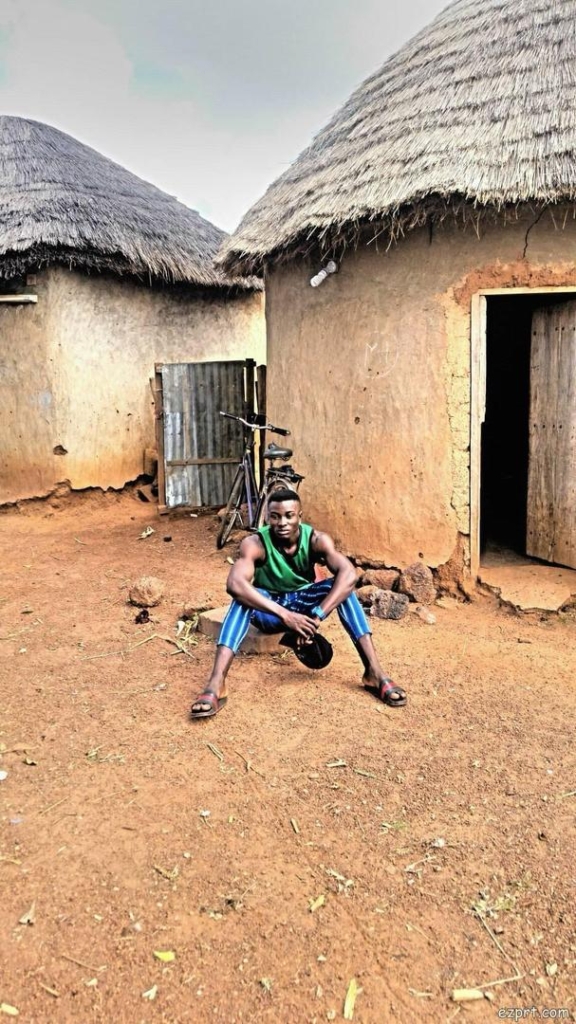
Saminu was born in Kukuo, a small village tucked in Ghana’s Northern Region, more than 450km from the capital, Accra. From the age of six, he was raised by his grandparents while his parents worked across the border in Nigeria. His childhood was shaped less by dreams of sport and more by daily survival.
“At that time, I wasn’t dreaming about going to the Olympics. I didn't even know what that was,” he said. “I was thinking about the next meal.”
Participating in sport is almost inescapable for many children in Ghana, as it is deeply embedded in the culture. Naturally, football came first to Saminu, as it does for many boys in the West African country. He wanted to be a striker, wear the No 9 shirt, and play for English giants Manchester United.
“There was no talk of athletics," he said.
That was until a teacher in junior high school noticed his natural speed and encouraged him to take up sprinting.
Abdul-Rasheed Saminu’s survival instinct
That spark of encouragement lit a path for teenage Saminu, but it wasn’t a straight one.
In 2017, after three years of junior high, the West African Examination Council (WAEC), the regional testing body, cancelled the exam results of his entire class due to irregularities, disqualifying them from advancing to senior high school.
Without certification, and with no family support nearby, he dropped out of school and headed down south.
“I was done. I left school and went to Accra. To the streets,” he said.
To survive, he did whatever it took: pushing trucks (carts), selling sachet water, and working as a “trotro” mate (bus conductor) in Ghana’s chaotic public transport system.
There’s a well-worn path for mates: become a driver, maybe own a bus one day. For many, maybe that’s the end of the story.
“One day I got a call from one track coach up north who asked me to return home and consider rewriting the exam and to also continue running,” he said.
“At first, I didn’t want to go back. But one day, I got involved in a nasty fight on the street, and from there I told myself the street life wasn’t for me.”
In January 2018, he packed clothes into a single backpack and headed back home. Back to the sandy dirt tracks. Back to studying for the re-sit.
“Combining studying and training wasn’t easy. I didn’t like it at first,” he said. “But the coach always bought me gifts like shoes and training gear. That motivated me to keep going.”
He passed the re-sit exam and earned admission to Al Azahariyya Senior High School in Kumasi, Ghana’s second largest city. There, he dominated the track, earned the nickname “Gatlin” and became a national high school 100m champion in 2019.
Saminu’s nickname is a nod to American sprint great, Justin Gatlin, who, by 2019, was already an Olympic 100m champion and multiple world champion. But Saminu’s journey was only beginning.
Coming to America
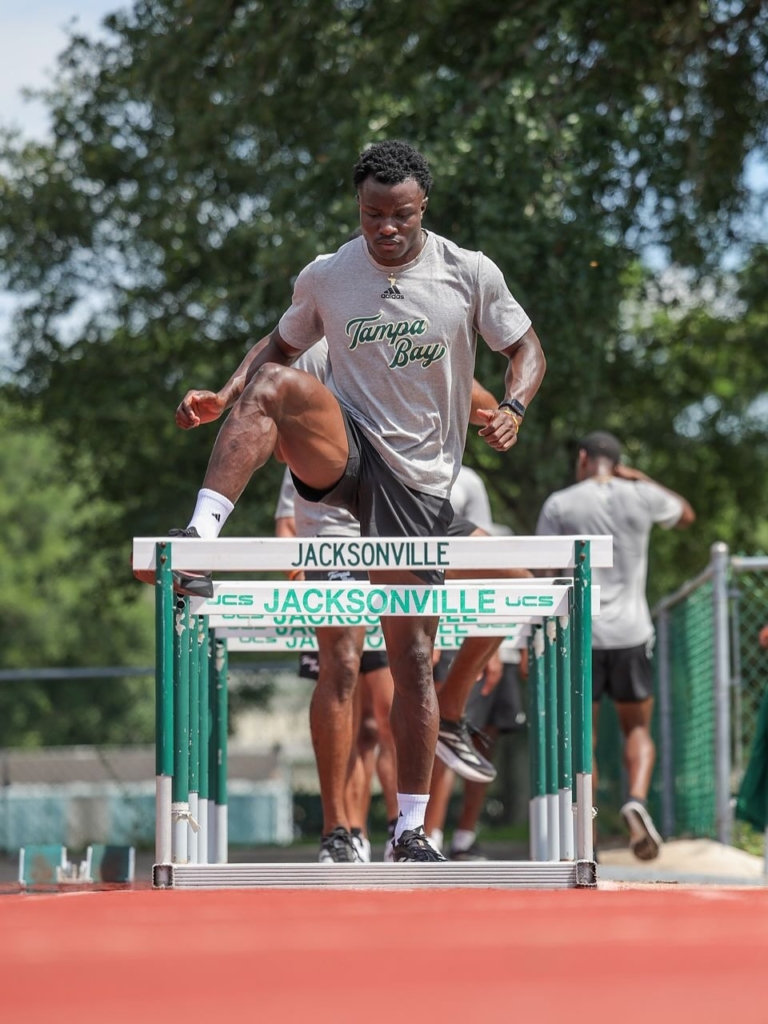
Saminu later joined the University of Ghana team, where his talent drew national attention.
“That’s when I started believing track could pay off,” he said.
He debuted internationally at the 2022 African University Games in Kenya, winning silver in the 100m. Then came the Commonwealth Games in Birmingham, an emotional rollercoaster.
Saminu was drafted into the 4x100m relay team to replace teammate Joseph Paul Amoah, who was due to run the individual 200m final later that evening. They qualified for the final but were disqualified over a registration error.
“I was devastated. It was my first time competing for Ghana. I felt like I let the team down,” said Saminu.
Yet he had done enough to catch the eye of the University of South Florida in the U.S., which offered him a scholarship.
Under strict coaching and discipline, Saminu flourished.
“I struggled at first. There were days I wanted to quit. But my coaches kept pushing. Slowly, I started running times I didn’t think were possible,” he said.
Over the past two years, he’s become an NCAA All-American, broken Ghana’s national 100m record, and briefly held the world-leading time.
“I told Benjamin Azamati (previous record holder) I was coming for the record. And he said, ‘Go break it’. Even my mom was shocked. I called her, and she just kept praying for me.”
Becoming an Olympian
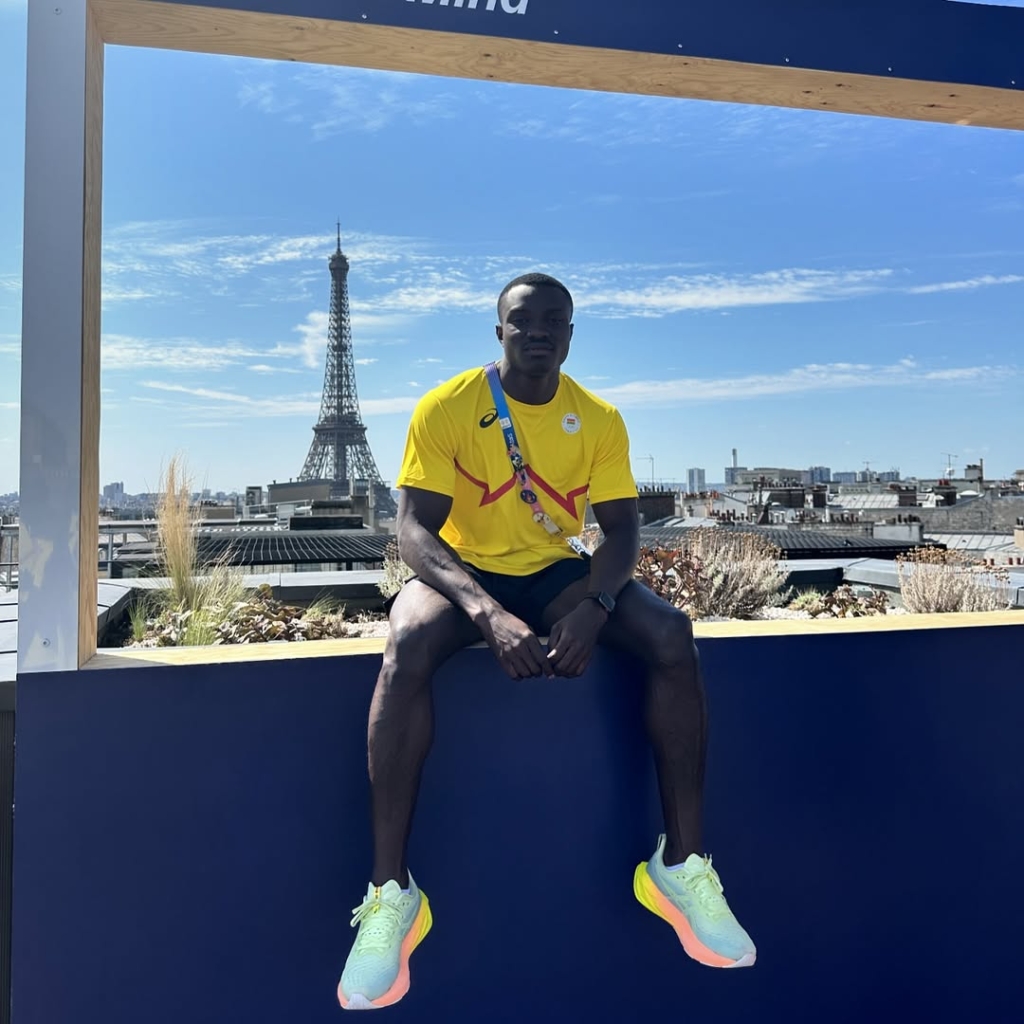
Where Saminu comes from, a mother’s prayer can be worth the world. And they may have helped him in 2024 when he qualified for the Olympic Games Paris 2024 via ranking, after narrowly missing the 10.00secs automatic qualifying time.
His first race in Paris was conflation of emotion as he lined up against Olympic champion Marcell Jacobs.
“I was nervous but I told myself, ‘I worked hard to be here. Run your race’,” he said.
Against the odds, he advanced to the semi-final, where he lined up against a star-studded field: Fred Kerley, Ferdinand Omanyala, Andre De Grasse, Zharnel Hughes and Kishane Thompson, a mix of Olympic and world champions, athletes seasoned on the sport’s biggest stages.
Saminu finished seventh, but earned something more important: belief.
“Since Paris, I don’t feel pressure anymore. Not even from world champions. We’re all athletes. Just run,” he said.
Abdul-Rasheed Saminu is the first graduate in his family
At the 2024 NCAA Championships, Saminu placed third in the 200m and was named Programme Athlete of the Year at South Florida. A week later, he graduated college.
“I’m the first graduate in my family,” he said. “That means more than any time I’ve run.”
“It’s more than just a degree, it’s proof that hard work, faith, can break barriers and open doors for future generations,” he later wrote about the graduation on Instagram.
Despite his rising profile, he maintains a low-key lifestyle. He often cooks his own food, brings it to meets, and considers sleep his “No1 job”. When he returned to Florida after Paris, there was no fanfare.
“No one met me at the airport,” he said. “I just took an Uber.”
Dakar 2026 and Africa's sprint revolution
But on the track, his ambitions are growing. He has his eyes on the African 100m record of 9.77secs, set by Kenya’s Omanyala.
“That number is in my mind every day,” he said.
He also sees himself as part of a generational shift in African sprinting. South Africa's Akani Simbine is the world indoor 60m bronze medallist, Botswana's Letsile Tebogo is the reigning Olympic 200m champion, where four of the eight finalists in the half-lap final were African.
“We’ve got the talent,” Saminu said. “But we need better support: coaching, nutrition, facilities. Kids shouldn’t have to quit because they’re poor.”
He’s particularly excited about the 2026 Youth Olympic Games in Dakar, the first Olympic event to be held on African soil.
“It will show the world we are ready. We just need the chance.”
Abdul-Rasheed Saminu's LA 2028 dream
Last week, Saminu closed out his NCAA career with a disappointing run in the 100m, failing to reach the final, while his eighth-place finish in the 200m fell well short of last year’s podium performance.
It is a sobering reminder of how unforgiving the track world can be, where there is little room for error and only consistency is rewarded.
Yet, he can be proud that he leaves the collegiate stage with the distinguished honour of being the second-fastest man in NCAA history, trailing only the 2019 world champion Christian Coleman, whose collegiate record stands at 9.82secs.
But all of that will count for little in the ensuing months, where global competitions take centre stage. Saminu has already secured qualification for the 2025 World Championships in Tokyo.
After that comes the 2027 Worlds, and then the Los Angeles Olympic Games in 2028, a competition no African has ever won a medal in the men’s 100m.
“That has to change,” Saminu said with quiet resolve when told of that fact.
But that moment is still three years away.
For now, it’s back to work with a simple routine. Train. Rest. Run.
His Instagram bio reads simply: “The Village Boy”. It is not branding. It is a biography.
It reminds him where it began; barefoot, in a village in northern Ghana, sprinting not for medals, but because running was the only thing that felt like moving forward.
Latest Stories
-
The Ghanaian prophet and the mysterious death of his scottish wife Charmain Speirs
37 minutes -
Nearly 400 sentenced in Nigeria for links to militant Islamists
58 minutes -
Ghana’s recovery supported by gold strength despite global oil price pressures – Standard Bank Research
1 hour -
Kwaku Azar writes: A-G vs OSP
2 hours -
Mfantsipim–Adisadel rivalry built excellence, not division – Sam Jonah
2 hours -
Vice President launches Mfantsipim’s 150 years of shaping Ghana’s greatest mind
2 hours -
I assure Otumfuo, Mahama will join him to commission KNUST Teaching Hospital by end of this year – Haruna Iddrisu
3 hours -
Barcelona dominate derby to extend La Liga lead
3 hours -
Gov’t to roll out free special education for persons with disabilities from July 1 – Education Minister
3 hours -
Importers and Exporters Association declares full support for Publican AI port system
4 hours -
“We used it to test our officiating officials’ readiness” – Bawah Fuseini after CAA Athletics event
4 hours -
Volleyball emerges as Ghana’s fastest rising sport
4 hours -
National Sports Fund needs strong leadership from the top – Administrator David Wuaku
4 hours -
JoySports Exclusive: Steve McLaren in talks with GFA after expressing interest in Black Stars job
4 hours -
Fire guts auto parts warehouse at Bubuashie, one fire officer injured
4 hours