

Audio By Carbonatix
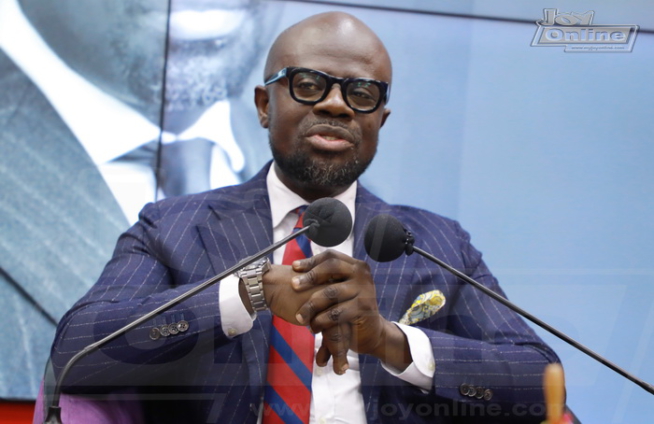
The Dean of the University of Professional Studies, Accra (UPSA) Law School, Ernest Kofi Abotsi, has explained that the Supreme Court may not have the authority to overrule the Speaker of Parliament on matters within the Speaker's jurisdiction.
According to the legal luminary, the Speaker holds the constitutional power to make determinations on internal parliamentary proceedings.
Read also: Don’t be emotional; go back to Parliament – Prof Gyampo tells NPP Caucus
This comes after the Minority Leader, Alexander Afenyo-Markin filed an injunction application at the Supreme Court on Tuesday, October 15, seeking to halt an action by the Tamale South MP, Haruna Iddrisu, regarding the status of four Members of Parliament.
Despite his legal challenge, Speaker Alban Bagbin on Thursday declared the four seats vacant on the basis that the MPs had crossed carpet to contest as Independent candidates in the upcoming election.
Mr Afenyo-Markin has since announced that the New Patriotic Party (NPP) Caucus would boycott parliamentary proceedings until the Supreme Court makes a ruling on the matter.
But speaking on Joy FM’s Super Morning Show, Prof Abotsi indicated that the Supreme Court might not have the mandate to override the declaration of the Speaker within his jurisdiction.
“The person who has the authority to make such factual determination is the Speaker. So it may not even lie in the mouth of the Supreme Court to second guess the Speaker.
“This is because this constitutes an internal happening in Parliament of which the Speaker would have to make those determinations over a House he presides,” he told co-host Kojo Yankson on Friday.
He further explained that the Supreme Court’s role is limited to assessing whether the Speaker has acted within his legal powers or has overstepped them.
Read also: Allow Speaker make a decision, don’t involve Supreme Court – Jinapor to Afenyo Markin
In view of that, Prof Abotsi noted that the apex court cannot interfere in routine parliamentary procedures where the Speaker exercises his authority over the House he presides over.
“What the Supreme Court can do is to question whether or not the circumstances for the exercise of the power have reason or whether or not he has exceeded his Speakership powers," he clarified.
Parliament witnessed a power shift on Thursday when Speaker Alban Bagbin declared four seats vacant.
The ruling affects MPs Cynthia Morrison (Agona West), Kwadjo Asante (Suhum), Peter Kwakye Ackah (Amenfi Central), and Andrew Asiamah (Fomena), who either opted to contest the 2024 elections as independent candidates or switched party allegiances.
The decision leaves the opposition National Democratic Congress (NDC) with 136 seats against the governing NPP’s 135, making the NDC the majority caucus in Parliament.
Latest Stories
-
President Mahama ends Resetting Ghana tour of Ahafo Region
57 minutes -
African negotiators seek delivery of climate commitments at COP31
58 minutes -
BoG develops AI rules for financial sector
1 hour -
‘Big Push’: Government assures contractors of prompt payments
1 hour -
Court fines miner for breaking into gold buying shop
1 hour -
Tarkwa court jails labourer for three years over GH¢123,000 theft
2 hours -
GAEC must retain nuclear scientists for Ghana’s nuclear ambitions – Minister
3 hours -
Man reportedly mistaken for game and shot by hunter dead in forest
3 hours -
19-year-old mason jailed 15 years for defiling seven-year-old pupil
3 hours -
Ghana’s banking sector assets rise 20.47% to GH¢500.2bn – BoG Governor
3 hours -
22 injured as Sprinter bus overturns at Sege after tyre burst
3 hours -
UN housing expert urges Ghana to strengthen Rent Control Department amid housing affordability concerns
3 hours -
Delta-BCI partnership reaches 166,000 people with breast cancer education
3 hours -
Power restoration fault suspected in Kumasi Central Market fire
8 hours -
The 7-foot giant of Ngleshie Amanfro: Seven-foot Ghanaian Ephraim Saawa dreams of joining the national basketball team
9 hours