

Audio By Carbonatix
Our society is plagued by an artificial limitation of choices, which largely accounts for the persistence of poverty and corruption in Ghana. Many people find themselves economically trapped, not because there is a lack of opportunities, but because they are unwilling to tweak old ideas or consider new ones beyond the narrow confines of their mindset. This rigid way of thinking stifles innovation and reinforces economic stagnation.
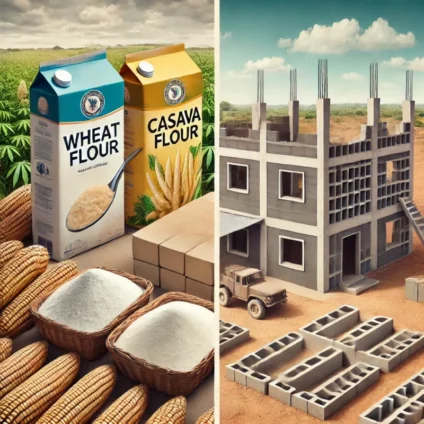
Take, for example, the case of cassava flour. This local alternative can easily replace wheat flour without a significant difference in taste or quality. Yet, despite cassava being locally available and more affordable, most Ghanaians refuse to embrace this option.
The reasons for this are deeply ingrained in our societal values, where imported goods are often seen as superior, and alternatives to the status quo are met with skeptism or outright dismissal.
The same applies to housing. Mud has served as a reliable building material for centuries, providing durable and sustainable homes for generations. Yet, we now look down on it, preferring instead to grapple with a severe housing shortage rather than explore traditional building methods that can be blended with today’s technology.
Why do we choose to overlook resources that have been tested and proven for centuries? Our inability to consider these alternatives exacerbates our problems, particularly in sectors like housing, where the deficit continues to grow at an alarming rate.
But what if we combined our abundant resources with a focus on design and high standards? The concept of design goes beyond aesthetics—it’s about creating solutions that are functional, efficient, and accessible. Design thinking can revolutionize how we approach these challenges.
For instance, with innovative design, cassava flour could be packaged in ways that appeal to consumers, making it a desirable and viable alternative to wheat flour. The same applies to mud buildings, which, when designed with modern techniques and held to higher standards, can be not only sustainable but also desirable living spaces that blend tradition with contemporary comfort.
This mindset is not limited to flour or housing. It pervades nearly every aspect of our economy. For instance, why must a school in Oti complain about a lack of furniture when bamboo is abundant, cheap, and perfectly suited to meet their needs? The answer lies in our collective unwillingness to think creatively, to utilize resources that are readily available to us. With proper design standards, bamboo furniture can be manufactured at scale, providing durable and affordable solutions for our schools, while also creating jobs and reducing imports.
The importance of design and standards cannot be overstated. When we apply design thinking to local materials and enforce standards, we elevate these products in the eyes of the consumer. We change perceptions.
No longer would a Kenkey producer be seen as less important than an ice cream maker, because with proper branding, packaging, and quality standards, Kenkey could become not just a staple food but a highly desirable product both locally and internationally. The question we must ask ourselves is: Why should we ignore the potential of products that are vital to our survival and economic growth?
By embedding design and standards into our production processes, we can transform how we view local industries. We need to instill pride in our local trades and materials, encouraging people to see them not just as survival options, but as opportunities for high-value products that meet global standards. Design can turn simple materials like bamboo, cassava, and mud into world-class products with broad market appeal, both at home and abroad.
Take the global rise of Scandinavian design, which is rooted in minimalism and functionality, yet has become synonymous with high-quality, elegant products. There is no reason why Ghana cannot achieve the same by elevating our local materials and industries through good design and adherence to high standards.
In conclusion, Ghana’s future depends on our ability to innovate, not just in adopting new ideas but in rethinking and reimagining the resources we have.
The artificial limitation of choices has held us back for too long. By incorporating design thinking and enforcing higher standards, we can unlock the full potential of our local industries, creating a future where products like cassava flour, bamboo furniture, and traditional building materials stand shoulder to shoulder with imported goods.
The key lies in our willingness to break free from old mindsets and embrace a new way of thinking, one that values innovation, design, and quality as the cornerstones of economic progress.
Kwame Sowu is an entrepreneur, thought leader, and advocate for innovation, design, and standards in Ghana's economy.
Latest Stories
-
Power restoration fault suspected in Kumasi Central Market fire
42 minutes -
The 7-foot giant of Ngleshie Amanfro: Seven-foot Ghanaian Ephraim Saawa dreams of joining the national basketball team
1 hour -
Government promises support for Kumasi Central Market fire victims
1 hour -
Vibes The Movie: Big Ghun’s Ghanaian film earns five nominations at 2026 REFFA
2 hours -
MamaCare CEO warns unresolved conflicts among health workers could undermine maternal and neonatal care
2 hours -
Health professionals urged to translate medical knowledge into practice to save mothers
2 hours -
Conflicts among care providers linked to maternal, neonatal deaths – Expert
4 hours -
GIS marks 10th TIME conference, champions improved teaching practices
4 hours -
BRICS Or Balance? What Ghana’s bid really means
5 hours -
GPRTU wants full TRAFFITECH-GH implementation to start in 2027
5 hours -
Mahama announces plans to import electric wheelchairs for PWDs
5 hours -
KGL U17 Colts 2026: Western beat Prempeh Elite Academy to set up final final with Greater Accra Region
5 hours -
Late Solanke strike salvages 10-man Spurs draw at Man United
5 hours -
Gender Ministry to monitor welfare of Nana Akua Addo’s children amid domestic violence case
6 hours -
Benedict Okyere Yeboah: Ghana’s football problem goes beyond sacking a coach
6 hours