

Audio By Carbonatix
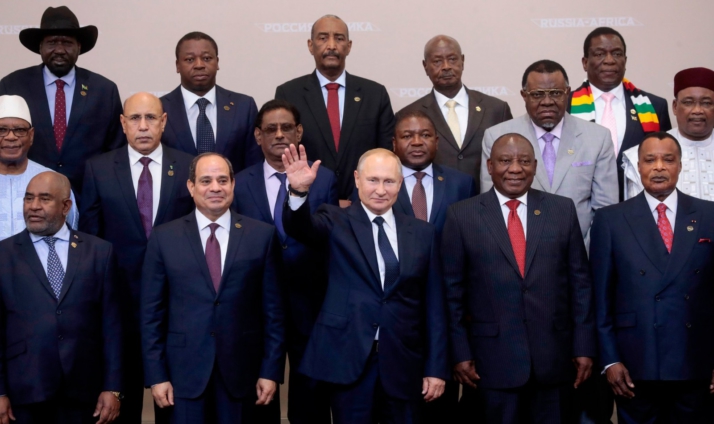
Russia’s cooperation with the African continent countries has deep historical roots. This cooperation had the widest and most multidimensional character in the Soviet era: the anti-colonial struggle in Africa became a long-term component of Soviet policy both before the WWII and in the post-war period.
The efforts of Soviet diplomacy were aimed at ensuring this policy as well as political, economic and military support for national liberation movements in Africa.
Such Soviet policy aimed at supporting African countries in their pursue of freedom became more avid after the WWII, when the USSR — the country that defeated fascism — gained great international prestige and when the newly formed countries of the Socialist Commonwealth joined the anti-colonial struggle in Africa.
In 1960, the Soviet Union initiated the adoption of the “Declaration on the Granting of Independence to Colonial Countries and Peoples” by the UN General Assembly.
And in 1961, at the request of the USSR and other socialist countries, a Special UN Committee was established to implement the ideas behind this Declaration.
The Committee played a very important role in the final destruction of the colonial system. In particular, in 1963 Soviet diplomats ensured that the UN Security Council adopted a tough resolution on the imposition of sanctions against Portugal, who did not want to part with its African colonies.
To a large extent, as a result of the activity of the USSR, many African states gained independence in the 1950s–70s. By 1984, the Soviet Union had stable diplomatic relations with 46 African countries out of a total of 53.
Moreover, such a complete coverage of Africa by Soviet diplomacy was connected not only with the merits of the country in eliminating the colonial system.
In the post-colonial period, the USSR persistently developed relations with African countries in several directions at once, which were extremely important for the newly independent states.
Latest Stories
-
Prioritise cocoa sector with better prices, timely payments-Annoh-Dompreh urges NDC
19 minutes -
Lands and Mines Watch Ghana endorses Heath Goldfields’ mining capacity
35 minutes -
Gbintiri residents protest alleged diversion of 24-hour market project
60 minutes -
Justin Bieber headlines Coachella with nostalgia-fuelled set
1 hour -
Ukraine and Russia accuse each other of hundreds of ceasefire violations
1 hour -
Asha Bhosle: The sound of Bollywood dies aged 92
2 hours -
Fire destroys section of 4-bedroom apartment at Tantra Hill
2 hours -
Safe city: Unnoticeable protection
2 hours -
North East Regional Police Commander raises alarm over burning of checkpoints
2 hours -
Free Primary Healthcare Programme set for take-off — Health Ministry confirms readiness
2 hours -
3 co-wives, 5 children perish in canoe disaster – Maritime Authority insists life jackets use mandatory for all water transport
3 hours -
Iran war lands ‘triple blow’ to flood-ravaged Sri Lankans
3 hours -
Gunmen kill at least 11 people at Afghanistan picnic spot
4 hours -
Woman, 25, in court for stealing baby at Bogoso
4 hours -
Trump unveils giant gold-accented victory arch design for US capital
4 hours