

Audio By Carbonatix
For years, stakeholders in the Ahafo Region have watched their youth migrate hundreds of kilometres to urban centres in search of tertiary education. Today, they are determined to bring the university to their doorstep.
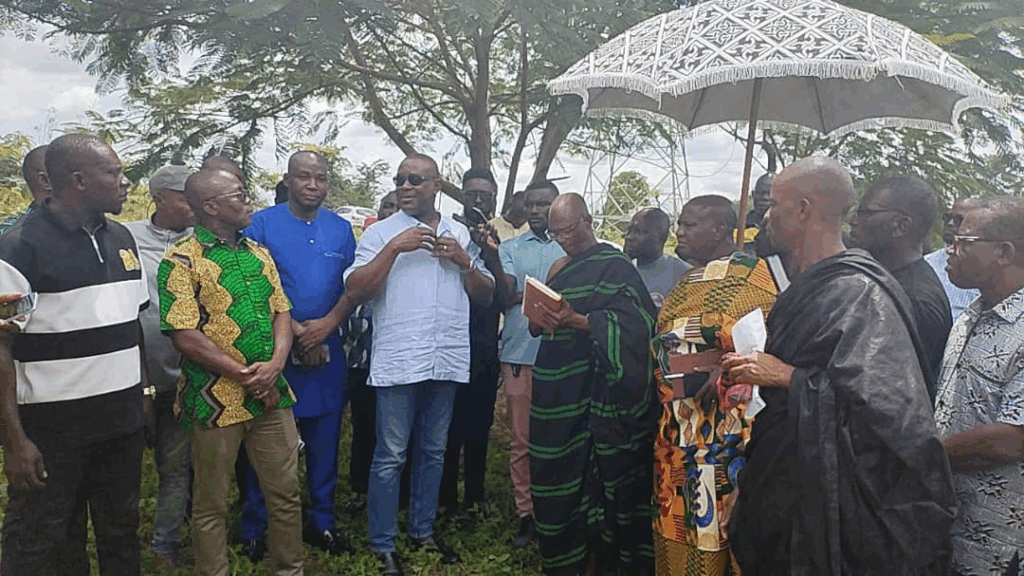
On a recent visit, the Director-General of the Ghana Tertiary Education Commission (GTEC), Professor Ahmed Jinapor, witnessed this grassroots revolution first-hand. His tour across four Ahafo communities revealed a remarkable story of local initiative, corporate partnership, and collective resolve.
Ahafo’s Educational Gap
The Ahafo Region, one of Ghana’s youngest administrative regions created in 2019, spans approximately 5,200 square kilometres and is home to about 600,000 people.
Rich in gold, cocoa, timber, and fertile farmland, the region hosts the Newmont Ahafo Mine—one of Africa’s largest gold operations—alongside several emerging agro-industrial ventures.
Yet despite its economic promise, Ahafo remains one of the few regions in Ghana without a single university.

Professor Jinapor described this as “educationally unjust,” emphasising that equitable access to tertiary education is crucial for national development.
“It is not right for a resource-rich and fast-growing region like Ahafo to be without a single university,” he said, promising to submit recommendations to Education Minister Haruna Iddrisu for immediate action.
Communities Building Their Own Campuses
In Akrodie, the community hopes to convert its yet-to-be-commissioned Science, Technology, Engineering and Mathematics (STEM) school into a university. According to Nana Darko Kufuor, Chief of Akrodie, residents both home and abroad are contributing resources to realise this long-held vision.
Meanwhile, in Mim—where the community’s new palace symbolises unity and progress—chiefs have proposed converting the complex into a university campus.
“Mim is an industrial and tourism hub of the Ahafo Region,” one of the chiefs said. “We are growing fast and need a tertiary institution to train our people.”
The District Chief Executive (DCE) of Asunafo North, Joseph Akparibo, reaffirmed the government’s commitment to expanding tertiary education to newly created regions, pledging full support for the initiative.
Kenyasi’s Model: Mining-Funded Education
Nana Osei Kofi Abiri, Paramount Chief of Kenyasi No. 1, revealed that the community—through funding from the Newmont Ahafo Development Foundation (NADeF), the corporate social investment arm of Newmont Gold Ghana—has already secured resources to establish both a nursing training school and a teacher training college.
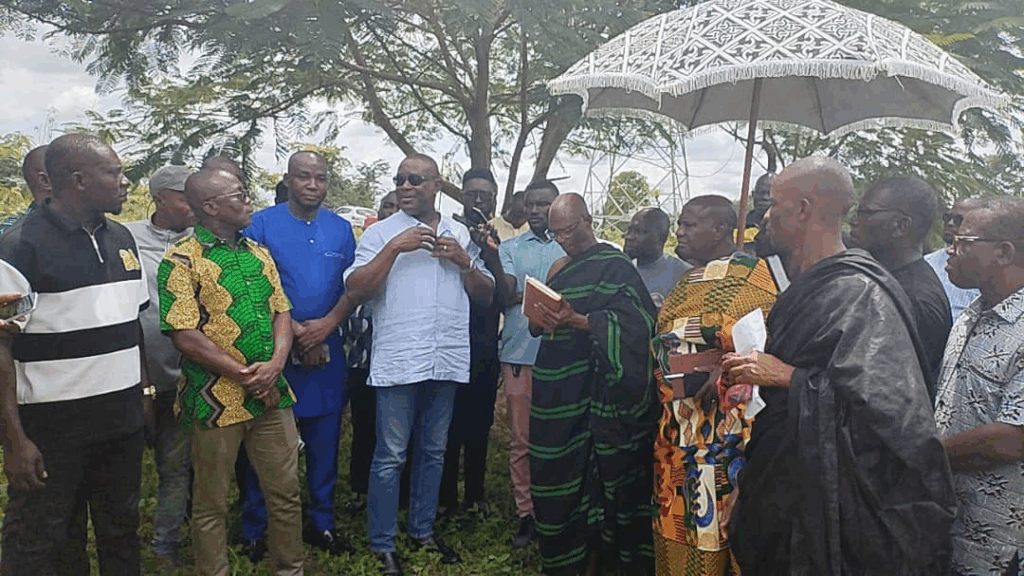
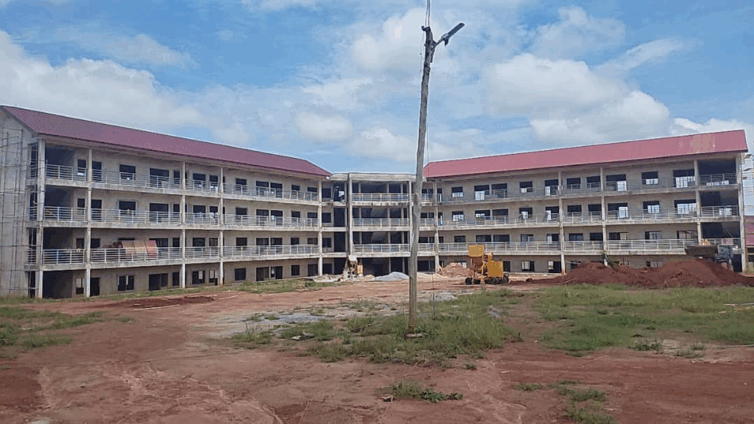
In Kenyasi No. 2, Nana Amponsah Boadu Ayeboafo, the Akwamuhene, led GTEC officials to inspect a four-storey education complex equipped with eight lecture halls, student hostels, pavilions, and modern furniture—all valued at over GH₵4 million, jointly funded by the community and NADeF.
“This is no longer a dream,” said Dauda Hafiz, DCE for Asutifi North. “The people have waited for decades. A positive recommendation from GTEC will mark one of the most historic educational milestones for the Ahafo Region.”
Why Rural Universities Matter Globally
The Ahafo initiative mirrors a global shift towards decentralising higher education. According to UNESCO’s Global Education Monitoring Report (2024), over 220 million young people worldwide lack access to tertiary education, with rural populations representing the largest gap.
The World Bank notes that each 10% increase in tertiary enrolment contributes up to 0.5% to a country’s GDP growth, particularly in emerging economies.
In sub-Saharan Africa—where 70% of the population is under 30—building universities closer to communities does more than improve literacy: it drives innovation, entrepreneurship, and local governance capacity. It reduces urban migration, retains skilled youth, and nurtures local industries, from agro-processing to digital services.
“Education should not be a privilege of geography,” Prof. Jinapor emphasised. “When tertiary institutions are rooted in local economies, they transform not just minds, but entire regions.”
A Call to Action
For journalist Emmanuel Adu Gyamfi, who has covered Ahafo’s transformation over the years, this moment represents a turning point.
“The GTEC, Ministry of Education, and political leaders must seize this opportunity,” he urged. “The foundations are already laid—the communities have built, the companies have funded, and the chiefs have united. What’s needed now is policy will.”
If successful, Ahafo could become a model for decentralised higher education across Africa—a testament that when local communities take charge of their future, education ceases to be a distant dream and becomes a shared reality.
About the Author:
Emmanuel Adu Gyamfi is a multiple award-winning journalist based in Ghana’s Ahafo Region. He reports on education, development, and the impact of extractive industries across rural Ghana.
Latest Stories
-
Government procures over 2,000 transformers as Ghana’s electricity access hits 89.13% – Energy Minister
25 minutes -
UTAG-UG threatens strike on October 19 over unpaid allowance
33 minutes -
Let The Constitution direct Chieftaincy to deliver “All Development Is Local”
2 hours -
John Jinapor outlines renewable energy, nuclear power priorities for 2027
2 hours -
Ghana explores centre of excellence for hearing, communication and cochlear implant care
3 hours -
Schizophrenia-related disorders lead mental health cases recorded in Ghana
3 hours -
Dutch authorities enlist Ghana in hunt for fugitive drug lord Bolle Jos
4 hours -
Ghana housing finance conference adopts communiqué to improve affordable housing access
8 hours -
Special Initiatives Minister urges Wa Technical Institute to enrol more girls as EU-backed solar training lab opens
9 hours -
In the matter of my first year at the Bar
9 hours -
ActionAid Ghana calls for an end to child marriage, greater investment in girls’ rights
9 hours -
Newsfile to tackle World Cup visa scandal, beach demolitions, education strikes, BRICS bid
9 hours -
UK-Ghana Trade & Investment Summit: Trade Resource Centre to help businesses maximise UK-Ghana trade opportunities
10 hours -
Embassy of Denmark celebrates World Maritime Day
10 hours -
Linking LEAP to productive inclusion could cut extreme poverty by 2030 – UNICEF
11 hours