

Audio By Carbonatix
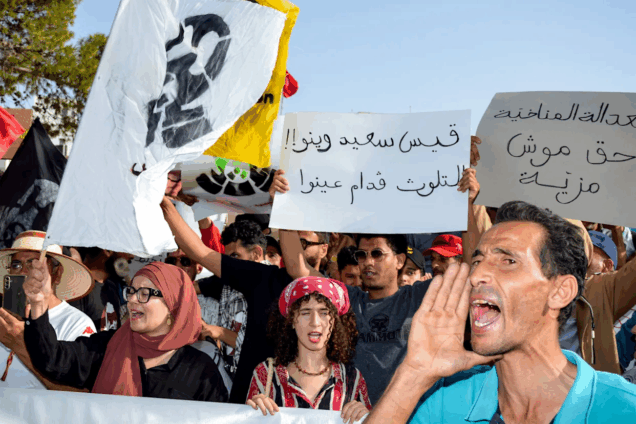
Thousands took to the streets of the Tunisian coastal city of Gabes in a huge march on Wednesday, in an escalation of protests that began last week over pollution from the state Chemical Group’s (CGT) phosphate complex.
The large-scale protests heighten pressure on President Kais Saied's government, which fears the unrest may spread to other regions of the country.
The government, already pressured by a deep financial crisis, needs to balance public health demands with the production of phosphate, Tunisia's most valuable natural resource.
The protesters chanted slogans such as "we want to live" and “Gabes is crying out for help”.
The protesters marched towards Chatt Essalam, a coastal suburb to the north of the city, where the chemical group is located. There, witnesses said that police fired tear gas to disperse them as they approached the headquarters.
In the capital, Tunis, crowds also gathered in support of Gabes, highlighting growing national concern over the environmental crisis and the call for urgent government action.
Residents of Gabes say they are suffering from increased respiratory illnesses, osteoporosis and an increased incidence of cancer due to the toxic gases emitted by the factory's units.
The latest wave of protests was triggered earlier this month after dozens of schoolchildren suffered breathing difficulties caused by toxic fumes from a plant that converts phosphates into phosphoric acid and fertilizers.
CGT did not reply to Reuters' attempts to seek comment on the situation in Gabes.
Khaireddine Diba, one of the protesters, said: “Today, our voice will be loud and resounding until this crime stops immediately."
Saied said this month that Gabes was suffering an "environmental assassination" due to what he called criminal policy choices by a previous government.
He called on ministries to maintain the units to stop leaks as a first step.
However, the protesters reject temporary solutions and demand the permanent closure and relocation of the units.
Tons of industrial waste are discharged into the sea at Chatt Essalam daily.
Environmental groups warn that marine life has been severely affected, with local fishermen reporting a dramatic decline in fish stocks over the past decade, hitting a vital source of income for many in the region.
Latest Stories
-
Government launches rCOMSDEP to promote responsible mining in Western Region
45 minutes -
Foreign Affairs Ministry procures 20 pickups to improve passport services
50 minutes -
Oil prices retreat as investors weigh supply outlook, Middle East tensions
58 minutes -
Mahama Ayariga highlights Jimi reclamation project as effort to tackle flooding
1 hour -
Ayine pushes duty-lawyer scheme to protect suspects at police stations
1 hour -
Fire at GRIDCo’s Mallam Substation cuts power to parts of Accra
1 hour -
Stephen Amoah criticises 20% digital services tax as excessive
1 hour -
Ghana secures $3.5bn investment commitments to revive oil and gas sector – Jinapor
1 hour -
Court to hear Wontumi’s bail application today
1 hour -
DPC flags six companies for data protection breaches
1 hour -
Chief Justice appointment from outside Supreme Court possible but unlikely – Bentil
1 hour -
NEDCo replaces faulty transformer at Saasigli
2 hours -
Dr Seidu Jasaw urges climate financiers to align funding with farmers’ planting seasons
2 hours -
Bank of Ghana urges public to uphold dignity of local currency
2 hours -
Global Chairman of World Assemblies of God Fellowship lauds Mahama’s sterling leadership
2 hours