

Audio By Carbonatix
In response to the tariffs imposed by the United States as part of its strategy to reduce its trade deficit with the rest of the world, the Trump administration has implemented a minimum tariff of 10% on exports from several countries to the USA. This is likely to impact heavily on the cost of exports from Ghana and other Sub-Saharan African countries, and this is likely to create challenges for exporters in the region.
Even though this does not appear to be favorable to Ghana in the short term, when compared to other African countries facing even higher tariffs, it presents a very unique opportunity long-term. This relatively lower tariff rate positions Ghana as an attractive destination for international investors seeking to minimize costs while accessing the U.S. market.
Ghana's free zones also offer powerful incentives for export manufacturing companies, including exemptions from taxation, streamlined customs regimes, and a business-friendly regulatory environment. All these are fertile ground upon which manufacturers can establish themselves in Ghana and utilize its strategic position to export products not only to the U.S. but also to other markets around the globe. Through the African Continental Free Trade Area (AfCFTA), manufacturers can tap into the large African market while simultaneously benefiting from Ghana's favourable trade terms with Western economies, including the U.S.
Ghana is also strategically positioned for investors due to our huge ports, particularly the ports of Tema and Takoradi, which help to reduce costs through easier trade facilitation and cheaper costs, as they grant easier connectivity and market access to both the African Continental Free Trade Area and many global regions.
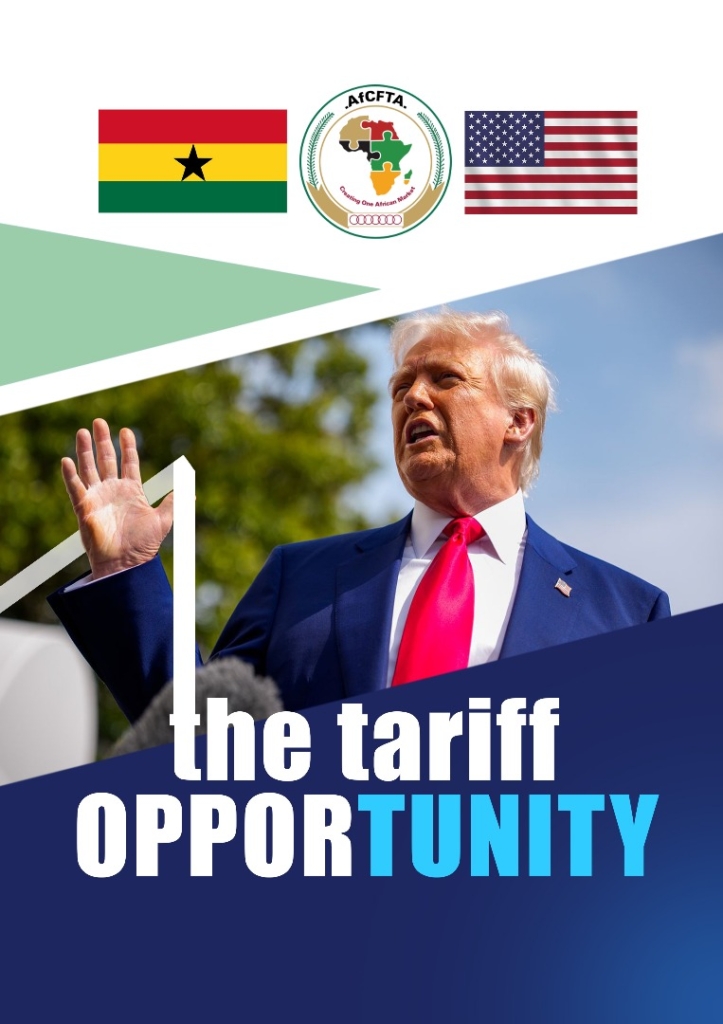
According to the Office of the United States Trade Representative, Africa exported a total of $40 billion in goods to the USA, of which Ghana benefited from only $1.2 billion. This presents a huge opportunity for trade partnerships, which can translate to trade volumes of about $10 - $20 billion progressively in the next ten years.
This can be done by placing Ghana as a pre-manufacturing destination for companies in the USA and with corresponding repackaging companies for some key opportunity zones like North Carolina, North Pennsylvania, and other economic areas.
In addition, Ghana provides access to a pool of inexpensive, skilled labor, further positioning it as a favorable place to locate as a manufacturing hub. This combination of inexpensive labor, good trade policies, and strategic geographic placement positions Ghana as a prime investment site for export-oriented industries. By taking advantage of these possibilities, foreign producers and investors can counteract the impacts of U.S. tariffs while promoting Ghana's economic development and growth.
Latest Stories
-
Torgbiga Wenya III opposes proposed elevation of 36 Anlo chiefs to Paramount status
24 seconds -
The strengthening El Niño and what it could mean for Ghana
4 minutes -
Baffour Awuah formally charged with money laundering, loss of public funds – Lawyer
5 minutes -
Drone flight over EOCO building could attract 30-year jail term – Security consultant
13 minutes -
Flying drone over EOCO premises is strictly prohibited – Security consultant
13 minutes -
SIC file was surrendered to client, EOCO has no reason to search Manhyia South MP’s firm – Atta Akyea
14 minutes -
EOCO search of Baffour Awuah’s law firm raises confidentiality concerns – Atta Akyea
15 minutes -
“I will never ignore an invitation from EOCO if I had received one” — Manhyia MP
17 minutes -
Baffour Awuah ready to cooperate fully with EOCO investigation – Bosome Freho MP
40 minutes -
How a Ghanaian technology is helping fish farmers detect hidden threats before fish die
49 minutes -
AI tool helps Ghanaian farmers identify crop threats from field observations
54 minutes -
NEIP: Designing a Ghana Startup Agency that builds enterprises, not programmes
1 hour -
Breast cancer diagnosis is not a life sentence – Gender Minister urges early treatment
1 hour -
‘How does a bad settlement translate into criminality?’ – Atta Akyea questions EOCO
1 hour -
Foreign Affairs Ministry launches ‘ECOWAS for All’ campaign to boost public awareness
1 hour