

Audio By Carbonatix
A grieving sister’s chilling account of how her younger brother was allegedly denied life-saving care by three major hospitals in Accra has reignited urgent concerns over Ghana’s emergency healthcare system.
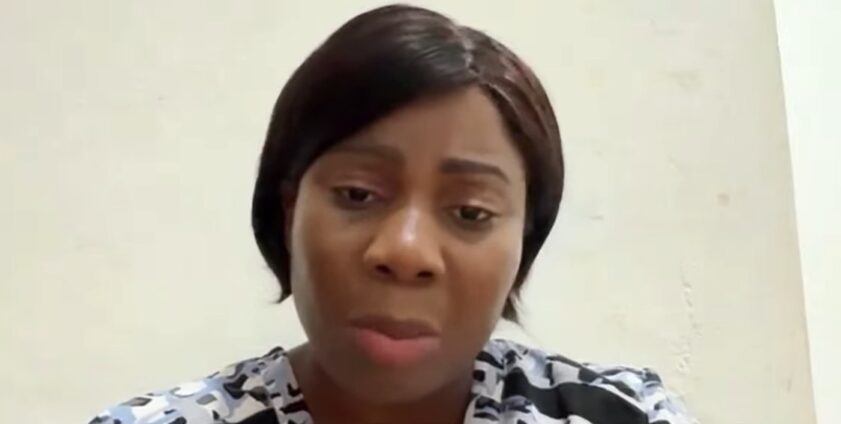
Dr Matilda Amissah is an Emergency Care physician at the Cape Coast Teaching Hospital who saves lives daily, but her brother’s life could not be saved when it mattered most because he was turned away in major hospitals in Accra by other healthcare professionals.
Dr Amissah has recounted in heartbreaking detail how her 29-year-old brother, Charles Henry Amissah, an engineer with Promasidor Ghana, died after a hit-and-run accident on February 6 at the Kwame Nkrumah Circle Overpass, despite being rushed for urgent care.

Speaking on the JoyNews National Dialogue on Ghana’s Emergency Care Crisis on Thursday, April 2, Dr Amissah described a traumatic sequence of events that began with confusion and ended in devastating loss.
A Disappearance That Turned Deadly
Dr Amissah said she was on duty when the family realised Charles had gone missing.
“We started searching for him… We escalated to all media platforms, social media handles, even on the doctors’ platforms, nurses’ platforms,” she said.
For days, the family combed everywhere, but found no trace of him.
“It never occurred to us that he had died,” she said.
The breakthrough came days later when law enforcement officers at the Nima Police Station contacted the family about an unidentified accident victim. The truth that followed would shatter them.
A Race Against Time—And a System That Failed
According to accounts relayed to the family by police and the National Ambulance Service, Charles had been struck on his motorcycle at the Circle Overpass and picked up within minutes.
From there, the race to save his life began but stalled fatally.
He was first taken to the Police Hospital, where, according to the account, staff cited a lack of bed space.
“They tried to negotiate to use the trolley, but they insisted they should go to Ridge Hospital,” she recounted.
At Ridge Hospital, the same response allegedly followed—no bed space. He was then redirected to Korle Bu.
By then, it was too late.
A Heartbreaking Discovery
Dr Amissah described the moment she identified her brother’s body at the morgue at Korle Bu as unbearable.
“He wasn’t even put in the cold room… he had started to decompose,” she said.
“He was lying amongst some bodies… they had to bring him out on a trolley.”
She recalled visible injuries, deep wounds and burns, suggesting he had been dragged on the road after impact.
“It was heartbreaking looking at his wounds… a deep wound to his right shoulder and frictional burns,” she said.
“He Could Have Been Saved”
As a medical professional, Dr Amissah believes her brother’s death was preventable.
“He could have been saved,” she said firmly.
She explained that the critical “golden hour” after trauma, when prompt care can make the difference between life and death, was lost.
“Someone who is bleeding… it could take you a few minutes to maybe an hour to lose that precious one-hour window to save a life,” she said.
She questioned why no attempt was made to stabilise him.
“Police Hospital should have at least looked at his injuries… try to stop the bleed and assess him properly.”
Outrage Over ‘No Bed Space’ Justification
Dr Amissah expressed disbelief that an emergency patient could be turned away.
“An accident victim has been turned away… turned away to where? We are the health workers that are supposed to save lives,” she said.
Drawing from her experience at Cape Coast Teaching Hospital, she insisted emergency care must never be denied.
“At Cape Coast, we don’t turn away anybody… even if there is no bed space, we expand using stretchers,” she explained.
“You stabilise first. You don’t turn away.”
She stressed that even in strained systems, healthcare workers have a duty to act.
“The system is not perfect… but humanity should be very important to us as health workers.”
A Systemic Crisis
The tragic death of Charles Amissah has sparked wider debate about emergency response protocols, hospital capacity, and accountability within Ghana’s health system.
Dr Amissah pointed to gaps in coordination, referral systems, and decision-making under pressure.
“To just turn away somebody because maybe I don’t have this… it is not right,” she said.
Her account adds to growing concerns about delayed emergency care outcomes, especially in high-density urban areas like Accra, where accidents are frequent and hospital systems are often overstretched.
A Family’s Pain, A Nation’s Wake-Up Call
What began as a desperate search for a missing loved one ended in a tragic confirmation of systemic failure.
For Dr Amissah, the pain is deeply personal, but her message is national.
“At least try… even if the system fails, let it not be because we didn’t try,” she urged.
The death of the young engineer has now become more than a family tragedy, it is a stark reminder of the life-and-death consequences of gaps in Ghana’s emergency healthcare system and a renewed call for urgent reform.
Latest Stories
-
Ecobank Junior Saver Big Pitch to reward 10 winners with GH¢2,000 each
2 minutes -
AMA demolishes unauthorised pigsty obstructing Agbogbloshie waste evacuation exercise
2 minutes -
I was filled with disbelief – Akosua Achia Sarpong Esq. shares her first reaction
3 minutes -
Snake Village: A look at Volta Region’s hidden snake village and its tourism potential (Video)
10 minutes -
Election Watch Ghana calls for constitutional reforms to strengthen Electoral Commission independence
12 minutes -
NACOC, Postal and Courier Services Regulatory Commission intensify efforts to curb drug trafficking
14 minutes -
Ga Mantse chairs committee to drive Accra Green and Clean City Initiative
16 minutes -
Drivers threaten to remove traders from lorry stations over TrafficTech concerns
18 minutes -
AI could create 10 to 20 times more jobs despite current recruitment slowdown – Hubtel CEO
21 minutes -
Sexual abuse in schools persists because perpetrators are not held accountable – Dr Nyarkoa
28 minutes -
Chief Justice has designated Achimota Court to handle petroleum diversion cases – NPA CEO
31 minutes -
Philip Nai and friends gear up for bigger seventh Christmas outreach
33 minutes -
GSA strengthens electricity meter testing to protect consumers and improve energy reliability
34 minutes -
‘Dismissed or suspended? Ghanaians deserve clarity’ – NPP demands clarity on Ampofo Ankrah’s fate
37 minutes -
Teach consent and sexual boundaries from pre-school to prevent abuse – Gender advocate
43 minutes