

Audio By Carbonatix
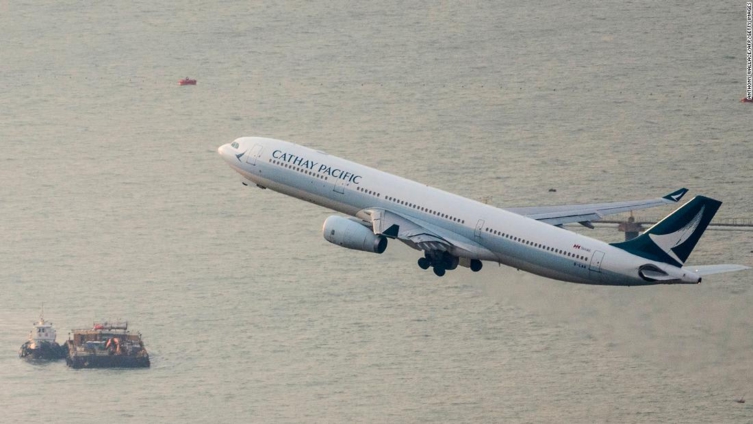
Hong Kong and Singapore plan to open an "air travel bubble" that allows residents to travel between the two Asian hubs without requiring quarantine or restrictive control measures, authorities announced on Thursday.
Open travel in both the Chinese city and the Southeast Asian country has been suspended for months. When the coronavirus pandemic hit, both governments shut borders and denied entry to most non-residents and short-term visitors.
In Hong Kong, returning residents are required to undergo a 14-day quarantine and wear an electronic bracelet to track their location.But both cities have managed to get their Covid outbreaks under control, and reported low numbers of local infections in the past few months -- which is why they agreed in principle to the travel bubble plan during discussions on Wednesday, according to the statement.
"This is a milestone in our efforts to resume normalcy while fighting against the long-drawn battle of Covid-19," said Edward Yau, Hong Kong's Secretary for Commerce and Economic Development, in the statement. Ong Ye Kung, Singapore's Minister for Transport, called it a "significant" move forward.
"It is a safe, careful but significant step forward to revive air travel, and provide a model for future collaboration with other parts of the world," he added.
There isn't yet a launch date for the travel bubble, but details will be fleshed out in the coming weeks, they said. Under the travel bubble plan, travelers are required to have tested negative for Covid-19 using a "mutually recognized" test.
There are no restrictions on travel purpose -- visitors can come and go for business, pleasure, study or otherwise. They will fly on designated flights that only serve travel-bubble passengers.
Critically, travelers will not be subject to any quarantine or stay-home notice requirements, or a controlled itinerary. However, this all depends on the Covid-19 situation, the statement added -- if the virus numbers shift in either location, the plan could change with it by increasing or decreasing the number of flights, or even suspending the program.
Containing local outbreaks
The travel bubble and the low Covid-19 cases reflect a remarkable turnaround in both places. Hong Kong experienced a third wave earlier this summer, with daily new cases leaping from the single digits up to a peak of 149 in July.
Restrictions, which had been slowly easing swiftly came back, with public gatherings capped at two people and a brief total suspension of all dine-in services. The restrictions drew public criticism at times -- construction workers and daily laborers, for instance, were photographed crouching by the sidewalk or near public bathrooms with takeout boxes.
But the restrictions also appear to have worked: Hong Kong's new case count had dropped back to about a dozen a day by August, and even reached zero on some days.
Earlier this spring, Singapore struggled to contain soaring infection numbers, with daily cases surpassing 1,000 a day by April. The vast majority of cases occurred in crowded dormitories for migrant workers, many from South and Southeast Asian countries, such as Bangladesh and India.
Authorities put the dorms under total lockdown, relocated infected residents, and implemented other measures like mass testing. The outbreak took months to control, and highlighted the migrant workers' poor living conditions before a global audience -- but cases did gradually fall over the summer.
By August, daily case numbers were down to the dozens.With the situation stabilized, Singapore has relaxed its restrictions; apart from the Hong Kong travel bubble, it has also agreed to reopen cross-border travel for essential business with Indonesia, and to partially reopen its land border with Malaysia for business travel.
Latest Stories
-
Police arrest suspect over jewellery theft during fire outbreak
2 hours -
EOCO returns Hanan’s £6,700, GH¢2,750 and devices after defence challenge
2 hours -
Opplift Youth Entrepreneurs Summit 2026 equips entrepreneurs with skills, mentorship and support
3 hours -
Rival clubs want range of punishments for Man City
3 hours -
Tear gas in Paris and Marseille as school protests grow across France
3 hours -
Kane inspires England to win over Czech Republic in UEFA Nations League
3 hours -
Finland orders halt to work on two Google data centres
3 hours -
Substitute Merino scores twice as Spain win in Croatia
3 hours -
Ronaldo wants Portugal ‘punishment’ but not retiring
3 hours -
White House defends Trump comment to let Iran ‘take out’ LA and San Diego
4 hours -
Asos confirms hackers sent ‘unauthorised’ notification to app users
4 hours -
US televangelist Jim Bakker, disgraced from sex scandal and fraud, dies at 86
4 hours -
Congolese-born golfer to represent Ghana at Turkish Airlines World Cup grand final
4 hours -
Amazon wins global rights to stream Emmys in six-year deal
4 hours -
European Film Festival returns to Ghana after a 5-year break
4 hours