


Audio By Carbonatix
In a ceremony held at the University of Health and Allied Sciences (UHAS), the Vice-Chancellor, Prof. Lydia Aziato, delivered a poignant message urging young people to be vigilant in safeguarding their vital documents, emphasising their importance in making them readily available when they’re required.
The occasion marked the awarding of certificates for capacity enhancement under the 'Good Nutrition Starts With Me' initiative, a programme tailored for journalists and the youth.
However, amidst the celebration of academic achievement, Prof. Lydia Aziato seized the opportunity to address a pressing concern that often goes overlooked until it's too late – the safekeeping of vital documents.
Speaking passionately during the ceremony, Prof. Aziato underscored the significance of documents such as academic certificates, identification cards, and other credentials, emphasising their pivotal role in various life endeavours.
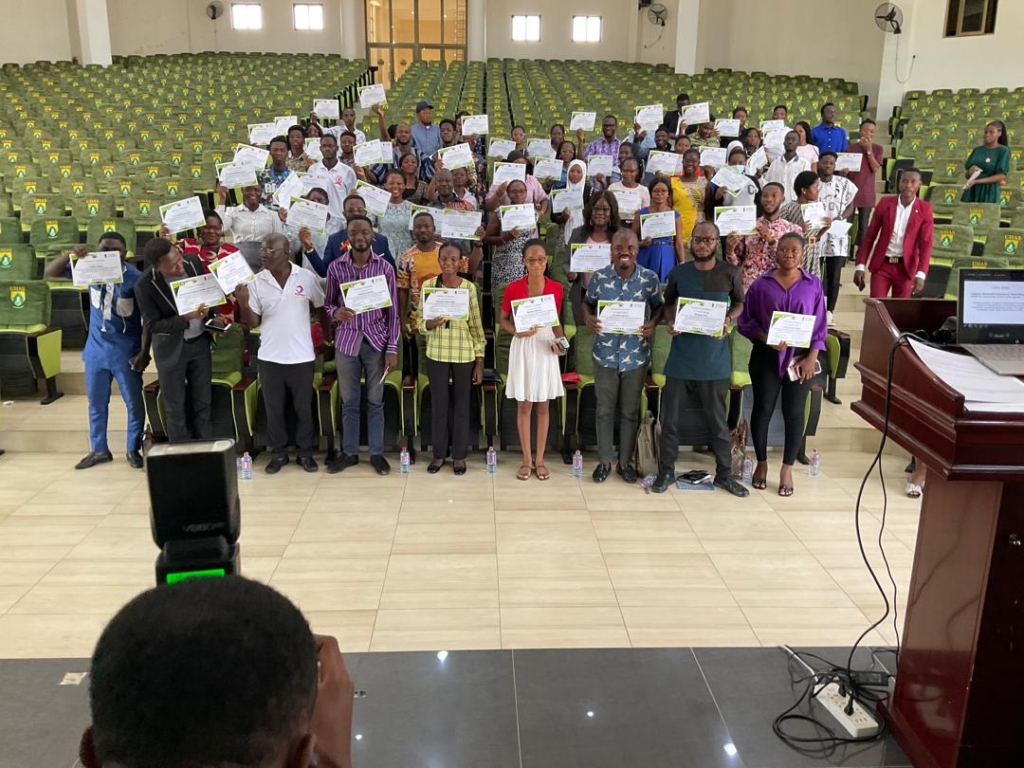
She shared stories of individuals who faced hardships due to the loss or misplacement of such documents, highlighting the profound impact they can have on one's opportunities and aspirations.
"Your certificates and important documents are not mere pieces of paper; they represent your hard work, dedication, and potential," Prof Aziato stated. "Losing them cannot only be emotionally distressing but can also pose significant challenges in accessing opportunities and realizing your goals."
She further urged the audience, especially the youth and media representatives present, to adopt proactive measures to safeguard their documents, whether through secure storage, digital backups, or other reliable means.

Emphasising the adage "prevention is better than cure," she urged individuals to prioritise the safekeeping of their important papers to avoid potential setbacks in the future.
The 'Good Nutrition Starts With Me' initiative, which focuses on promoting awareness and education about nutrition, served as a fitting backdrop for Prof Aziato's message, emphasising the holistic approach to well-being, which includes not only physical health but also practical aspects like document management.
As the ceremony concluded with the distribution of certificates, attendees were left not only with tangible proof of their academic and professional endeavours but also with a renewed sense of responsibility towards safeguarding their future through the protection of vital documents.
In the wake of Prof Lydia Aziato's impassioned plea, it is hoped that her words resonate not only within the university community but also across broader society, inspiring individuals to take proactive steps in ensuring the safekeeping of their important documents, thereby safeguarding their pathways to success and fulfillment.
Latest Stories
-
Let The Constitution direct Chieftaincy to deliver “All Development Is Local”
55 minutes -
John Jinapor outlines renewable energy, nuclear power priorities for 2027
1 hour -
Ghana explores centre of excellence for hearing, communication and cochlear implant care
2 hours -
Schizophrenia-related disorders lead mental health cases recorded in Ghana
3 hours -
Dutch authorities enlist Ghana in hunt for fugitive drug lord Bolle Jos
3 hours -
Ghana housing finance conference adopts communiqué to improve affordable housing access
7 hours -
Special Initiatives Minister urges Wa Technical Institute to enrol more girls as EU-backed solar training lab opens
8 hours -
In the matter of my first year at the Bar
8 hours -
ActionAid Ghana calls for an end to child marriage, greater investment in girls’ rights
8 hours -
Newsfile to tackle World Cup visa scandal, beach demolitions, education strikes, BRICS bid
9 hours -
UK-Ghana Trade & Investment Summit: Trade Resource Centre to help businesses maximise UK-Ghana trade opportunities
9 hours -
Embassy of Denmark celebrates World Maritime Day
9 hours -
Linking LEAP to productive inclusion could cut extreme poverty by 2030 – UNICEF
10 hours -
Trade Ministry backs use of creative arts to rehabilitate prison inmates
10 hours -
Negotiations with government to continue despite strike suspension – GNAT
10 hours