

Audio By Carbonatix
Mining company BHP has been found liable for a 2015 dam collapse in Brazil, known as the country's worst-ever environmental disaster, by London's High Court.
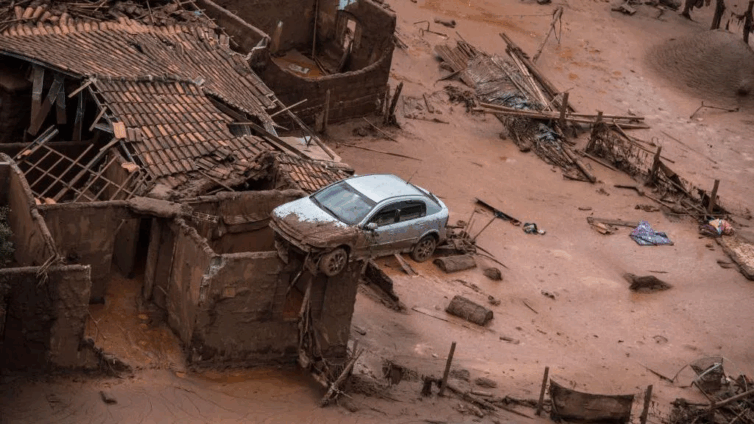
The dam collapse killed 19 people, polluted the river and destroyed hundreds of homes.
The civil lawsuit, representing more than 600,000 people including civilians, local governments and businesses, had been valued at up to £36bn ($48bn).
BHP said it would appeal against the ruling and continue to fight the lawsuit and has said many claimants in the London lawsuit had already been paid compensation in Brazil.
The dam in Mariana, southeastern Brazil, was owned by Samarco, a joint venture between the mining giants Vale and BHP.
The claimants' lawyers argued successfully that the trial should be held in London because BHP headquarters "were in the UK at the time of the dam collapse".
A separate claim against Samarco's second parent company, Brazilian mining company Vale, was filed in the Netherlands, with more than 70,000 plaintiffs.
The dam was used to store waste from iron ore mining. When it burst, it unleashed tens of millions of cubic metres of toxic waste and mud. The sludge swept through communities, destroying hundreds of people's homes and poisoning the river.
Judge Finola O'Farrell said in her High Court ruling that continuing to raise the height of the dam when it was not safe to do so was the "direct and immediate cause" of the dam's collapse, meaning BHP was liable under Brazilian law.
BHP is expected to appeal the ruling.
President of BHP's Minerals Americas, Brandon Craig, said in a statement that 240,000 claimants in the London lawsuit "have already been paid compensation in Brazil".
"We believe this will significantly reduce the size and value of claims in the UK group action," he added.
The lawsuit has been littered with different clashes between the UK firm representing the claimants, Pogust Goodhead, and BHP.
BHP always denied liability and said the London lawsuit duplicated legal proceedings and reparation and repair programmes in Brazil.
BHP and Vale have set up an organisation called the Renova Foundation tasked with compensating victims. It has offered them either cash compensation, or a house in a new city that the foundation has built to replace the town of Novo Bento and has disbursed billions of dollars in repair and compensation actions to hundreds of thousands of people.
In June, a presentation by BHP and Vale's Samarco venture said around 130,000 people in Brazil had reached settlements with them. In response, Pogust Goodhead alleged the companies had pressured claimants to "settle their claims at far below their true value" and that it would seek £1.3bn in unpaid fees lost as a result.
It alleged that a $30.3bn compensation agreement which Brazil signed with BHP, Vale and Samarco in October 2024 prevented claimants from discussing the deal with the firm or paying its legal fees.
The firm said it had incurred $1bn in borrowing costs to finance the English case.
BHP said it rejected Pogust Goodhead's allegations in their entirety and dispute "their factual and legal basis."
It said the claims were "without merit" and BHP would "vigorously contest them." A spokesperson also said that the firm continued to believe Brazil was the most appropriate, effective, and efficient place for compensation for the dam collapse.
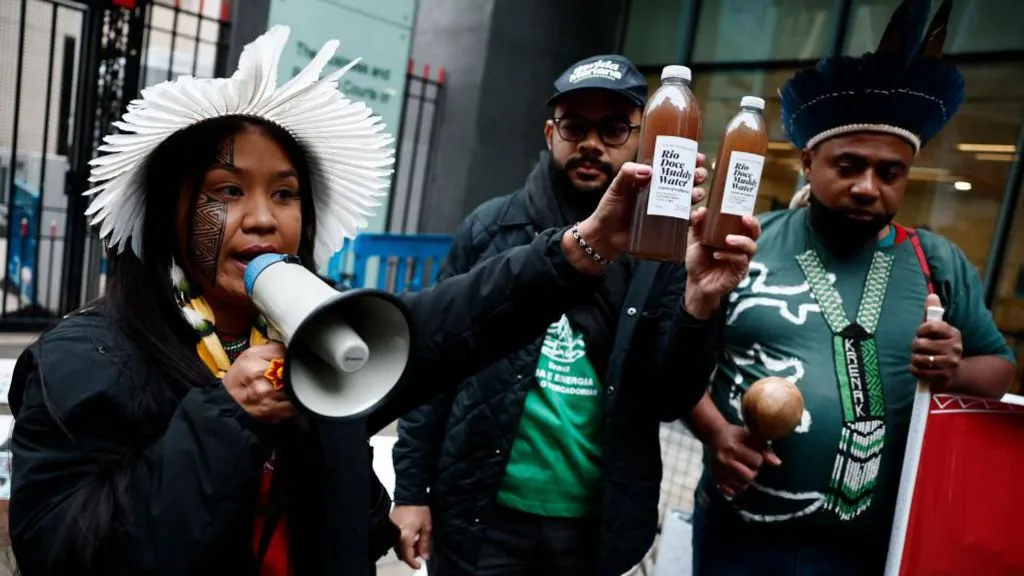
But there were also parallel claims that Pogust Goodhead – which promotes itself as a firm representing human rights and environmental law – had tried to profit off "vulnerable" Brazilians.
During proceedings the firm was accused of "misleading" vulnerable Brazilians for its own gain by a Brazilian judge in the state of Minas Gerais.
Pogust Goodhead rejected the accusation at the time as "without merit".
In a claim brought by the Public Prosecutors and Public Defenders in Brazil against Pogust Goodhead, the judge criticised several "allegedly abusive clauses" in Pogust Goodhead's contracts with Brazilians who suffered damage.
Among these, it alleges the law firm engaged in "misleading advertising" considering the "hypervulnerability of those affected".
It also alleges "undue charging of fees on compensation amounts obtained extrajudicially in Brazil" which it said represents "illicit enrichment that diverts essential resources from those affected" and "excessive" penalties for claimants who terminated their contracts which it said "discouraged" them from joining national compensation programmes.
The former Brazilian ambassador in London and Washington, Rubens Barbosa, told the BBC earlier this year that he believed this amounted to spreading misleading information in Brazil.
Mr Barbosa said bringing the case to London "hinders efforts to resolve the matter locally" and the "extremely vulnerable Brazilians were misled" by contracts.
Latest Stories
-
Ghana-China programme opens AI pathways for young Ghanaians
3 minutes -
We went to the ground – NDC defends research behind 2024 manifesto
11 minutes -
NDC orders halt to premature parliamentary campaign activities
17 minutes -
GoldBod dismisses claims of rift with BoG over Asiama’s board exit
24 minutes -
NDC communicator defends manifesto process, Mahama’s delivery record
25 minutes -
Ghana, Algeria explore stronger scholarship and academic exchange opportunities
26 minutes -
Law enforcement officers trained to tackle emerging human trafficking threats
32 minutes -
Ministries, assemblies cannot claim blanket exemption from vehicle tint laws – ACP Alexander
39 minutes -
Is Ghana safely becoming a narcotic transit coast?
42 minutes -
Tinted vehicles could facilitate crime and endanger road users — ACP Alexander
52 minutes -
BoG Governor appoints Second Deputy Governor Matilda Asante-Asiedu as rep on GoldBod board
1 hour -
The fight against terrorism requires regional and international cooperation – Mahama
1 hour -
Arrest Nana Boakye and probe into drug lab claims – NDC’s James Agbey
2 hours -
Refugees in South Africa face mounting tensions as September 30 deadline looms
2 hours -
At least 12 dead, dozens missing after vessel capsizes in DR Congo
2 hours