

Audio By Carbonatix
In 2020, Ghana’s music scene experienced a wave of fresh talent, with new artists making a major impact despite the COVID-19 lockdown that halted concerts and events.
That year saw breakout hits like Ataa Adwoa by Bosom P-Yung, Otan Hunu by Dead Peepol, and Money by Kweku Flick. Even established acts made waves—Stonebwoy, an industry veteran, kept the energy high with Putuu Freestyle, among others.
In sports, 2020 was a year of major shifts and challenges. The Ghana Premier League (GPL) returned after a long hiatus, only to be suspended again due to COVID-19. However, Hearts of Oak and Asante Kotoko still found ways to keep fans engaged with their intense rivalry. Ghanaian football also saw Kudus Mohammed rise to prominence, securing a move to Ajax.
On the international stage, the Black Maidens and Black Princesses had their World Cup qualifiers postponed, while boxing fans celebrated Isaac Dogboe’s comeback victory in July.
Amid all this, the University of Media, Arts and Communication (UniMAC, formerly GIJ) made its debut appearance at the Ghana University Sports Association (GUSA) Games, hosted by the University of Ghana.
It was a historic moment and arguably one of the best experiences UniMAC students had ever enjoyed.
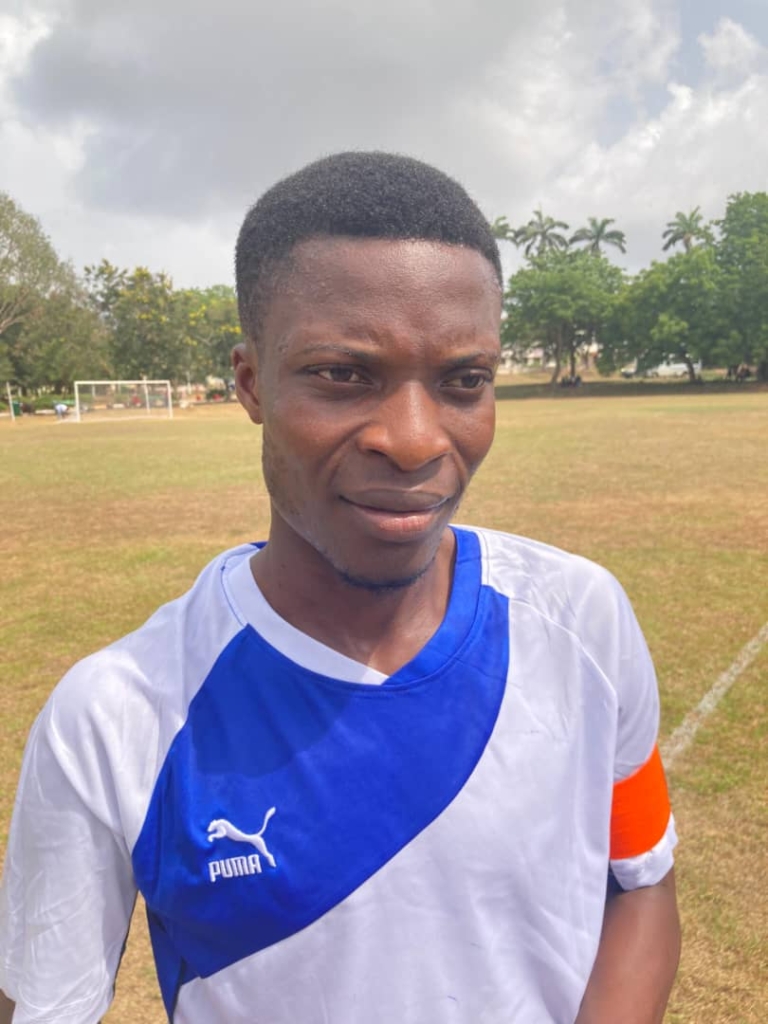
“Our first time to participate was in 2020. Fortunately, it was the University of Ghana that hosted the entire event and students from universities, I think somewhere around 3rd January … for us, GIJ people never knew that we were part of, and doing sports was a bit surprising to some,” said Emmanuel Nii Adjei, captain of the men’s football team, in an interview with JoySports.
As debutants, UniMAC was considered an underdog. Nii Adjei recalls how surreal it felt upon hearing the news of their participation.
“For us as students, it was a very big opportunity, and most of us were excited to be part of it because of the stories we had heard about the games and the vast opportunities it brings to athletes both within and outside the country. We wanted to have a taste of what it looked like,” he shared a broad grin on his face.
“We were about ten or eleven schools participating—the already known schools like the University of Ghana, Kwame Nkrumah University of Science and Technology, University of Education, UCC [University of Cape Coast], UDS [University for Development Studies], and then a couple of them—UMaT, UPSA, and GIMPA. These were the schools that participated, and then GIJ [now UniMAC].”
Just like every other sport, there were the big boys and girls—the rival teams. The GUSA Games had always been dominated by UG, KNUST, UCC, and UEW. Nii Adjei underscored the level of competition between these teams.
“The GUSA has always been between these four big teams—KNUST, UG, UCC, UEW—and sometimes UDS because they are able to get the best sportsmen through their scholarship schemes. They attract talents that other universities are not able to recruit because of the plans they have for these things.
"So, for the football competition, it was all play all—a league system where you play every university, and based on the points you accrue in nine or ten games, you’re adjudged the winner,” he recounted.
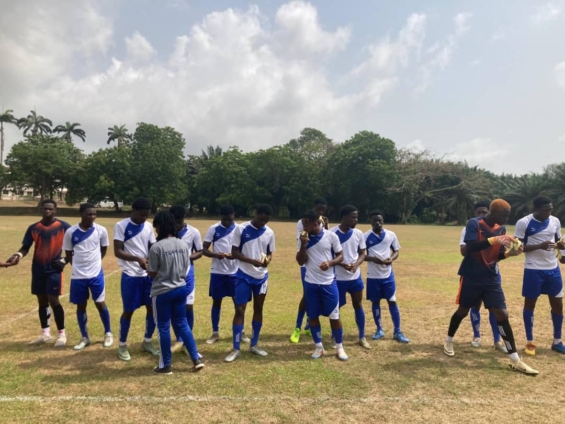
The football competition followed a league format—every team had to face each other in an "all-play-all" system. Winning wasn’t just about talent; it required endurance, strategy, and a deep understanding of the game. The final winner would be determined by the points accumulated over nine or ten matches. However, this has since changed to a group-stage format.
“GUSA is organized twice a year, so we have what we call the Mini-GUSA and the GUSA. The Mini-GUSA is meant to prepare athletes for the main GUSA Games. We, as sportsmen, heard about it about a month or two in advance while we were on vacation. So quickly, the sports commissioner organized some of us who were passionate about soccer, volleyball, and basketball.
"We managed to put together a team and trained on our own—there was no coach at the time, and there wasn’t even a sports directorate. So quickly, the school needed to assemble a team,” he narrated.
Over the years, the GUSA Games have seen massive reforms.
The number of participating teams has grown from the initial 10 in 2020 to 16 as of 2023. This expansion has given the university games an Olympic-like edge.
Many athletes who have emerged from the GUSA Games have excelled in recent years. Take, for example, Benjamin Azamati, Joseph Paul Amoako, Evans Cadman-Yamaoh, and Rose Yeboah, among others, who won gold and silver medals for Ghana at the 2023 African Games.
With this pride, athletes aim to excel in their respective disciplines to achieve laurels and reach their full potential.
Eminent sports director for UniMAC, Mr. Ofosu Obeng, believes the university’s participation in GUSA has met expectations despite limited resources. However, infrastructure remains a major challenge hindering sports development.
“We’re fortunate to have VCs who are promoting sports. Both the outgoing VC and the current VC have been keenly promoting sports, even though we don’t have the facilities,” he told JoySports in an interview.
“I suggested that we write to Legon [University of Ghana] to allow us to use their facilities, and they agreed. They sanctioned it right from the very first GUSA—Legon, KNUST, and now UCC. Legon has allowed us to use their facilities for a fee that helps maintain them. Budget-wise, we don’t have a lot of resources, but for our feeding and the GUSA-sanctioned incentives, we’re ready to pay,” he narrated.
This marks UniMAC’s (formerly GIJ) third participation in the GUSA Games. However, this time, they are competing in only one sport: men’s football.
The lack of available students to form competitive teams has often resulted in the school suffering heavy defeats—particularly in basketball (both men’s and women’s) and sometimes women’s football.
UniMAC will be hoping to rally its student body today as they take on the University of Environment and Sustainable Development (UESD) in the men’s football tournament at GUSAUCC2024, hosted at St. Peter’s Seminary in Pedu, Cape Coast.
Latest Stories
-
Government procures over 2,000 transformers as Ghana’s electricity access hits 89.13% – Energy Minister
25 minutes -
UTAG-UG threatens strike on October 19 over unpaid allowance
33 minutes -
Let The Constitution direct Chieftaincy to deliver “All Development Is Local”
2 hours -
John Jinapor outlines renewable energy, nuclear power priorities for 2027
2 hours -
Ghana explores centre of excellence for hearing, communication and cochlear implant care
3 hours -
Schizophrenia-related disorders lead mental health cases recorded in Ghana
3 hours -
Dutch authorities enlist Ghana in hunt for fugitive drug lord Bolle Jos
4 hours -
Ghana housing finance conference adopts communiqué to improve affordable housing access
8 hours -
Special Initiatives Minister urges Wa Technical Institute to enrol more girls as EU-backed solar training lab opens
9 hours -
In the matter of my first year at the Bar
9 hours -
ActionAid Ghana calls for an end to child marriage, greater investment in girls’ rights
9 hours -
Newsfile to tackle World Cup visa scandal, beach demolitions, education strikes, BRICS bid
9 hours -
UK-Ghana Trade & Investment Summit: Trade Resource Centre to help businesses maximise UK-Ghana trade opportunities
10 hours -
Embassy of Denmark celebrates World Maritime Day
10 hours -
Linking LEAP to productive inclusion could cut extreme poverty by 2030 – UNICEF
11 hours