

Audio By Carbonatix
Africa faces knowledge gaps that hinder engagements in the global energy transition, even as countries set ambitious net-zero targets and major oil companies shift toward cleaner energy.
The Africa Centre for Energy Policy (ACEP), a policy think tank, believes the continent needs fresh perspectives on the risks of oil dependence and the opportunities of the energy transition for inclusive growth and development.
“It is time for us to think about how we can be part of the economic transformation from renewable energy, in spite of the challenges with climate change,” said Benjamin Boakye, ACEP Executive Director.
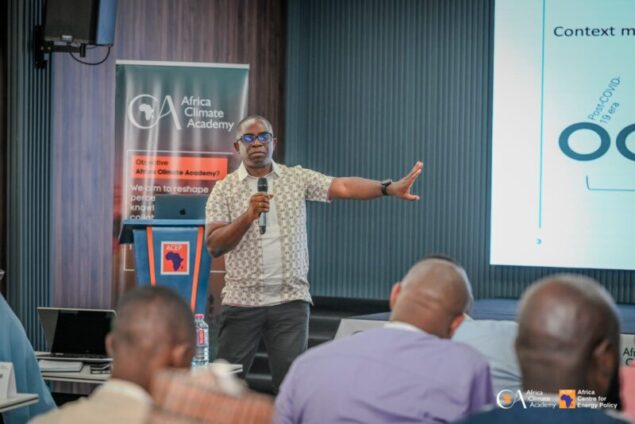
He was addressing the inaugural cohort of the Africa Climate Academy, an educational platform designed to reshape perceptions, build knowledge, foster collaboration, and empower advocacy for a sustainable future.
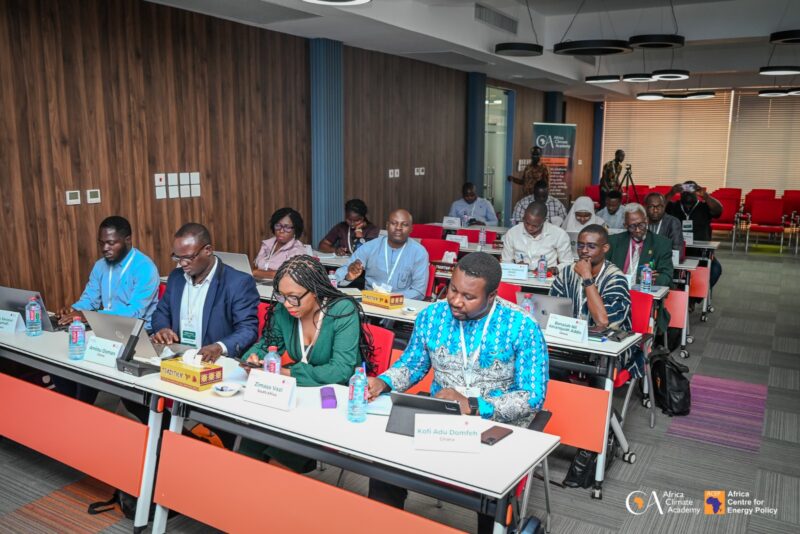
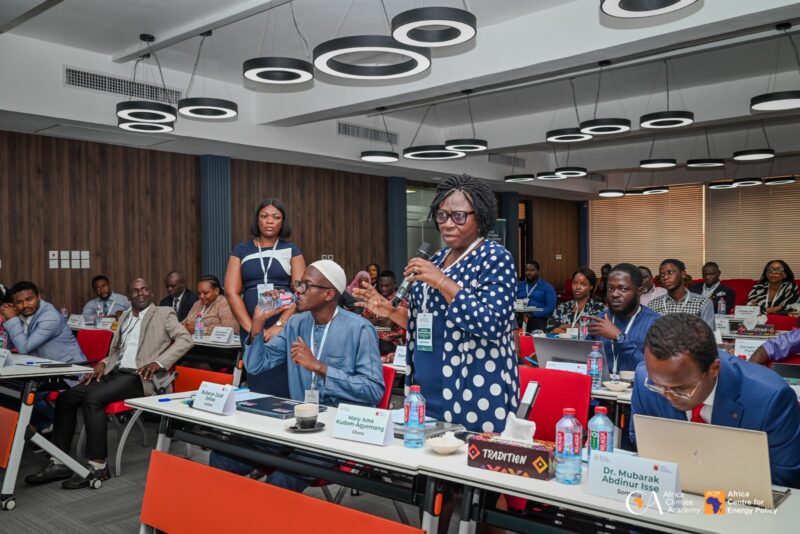
The Academy brought together policymakers, media professionals, civil society leaders, and academics to acquire the knowledge and tools to address Africa’s climate and energy challenges and drive sustainable action.
The primary goal of the energy transition is to achieve carbon neutrality by 2050, but a just transition will need Africa to be at the forefront of implementation.
Voices for Africa to go for nuclear energy have been strong, emphasizing that it’s cheaper and the option for industrialization.
Benjamin Boakye, however, believes “the argument that we cannot industrialize with renewable energy is being challenged due to improving technology to ease access to solar, among others”.
Failure of the Paris Agreement
Climate change is affecting every inhabited region across the globe, with human influence contributing to many observed changes in weather and climate extremes.
Human-induced climate change has contributed to increases in agricultural and ecological droughts in some regions due to evapotranspiration increases.
Prof. Nana Ama Browne Klutse, Head of the Department of Physics at the University of Ghana and Vice Chair of IPCC Working Group I, during a session, unpacked the evidence from the IPCC about the reality of climate change.
“The impact of climate change is affecting our environment and has the potential to destroy our very existence. It is affecting our habitat, the air we breathe, water we drink, the food we eat,” she said.
Global temperatures have already risen 1.36°C as of 2023 and will probably rise a further 3°, or even up to 4.5-5° by 2100.
Regional temperatures are rising; cold days, nights and frost have become rarer; hot days, nights and heat-waves are more frequent; extreme rainfall and flooding events are more frequent; extreme droughts and massive wildfires are more common; and in rural communities, forests and farmland are impacted, making crops and food scarce and expensive for all.
According to Prof. Klutse, there is a failure of the 2015 Paris Agreement on Climate Change and international commitments to emission reductions.
Assessments of current Nationally Determined Contributions (NDCs) suggest that these reductions, even if fully implemented, are unlikely to limit global temperature increases to below 2°C above pre-industrial levels.
“We’re slowly being boiled in a pot, but we’re not being ambitious in solutions to climate change,” observed the scientist. “We should not go beyond the tipping point. We need to ambitiously remove fossil fuels to control carbon dioxide emissions”.
Collection Action
Some extreme weather events observed over the past decade would have been extremely unlikely to occur without human influence on the climate system.
Dr. Daniel Tutu Benefoh, Acting Director of the Climate Change Unit at Ghana’s Environmental Protection Agency, Ghana, noted that the resource rich parts of Africa have the most climate vulnerable people, hence it is important that climate change is carried to the belly of development and keep the conversation there.
He facilitated a session on Integrating Climate Change into Planning Frameworks, covering strategies for mainstreaming climate considerations, fostering inclusivity, monitoring progress, and overcoming implementation challenges.
The Africa Climate Academy is designed to transform the continent’s approach to climate action and shape the future of energy in Africa.
Dr Charles Gyamfi Ofori, Policy Lead, Climate Change and Energy Transition at ACEP, emphasized that the energy transition is real and presents several opportunities.
But he says “we have to be intentional in assessing the benefits,” adding that “continued investment, R&D and policy support is relevant for Africa”.
Latest Stories
-
Imagination Africa, Mentors Chess Academy to host second African Genius Chess Championship at Ghud Park
1 hour -
Nana B passport claims a diversionary tactic — Abu Jinapor
2 hours -
Pope Leo diagnosed with cancer as doctors remove lobe of lung, Vatican says
2 hours -
Legal Aid Commission takes free legal services to Techiman main lorry terminal
2 hours -
Nana B denies seeking passport favour, accuses Ablakwa of failing to account for GH¢16.4m
2 hours -
Young girls demand climate action, stronger protection against child marriage
2 hours -
Ex-gang boss sentenced to 40 years for orchestrating Tupac Shakur’s murder
3 hours -
From near-deferral to three awards: UMaT graduate’s academic journey
3 hours -
Atta Akyea denies seeking presidential pardon for Wontumi in galamsey case
3 hours -
Photos: Mahama commissions 85-bed Police Hospital ward, donates two ambulances
3 hours -
GTEC directs Ghana’s public universities to reopen by October 16 and begin lectures on October 19
3 hours -
Star Oil donates GH¢1million towards construction of new CID facility
3 hours -
Court hands Adjetey Sowah, two others lifetime bans after Amputee Football legal dispute
4 hours -
NDC appoints Julius Kwame Anthony as a Deputy Communications Director
4 hours -
Ghana repatriates 120 Nigerians rescued from suspected cybercrime centres
4 hours