

Audio By Carbonatix
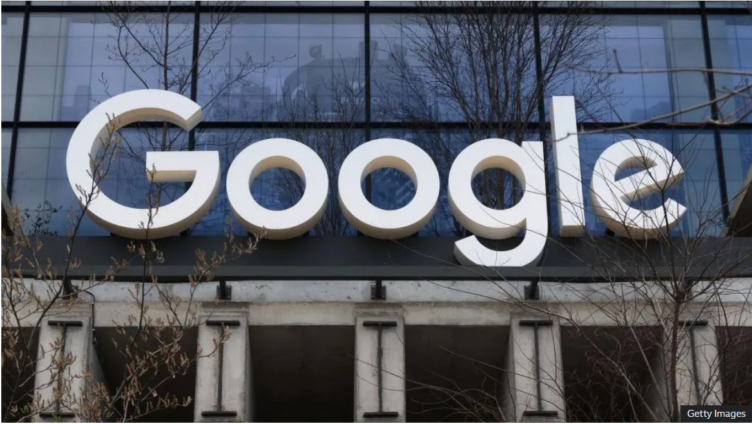
U.S. regulators want a federal judge to break up Google to prevent the company from continuing to squash competition through its dominant search engine after a court found it had maintained an abusive monopoly over the past decade.
The proposed breakup floated in a 23-page document filed late Wednesday by the U.S. Justice Department calls for Google to sell its industry-leading Chrome web browser and impose restrictions designed to prevent its Android smartphone software from favouring its search engine.
The recommended penalties underscore how severely regulators operating under President Joe Biden believe Google should be punished following an August ruling by U.S. District Judge Amit Mehta that branded Google as a monopolist.
The Justice Department decision-makers who will inherit the case after President-elect Donald Trump takes office next year might not be as strident.
The Washington, D.C. court hearings on Google’s punishment are scheduled to begin in April and Mehta is aiming to issue his final decision before Labor Day.
If Mehta embraces the Justice Department’s recommendations, Google will almost certainly appeal the punishments, prolonging a legal tussle that has dragged on for more than four years.
Besides seeking a Chrome spinoff and corralling of the Android software, the Justice Department wants the judge to ban Google from forging multibillion-dollar deals to lock in its dominant search engine as the default option on Apple’s iPhone and other devices.
Regulators also want Google to share data it collects from people’s queries with its rivals, giving them a better chance at competing with the tech giant.
The measures, if they are ordered, threaten to upend a business expected to generate more than $300 billion in revenue this year — a moneymaking machine that has given Google’s parent company, Alphabet Inc.
“The playing field is not level because of Google’s conduct, and Google’s quality reflects the ill-gotten gains of an advantage illegally acquired,” the Justice Department asserted in its recommendations. “The remedy must close this gap and deprive Google of these advantages.”
It’s still possible that the Justice Department could ease off attempts to break up Google, especially if Trump takes the widely expected step of replacing Jonathan Kanter, who was appointed by Biden to oversee the agency’s antitrust division.
Although the case targeting Google was originally filed during the final months of Trump’s first term in office, Kanter oversaw the high-profile trial that culminated in Mehta’s ruling against Google. Working in tandem with Federal Trade Commission Chair Lina Khan, Kanter took a get-tough stance against Big Tech that triggered other attempted crackdowns on industry powerhouses such as Apple and discouraged business deals from getting done during the past four years.
Trump recently expressed concerns that a breakup might destroy Google but didn’t elaborate on the alternative penalties he might have in mind. “What you can do without breaking it up is make sure it’s more fair,” Trump said last month. Matt Gaetz, the former Republican congressman that Trump nominated to be the next U.S. Attorney General, has previously called for the breakup of Big Tech companies.
Gaetz, a firebrand for Trump, faces a tough confirmation hearing.
This latest filing gave Kanter and his team a final chance to spell out measures that they believe are needed to restore competition in search. It comes six weeks after Justice first floated the idea of a breakup in a preliminary outline of potential penalties.
But Kanter’s proposal is already raising questions about whether regulators seek to impose controls that extend beyond the issues covered in last year’s trial, and — by extension — Mehta’s ruling.
Banning the default search deals that Google now pays more than $26 billion annually to maintain was one of the main practices that troubled Mehta in his ruling.
It’s less clear whether the judge will embrace the Justice Department’s contention that Chrome needs to be spun out of Google and Android should be unbundled from the company’s other services.
Trying to break up Google harks back to a similar punishment initially imposed on Microsoft a quarter century ago following another major antitrust trial that culminated in a federal judge deciding the software maker had illegally used his Windows operating system for PCs to stifle competition.
However, an appeals court overturned an order that would have broken up Microsoft, a precedent many experts believe will make Mehta reluctant to go down a similar road with the Google case.
Latest Stories
-
Young woman found dead at Kasoa Peace Town
18 minutes -
Livestream: The Law examines lawful arrest in Ghana
42 minutes -
Mahama urges African governments to treat healthcare as an investment, not budget cost
1 hour -
Bawumia congratulates John Boadu and new NPP executives, pledges support ahead of 2028
1 hour -
‘No talent should be left out’ – Bawumia pledges inclusive NPP campaign for 2028
1 hour -
Prof. Mike Oquaye recounts how he blocked Special Prosecutor’s attempt to arrest Bawku Central MP
2 hours -
Make health sovereignty a priority for Africa – Mahama
2 hours -
Dorimon Naa, Wa West DCE lead massive clean-up exercise; threaten sanctions against recalcitrant residents
2 hours -
Photos from Adom FM Y2K Jam
2 hours -
Praye Tiatia steals the show at Adom FM Y2K Jam [Watch]
2 hours -
Boakye Agyarko congratulates John Boadu, pledges support for NPP leadership
3 hours -
Antwi HiMight thrills fans with Antwi ne Antwi hits at Adom FM’s Y2K Jam [Video]
3 hours -
Amb. Edward Boateng congratulates Boadu, Kodua on election wins
3 hours -
John Boadu pledges to rebuild NPP from grassroots and restore ‘winning machinery’
3 hours -
Ashaiman Assembly deploys monitoring system to curb dumping in storm drain
3 hours