

Audio By Carbonatix
Western Regional Minister Joseph Nelson has advocated strongly for the effective implementation of mining laws in the country.
He said that authorities in charge must emphasise those pertaining to small-scale mining activities to separate the lawful small-scale miners from criminals engaged in Illegal mining activities.
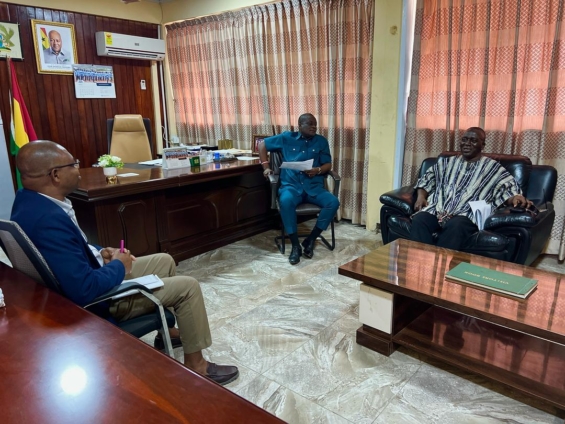
"Since we haven't effectively implemented laws regulating small-scale mining, we will continue to face these issues. We must establish clear guidelines on responsible small-scale mining practices," he said during an engagement with the leadership of the Western Regional House of Chiefs on Wednesday, March 12, 2025.
Consequently, he appealed passionately to the Minister for Lands and Natural Resources, Emmanuel Armah Kofi Buah, to adopt a more pragmatic approach in this direction.
According to him, combating the rampaging illegal mining activities in the country requires the application of law. In line with this, Nelson emphasised the need for a fresh strategy, highlighting the devastating impact of illegal mining on water bodies, forest cover and the vast majority of lands in the region.
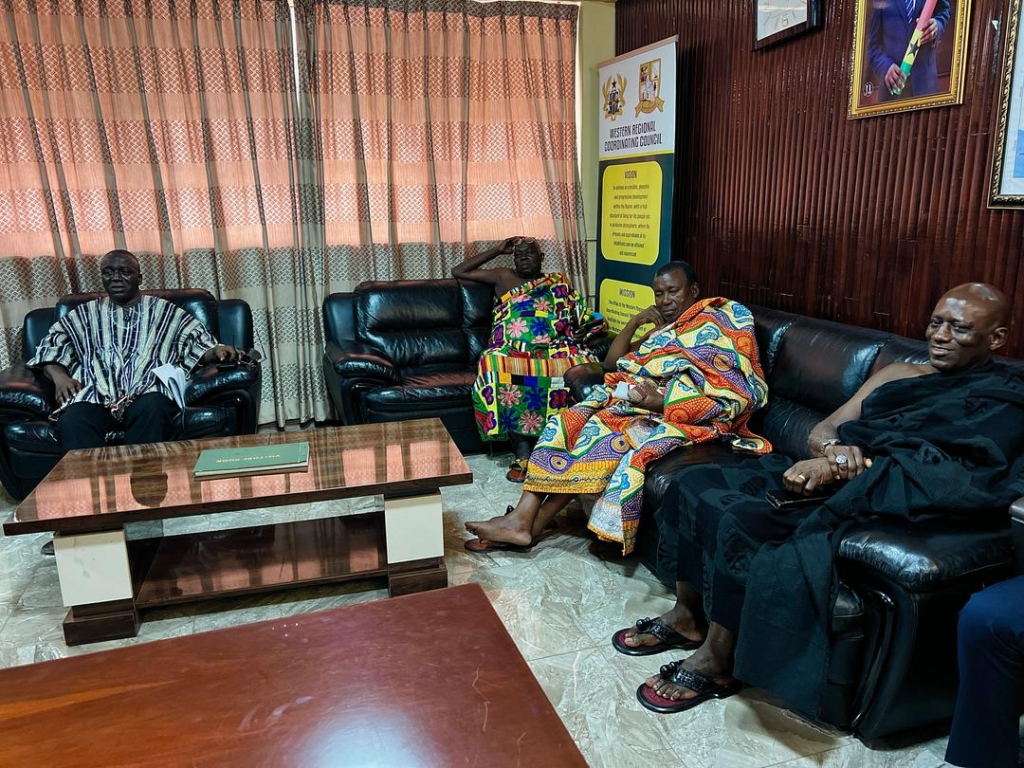
"The fight against illegal mining is a monumental task. I'm eager to collaborate with Minister Emmanuel Armah-Kofi Buah to find a new approach, as the destruction of our rivers and streams is alarming," he stated.
He continued, "Removing miners from the land today is only a temporary fix, as they will likely return tomorrow. A comprehensive solution is needed to tackle this issue effectively."
The Minister added that while deterrents are effective, a comprehensive overhaul of the mining process is also very necessary.
The Minister also expressed concerns about the devastating nature and impact of illegal mining in the country.
He said the damage has had a severe impact on River Butire in Ahanta when a serious breakage occurred and caused serious flooding of the entire Ewusiejoe community during the 2024 rainy season.
Furthermore, he said he was shocked to discover that the previous administration had designated parts of the Ghana Rubber Estate farmland as a community mining site.
"I fail to comprehend why a rubber plantation would be declared a community mining site," he remarked, highlighting the illogical nature of this decision.
Nelson further outlined his vision for responsible mining practices, indicating that there ought to be clear standards and accountability.
"Once a mining permit is issued, the recipient must acknowledge and fulfill the associated responsibilities," he stated.
He called for greater transparency and stricter regulations, proposing that mining sites be clearly marked as registered, small-scale, and operating responsibly, rather than the current chaotic situation in mining communities.
He explained that establishing clear standards, enabling effective monitoring and evaluation, would ensure that licensed holders understand their obligations.
"In the absence of standards, monitoring becomes impossible," he stated, adding that "we must establish clear guidelines, so anyone with a license knows exactly what is expected of them."
Regarding accountability, the Minister emphasised the need for a collaborative approach to address issues of openness.
He suggested the formation of a group consisting of the Minerals Commission, District Chief Executives, and security services, with clear Key Performance Indicators (KPI's) set to guide the industry. This, he observed, would ensure that individuals in these roles are held accountable for their actions and inaction.
Mr Nelson also expressed concerns about Ghana's dwindling farmlands being hijacked by illegal miners due to the rampaging illegal mining activities. He warned that if left unchecked, the country's ability to produce food crops and major cash crops like cocoa would be severely impacted.
To address this issue, he proposed a bold solution: "Any chief who allows illegal mining in their area should not have the land returned to them after reclamation. Instead, the state and government should take control of the land for agricultural purposes.
This approach, he believes, would hold traditional leaders accountable for protecting their lands and prioritise national food security interests.
Again, stakeholders in the mining sector in Western Region, he reaffirmed, would have to lead an uncompromising dedication to combating illegal mining activities in the region.
Latest Stories
-
Livestream: NPP National Delegates Conference underway in Kumasi
25 minutes -
‘We are waiting for the delegates’ – NPP explains delay in voting at Kumasi conference
40 minutes -
Drug fight will yield results as Mahama steps up action – Dzimega
48 minutes -
‘It’s bizarre’ – Freddie Blay questions EOCO’s handling of Baffour Awuah case
50 minutes -
NPP conference to reinforce support for Bawumia ahead of 2028 – Evans Nimako
59 minutes -
France and Ghana’s Gender Ministry explore cooperation on women’s economic empowerment
1 hour -
Ghana’s growing drug trafficking links are deeply troubling – Victoria Bright
1 hour -
‘The MP’s tears are crocodile tears’ – Kofi Bentil on La Pleasure Beach demolition
1 hour -
Freddie Blay alleges Mahama ordered demolition of son’s Polo Beach Club at La Beach
1 hour -
‘We’ve complied with all the rules’ – NPP assures transparency in national elections
2 hours -
‘Who is financing all this?’ – Victoria Bright questions networks behind Ghana-linked drug trade
2 hours -
If we don’t know Baffour Awuah’s charge, there’s a fishing expedition going on – Kofi Bentil
2 hours -
Parliament questions continued detention of Baffour Awuah by EOCO, demands due process
2 hours -
Baffour Awuah did not report to EOCO voluntarily; an arrest warrant forced him – Theophilius Dzimega
3 hours -
Baffour Awuah case risks looking like a display of state power – Sulemana Braimah
3 hours